
October 03, 2026
The U.S. Food and Drug Administration (FDA) is moving toward the next major phase of its prescription drug user fee program with the proposed PDUFA VIII commitment letter for Fiscal Years 2028–2032.
PDUFA VII is currently authorized through September 2027. PDUFA VIII is intended to establish the FDA's performance goals, review enhancements, user-fee structure and related commitments for the following five fiscal years. FDA held a public meeting on 16 September 2026 to discuss the proposed recommendations and is considering stakeholder comments as part of the reauthorization process.
The proposed program places significant emphasis on first-cycle review performance, regulatory interactions, postmarked safety, chemistry, manufacturing and controls (CMC), manufacturing-facility readiness, regulatory science and drug-development efficiency.
One proposed fee-structure change would provide a 50% reduction in the application fee when an application includes clinical data from at least one Phase 1 trial anchored in the United States and initiated after 1 October 2027.
For pharmaceutical and biotechnology companies preparing U.S. development programs, PDUFA VIII therefore represents more than a user-fee update. It could influence how sponsors plan clinical development, regulatory strategy, CMC readiness, FDA interactions and NDA/BLA submission preparation.
What Is PDUFA VIII?
The Prescription Drug User Fee Act (PDUFA) allows FDA to collect user fees from pharmaceutical companies to support the review of human drug applications.
The current PDUFA VII authority expires at the end of FY 2027, making congressional reauthorization necessary for FDA to continue collecting prescription drug user fees in subsequent fiscal years. PDUFA VIII would cover FY 2028 through FY 2032.
FDA and industry conducted negotiations and stakeholder discussions throughout 2025 and 2026 before developing the proposed commitment letter.
The proposed enhancements span several areas:
- Premarket drug review
- First-cycle review
- FDA-sponsor communications
- post market safety
- CMC and manufacturing
- Regulatory science
- Cell and gene therapy development
- Financial management
- Information technology
- User-fee structure
Why PDUFA VIII Matters to Drug and Biologics Sponsors
PDUFA commitments can influence how FDA and sponsors interact throughout the development and review lifecycle.
For sponsors, the proposed framework places greater emphasis on identifying potential issues before they become barriers during the marketing application review cycle.
This is particularly important for:
Clinical development → IND interactions → CMC development → manufacturing readiness → NDA/BLA preparation → FDA review → post market commitments
A development program may have strong clinical results but still encounter delays if manufacturing, inspection readiness, data integrity, facility compliance or other application components are not adequately prepared.
The proposed PDUFA VIII framework specifically addresses this relationship between development, application review and manufacturing readiness.
Key PDUFA VIII Proposed Enhancements
| Regulatory Area | Proposed Focus |
| First-cycle review | Improve efficiency and reduce avoidable review cycles |
| FDA-sponsor communications | More structured and timely interactions |
| Clinical development | Enhanced regulatory advice and protocol engagement |
| User fees | Changes to application-fee structure |
| U.S. clinical trials | Proposed fee incentive for qualifying U.S.-anchored Phase 1 data |
| CMC | Risk-based lifecycle approach to manufacturing assessment |
| Facility readiness | Earlier preparation for PAI/PLI |
| Postmarket safety | Improved PMR communication and oversight |
| Regulatory science | Greater use of modern regulatory tools |
| Cell & gene therapy | Continued development and review support |
| Performance assessment | Independent assessment of review processes |
1. Focus on First-Cycle Review
One of the major proposed enhancements is continued attention to first-cycle review.
The proposed commitment letter establishes a program intended to promote efficient and effective first-cycle reviews of eligible new molecular entity (NME) NDAs and original BLAs.
FDA's stated goal is to minimize unnecessary review cycles while ensuring that applications are sufficiently complete and support approval based on safety, efficacy and quality standards.
The proposal also includes an independent third-party assessment of first-cycle review processes, outcomes and FDA-sponsor communications.
The assessment would examine factors such as:
- Review milestones
- FDA-sponsor communications
- Information requests
- Application amendments
- Labeling communications
- Complete response outcomes
- Review-clock extensions
- Pivotal protocol interactions
The proposed assessment is intended to identify trends and practices that could improve the review process over the PDUFA VIII period.
2. Proposed U.S. Clinical Trial Fee Incentive
A notable proposed change is the introduction of a fee incentive connected to U.S.-based clinical development.
Under the proposal, sponsors will receive a 50% reduction in the application fee if the application includes clinical data from at least one Phase 1 trial anchored in the United States, provided the trial is initiated after 1 October 2027.
This proposed provision could become an important consideration during development planning.
Sponsors may need to evaluate:
- Clinical trial location strategy
- IND planning
- Phase 1 development timelines
- U.S. clinical operations
- Application eligibility
- Supporting clinical documentation
- User-fee implications
Importantly, this is part of the proposed PDUFA VIII fee structure and should not be treated as a current PDUFA VII requirement.
3. CMC Becomes an Earlier Development Priority
The proposed PDUFA VIII framework places substantial emphasis on Chemistry, Manufacturing and Controls (CMC).
FDA and industry propose a risk-based CMC facility lifecycle approach designed to improve communication and manufacturing-facility readiness throughout drug development and application review.
The proposal recognizes that manufacturing deficiencies identified during inspections can contribute to complete response actions and additional review cycles.
PDUFA VIII therefore proposes earlier and more structured communication around manufacturing facilities.
This can include:
- Manufacturing supply-chain assessment
- Facility readiness
- Inspection preparation
- Manufacturing process understanding
- Quality-system readiness
- Facility-specific risk assessment
- CMC pre-submission interaction
- Post-inspection communication
4. CMC Facility Pre-Submission Meetings
One proposed enhancement would allow applicants to request a CMC Facility Pre-submission Meeting for an NDA or BLA, including certain CMC supplements related to manufacturing facilities.
The meeting would generally be expected to occur 3–6 months before application submission, although the proposal allows flexibility depending on circumstances.
Potential discussion areas include:
- Manufacturing supply chain
- Interdependence between facilities
- Manufacturing operations
- Facility-related risks
- Previous regulatory inspections
- Facility readiness
- Planned application information
This creates an opportunity for sponsors to identify potential facility-related issues before the marketing application is submitted.
5. Pre-Approval and Pre-License Inspection Readiness
PDUFA VIII proposes greater transparency around FDA expectations for Pre-Approval Inspections (PAIs) and Pre-License Inspections (PLIs).
FDA plans to publish guidance describing manufacturing-facility readiness attributes that companies should consider before facility evaluation and inspection.
Sponsors could use these criteria to conduct internal readiness assessments covering:
Facility → Quality System → Manufacturing → Documentation → Data Integrity → Personnel → Inspection Readiness
The objective is to identify deficiencies before FDA inspection rather than discovering significant issues late in the application review process.
6. Enhanced Inspection Communication
The proposed framework also includes additional communication mechanisms around certain manufacturing inspections.
For applicable original NDAs and BLAs, FDA proposes communicating its intent to conduct certain manufacturing inspections at least 60 days in advance, when the inspection timing and circumstances allow, while retaining the ability to conduct inspections when necessary.
After a PAI or PLI, applicants could also request a post-PAI or post-PLI meeting when inspection findings may affect application approval.
The proposed objective is to improve transparency and, where possible, allow corrective actions to be addressed within the review cycle.
7. Post market Safety and PMR Enhancements
PDUFA VIII also addresses postmarketing requirements (PMRs) and safety oversight.
For standard NME NDAs and original BLAs, FDA proposes communicating anticipated PMRs no later than 8 weeks before the PDUFA action goal date.
For priority NME NDAs and original BLAs, the proposed timeframe is 6 weeks before the PDUFA action goal date.
The communication would include information such as:
- Purpose of the proposed study
- Critical study-design elements
- Study type
- Study population
- Relevant timelines
- Safety issues where applicable
FDA also proposes a process through which applicants can request review of certain existing PMRs for potential release when supporting information demonstrates that the requirement may no longer be necessary.
8. Regulatory Meetings and Sponsor-FDA Interaction
Effective communication between sponsors and FDA remains a central element of the proposed program.
PDUFA VIII continues to recognize multiple meeting types, including:
- Type A
- Type B
- Type B(EOP)
- Type C
- Type D
- INTERACT
The proposal also introduces or expands mechanisms such as multi-divisional meetings and the ability in certain circumstances to request written responses instead of face-to-face or teleconference meetings.
For innovative or challenging products, early regulatory engagement can help sponsors address questions related to:
- Novel development approaches
- Preclinical programs
- CMC strategy
- First-in-human studies
- Innovative technologies
- Complex clinical development
- Regulatory science
9. Implications for Pharmaceutical and Biotech Companies
PDUFA VIII could require companies to think about regulatory readiness earlier in the development lifecycle.
1. Clinical Teams
Clinical-development teams should evaluate how proposed U.S. Phase 1 eligibility and development strategy interact with broader regulatory and financial planning.
2. Regulatory Affairs
Regulatory teams should monitor the final PDUFA VIII legislation and translate new commitments into development and submission strategies.
3. CMC Teams
CMC functions should build manufacturing readiness into the development plan rather than treating facility preparation as a late-stage activity.
4. Quality Teams
Quality organizations should integrate inspection-readiness activities with NDA/BLA planning.
5. Manufacturing Sites
Manufacturing facilities supporting commercial applications should assess readiness, documentation, quality systems and previous inspection findings.
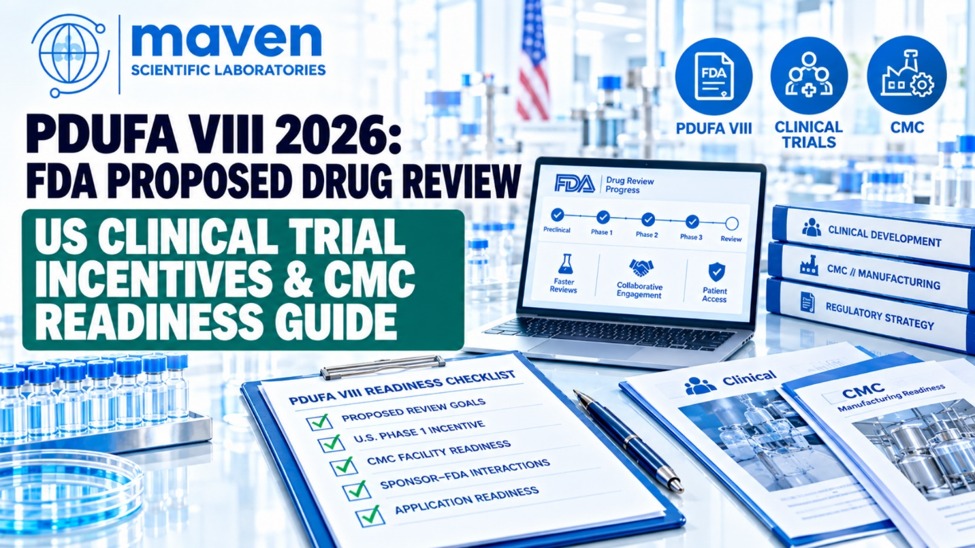
PDUFA VIII Readiness Checklist
Companies preparing for the FY 2028–2032 regulatory environment should consider:
- Monitor final PDUFA VIII legislation and implementation
- Review proposed user-fee changes
- Evaluate U.S.-based Phase 1 development implications
- Map the clinical-to-commercial development strategy
- Establish early CMC readiness assessments
- Review manufacturing supply-chain dependencies
- Prepare for PAI/PLI expectations
- Evaluate facility inspection history
- Strengthening CMC documentation
- Plan FDA meeting strategy
- Track potential PMR requirements
- Review NDA/BLA submission readiness
- Establish regulatory intelligence monitoring
- Align Regulatory, Clinical, CMC and Quality teams
FAQs
1. When does PDUFA VII expire?
The current PDUFA VII authority expires at the end of September 2027. PDUFA VIII is proposed to cover FY 2028 through FY 2032.
2. What is PDUFA VIII?
PDUFA VIII is the proposed reauthorization framework for FDA's prescription drug user-fee program for FY 2028–2032. It establishes proposed performance goals, review enhancements, fee provisions and related commitments.
3. Does PDUFA VIII change FDA drug approval standards?
The proposed commitment letter focuses primarily on the operation and performance of the FDA drug review program, including review processes, communications, CMC and post market activities. It does not itself replace the statutory standards for drug approval.
4. What is the proposed U.S. Phase 1 fee incentive?
The proposal would provide a 50% reduction in the application fee where the application includes clinical data from at least one Phase 1 trial anchored in the United States and initiated after 1 October 2027.
5. Why is CMC important under PDUFA VIII?
The proposed framework emphasizes earlier manufacturing-facility readiness and communication because facility deficiencies identified during inspections can contribute to complete response actions and additional review cycles.
6. Will PDUFA VIII affect biologics?
Yes. The proposed first-cycle review and CMC provisions include original BLAs, alongside applicable drug applications, and the framework contains specific provisions for biologics and advanced therapies.
Conclusion
The proposed PDUFA VIII framework represents a significant development for the U.S. pharmaceutical and biotechnology regulatory environment for FY 2028–2032.
The proposal combines traditional FDA review-performance commitments with enhanced attention to first-cycle review, regulatory communication, post market safety, CMC development, manufacturing-facility readiness and regulatory science.
The proposed 50% application-fee reduction linked to qualifying U.S.-anchored Phase 1 clinical data is also a notable change for sponsors evaluating future development strategies.
For pharmaceutical and biotech organizations, the practical message is clear: regulatory readiness should extend beyond clinical data and dossier preparation.
Clinical strategy, CMC development, manufacturing readiness, inspection preparedness, FDA interactions and post market planning increasingly need to operate as an integrated regulatory program.
Companies planning products that could enter the U.S. review system during the PDUFA VIII period should therefore monitor the final legislation and begin assessing how the proposed framework could affect their development, submission and compliance strategies.
How Maven Regulatory Solutions Can Help
Maven Regulatory Solutions supports pharmaceutical and biotechnology companies with end-to-end regulatory strategy, submission planning, CMC documentation, FDA interactions and lifecycle compliance.
Our support can include:
- U.S. FDA Regulatory Strategy
- IND & NDA/BLA Regulatory Support
- CTD/eCTD Dossier Preparation
- CMC Regulatory Documentation
- FDA Meeting Strategy & Preparation
- Clinical Development Regulatory Support
- Manufacturing & Inspection Readiness
- Regulatory Intelligence
- post market Regulatory Compliance
- Product Registration & Lifecycle Management
- Global Market Entry Strategy
From development strategy to FDA submission readiness, Maven helps organizations build regulatory programs designed for complex global markets.

Post a comment