
November 06, 2026
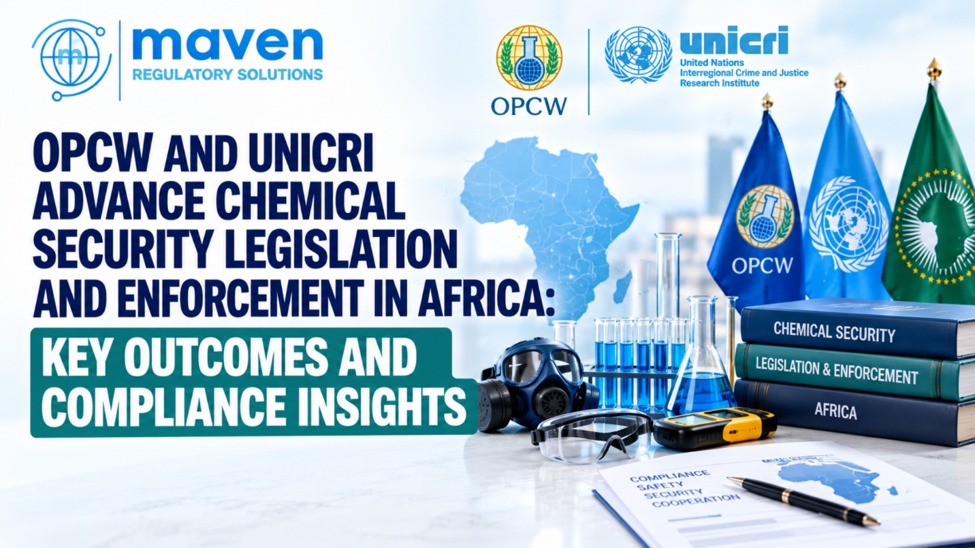
How the October 2026 Regional Workshop Strengthens Chemical Weapons Convention Implementation, Chemical Security and Law Enforcement
The Organization for the Prohibition of Chemical Weapons (OPCW), in partnership with the United Nations Interregional Crime and Justice Research Institute (UNICRI), convened a regional workshop on chemical security legislation and enforcement in Africa from 6–8 October 2026 in Rabat, Morocco.
The workshop, titled Implementing and Enforcing Legislation: The Chemical Weapons Convention and Chemical Security in Africa, brought together more than 60 participants from 22 African States Parties to the Chemical Weapons Convention (CWC).
The event focused on strengthening national legal frameworks, improving law enforcement capabilities, and enhancing coordination among government authorities responsible for chemical security. Discussions covered legislative implementation, hazardous chemical management, cross-border trafficking risks, criminal investigations, prosecution, and emergency response.
The Rabat workshop was the third in a series of regional capacity-building initiatives jointly organized by OPCW and UNICRI with European Union funding. Following earlier workshops in Ankara, Türkiye, in June 2025 and Manila, Philippines, in June 2026, the initiative has reached 41 States Parties across three regions.
For chemical manufacturers, industrial operators, regulatory professionals, and government stakeholders, these developments highlight the importance of effective chemical governance, risk management, and controls designed to prevent the misuse of toxic chemicals.
Why Chemical Security Legislation Matters
Chemicals play an essential role in manufacturing, agriculture, pharmaceuticals, industrial processing, and scientific research. However, certain toxic chemicals can also present serious security risks when improperly handled, diverted, or deliberately misused.
Effective chemical security therefore requires more than technical safeguards. It depends on clear legislation, accountable institutions, trained enforcement personnel, reliable information-sharing mechanisms, and the capacity to investigate and prosecute chemical-related offences.
The Chemical Weapons Convention establishes international obligations aimed at preventing the development, production, stockpiling, transfer, and use of chemical weapons. National implementation translates these obligations into domestic legal and operational measures.
Key chemical security priorities include:
- Strengthening national legislation and enforcement frameworks.
- Preventing the illicit trafficking and misuse of toxic chemicals.
- Improving coordination between regulatory authorities and law enforcement agencies.
- Supporting effective chemical incident preparedness and response.
- Building investigative and prosecutorial expertise.
- Identifying vulnerabilities throughout the chemical life cycle.
For businesses operating in chemical-related industries, stronger national enforcement can increase the importance of robust inventory management, documented procedures, supply-chain oversight, and compliance with applicable national requirements.
OPCW–UNICRI Africa Workshop: Key Highlights
The Rabat workshop combined expert presentations, case studies, interactive discussions, and a tabletop exercise to help participants apply chemical security principles in practical situations.
|
Workshop Element |
Key Focus |
Intended Outcome |
|
CWC implementation |
National legislation and international obligations |
Stronger legal frameworks |
|
Chemical security governance |
Institutional roles and responsibilities |
Clearer accountability |
|
Law enforcement training |
Investigation of chemical offences |
Improved investigative capability |
|
Prosecutorial guidance |
Evidence, criminalization and prosecution |
Stronger legal proceedings |
|
Interagency coordination |
Cooperation among national authorities |
More coordinated responses |
|
Tabletop exercise |
Simulated chemical security incident |
Improved preparedness and decision-making |
The programme highlighted the relationship between legislation and operational enforcement. Participants considered how legal requirements can be translated into effective procedures for preventing, detecting, investigating, and prosecuting chemical-related offences.
Building a Network of Chemical Security Practitioners in Africa
More than 60 participants representing 22 African States Parties attended the workshop:
Angola, Botswana, Cabo Verde, Cameroon, Côte d'Ivoire, Djibouti, Ethiopia, Liberia, Madagascar, Mauritania, Mauritius, Morocco, Mozambique, Namibia, Nigeria, Senegal, Seychelles, Sierra Leone, South Africa, Togo, Tunisia, and Zambia.
The participants included policymakers, police and gendarmerie officers, prosecutors, customs and border control personnel, military representatives, law enforcement officials, and officials from National Authorities responsible for CWC implementation.
This multidisciplinary participation supported discussions on how different institutions can work together to prevent chemical security threats.
The workshop also provided opportunities to exchange national experiences, identify common legislative challenges, and discuss good practices for implementing and enforcing chemical security measures.
For national authorities, effective cooperation can help address gaps between chemical regulation, border controls, criminal investigation, and emergency response.
From Policy to Practice: Legislative Enforcement and Chemical Crime Investigation
A central theme of the workshop was the need to make chemical security legislation operational.
Participants examined challenges associated with developing and enforcing domestic legal frameworks, including legislative advocacy within the broader chemical, biological, radiological, and nuclear (CBRN) security context.
Sessions also addressed the legal and evidentiary requirements involved in investigating and prosecuting chemical crimes. Practical guidance from UNICRI's Prosecutor's Guide to Chemical and Biological Crimes, together with real-world case studies, supported discussions on the classification, criminalization, investigation, and prosecution of chemical offences.
The programme highlighted several operational priorities:
- Legal clarity: Define applicable offences, responsibilities, and enforcement powers under national law.
- Evidence management: Understand the legal and evidentiary requirements for investigating suspected chemical crimes.
- Institutional coordination: Establish effective cooperation among National Authorities, police, prosecutors, customs agencies, and other relevant bodies.
- Risk identification: Assess vulnerabilities associated with the handling, movement, storage, and potential diversion of chemicals.
- Emergency preparedness: Strengthen decision-making and coordinated responses to chemical incidents.
These capabilities are important because chemical security incidents can require rapid cooperation between multiple agencies, each with distinct legal responsibilities and operational expertise.
Addressing Emerging Chemical Security Risks Across Africa
The workshop took place amid evolving security challenges, including the potential misuse of toxic chemicals by non-state actors, expanding chemical industries, and the complexity of monitoring hazardous materials moving across land borders and maritime trade routes.
Participants explored approaches to strengthening national legal frameworks, addressing gaps in criminalization, enhancing interagency cooperation, and developing specialist expertise among investigators and prosecutors.
The discussions also emphasized integrating chemical security into broader national security and law enforcement strategies.
For organizations involved in chemical manufacturing, distribution, importation, or industrial use, this wider security context reinforces the value of documented chemical inventories, appropriate access controls, supplier oversight, traceability, and incident-management procedures, as applicable to their operations and legal obligations.
These measures are practical risk-management considerations; the workshop announcement does not establish new, universally applicable business obligations.
Chemical Security Compliance: Key Considerations for Organizations
The workshop focused primarily on national legislation, institutional capacity, and law enforcement. Nevertheless, its themes provide a useful framework for businesses reviewing their own chemical governance practices.
|
Compliance Area |
Recommended Business Action |
Risk-Management Benefit |
|
Chemical inventory |
Maintain accurate records of chemicals and relevant hazards |
Improves visibility and accountability |
|
Supply-chain oversight |
Assess suppliers and document relevant transactions |
Supports traceability |
|
Access management |
Apply appropriate controls to sensitive chemicals and storage areas |
Helps reduce unauthorized access |
|
Regulatory compliance |
Identify applicable national chemical and security requirements |
Reduces compliance gaps |
|
Employee training |
Train relevant personnel in safe handling and escalation procedures |
Improves operational awareness |
|
Incident management |
Establish reporting and response procedures |
Supports timely coordination |
|
Documentation |
Maintain relevant records, procedures, and training evidence |
Supports audits and investigations |
Organizations should determine which controls are appropriate based on their activities, chemical hazards, operating locations, and applicable legislation. Requirements may vary across jurisdictions and chemical categories.
OPCW–UNICRI Initiative: Strengthening Global Chemical Security Cooperation
The Rabat workshop forms part of a wider interregional initiative to improve implementation and enforcement of the Chemical Weapons Convention.
|
Workshop Location |
Timing |
Regional Coverage |
|
Ankara, Türkiye |
June 2025 |
Central Asia |
|
Manila, Philippines |
June 2026 |
South and Southeast Asia |
|
Rabat, Morocco |
6–8 October 2026 |
Africa |
With the completion of the Africa workshop, the initiative has reached 41 States Parties across three regions.
The programme demonstrates the importance of combining international commitments with national legislation, operational expertise, and effective enforcement mechanisms. Laws alone cannot address chemical security threats without institutions capable of applying them in practice.
Continued regional cooperation can help build professional networks, share good practices, and improve the capacity of national authorities to prevent chemical weapons-related risks and respond to chemical security incidents.
Practical Chemical Security Readiness Checklist
Organizations can use the following checklist to review their internal chemical governance arrangements:
- Identify applicable chemical safety, security, and regulatory requirements.
- Maintain an updated inventory of chemicals and relevant hazards.
- Review supplier qualification and supply-chain traceability procedures.
- Establish appropriate chemical storage and access controls.
- Define responsibilities for chemical security and incident escalation.
- Train relevant employees in handling, reporting, and emergency procedures.
- Maintain accurate operational and compliance documentation.
- Review incident-response and business-continuity arrangements.
- Evaluate relevant national and cross-border regulatory requirements.
- Periodically reassess risks and update internal procedures.
This checklist is a general risk-management aid, not a substitute for a jurisdiction-specific legal assessment.
Frequently Asked Questions
1. What was the OPCW–UNICRI Africa workshop about?
The workshop addressed the implementation and enforcement of chemical security legislation under the Chemical Weapons Convention, with an emphasis on national legal frameworks, law enforcement, chemical crime investigation, prosecution, and interagency coordination.
2. When and where was the workshop held?
It took place in Rabat, Morocco, from 6–8 October 2026.
3. How many countries participated?
More than 60 participants from 22 African States Parties to the CWC attended the workshop.
4. What is the role of the Chemical Weapons Convention?
The CWC is an international treaty intended to eliminate chemical weapons and prevent their development, production, stockpiling, transfer, and use. States Parties implement their obligations through relevant national laws and institutional measures.
5. What role did UNICRI play?
UNICRI partnered with OPCW to support regional capacity building, including practical training and guidance relevant to the investigation and prosecution of chemical and biological crimes.
6. Why is interagency cooperation important?
Chemical security incidents can involve regulatory authorities, police, officials, emergency responders, investigators, and prosecutors. Coordination helps clarify responsibilities and improve information sharing and response effectiveness.
7. Does the workshop introduce new chemical compliance requirements for businesses?
The workshop announcement describes a capacity-building initiative rather than a new, generally applicable business regulation. Companies should review the legislation and requirements applicable in each jurisdiction where they operate.
Conclusion
The OPCW–UNICRI regional workshop in Rabat represents an important step in strengthening chemical security legislation, enforcement capacity, and international cooperation across Africa.
By bringing together representatives from 22 African States Parties, the initiative supported practical discussions on national implementation of the Chemical Weapons Convention, chemical crime investigation, prosecution, interagency coordination, and incident response.
Its completion also marks the expansion of the joint capacity-building initiative to 41 States Parties across Central Asia, South and Southeast Asia, and Africa.
For chemical-sector organizations, the broader message is clear: effective chemical governance combines regulatory compliance with appropriate risk management, traceability, staff training, documentation, and incident preparedness.
Businesses should continue monitoring applicable national requirements and reviewing their internal chemical management practices as chemical security priorities evolve.
How Maven Regulatory Solutions Can Help
Maven Regulatory Solutions supports organizations in strengthening their regulatory compliance and chemical governance frameworks through services such as:
- Chemical regulatory assessments.
- Chemical inventory and compliance reviews.
- Regulatory gap assessments.
- Chemical classification and documentation support.
- Safety Data Sheet (SDS) and labelling support.
- Supply-chain compliance assessments.
- Regulatory intelligence and legislative monitoring.
- Compliance documentation and lifecycle support.
Our approach helps organizations identify relevant regulatory requirements, evaluate potential compliance gaps, and develop practical, documented compliance strategies aligned with applicable chemical regulations.

Post a comment