
September 17, 2026
What Japan’s New PFAS Controls Mean for Manufacturers, Importers, Chemical Suppliers and Product Compliance
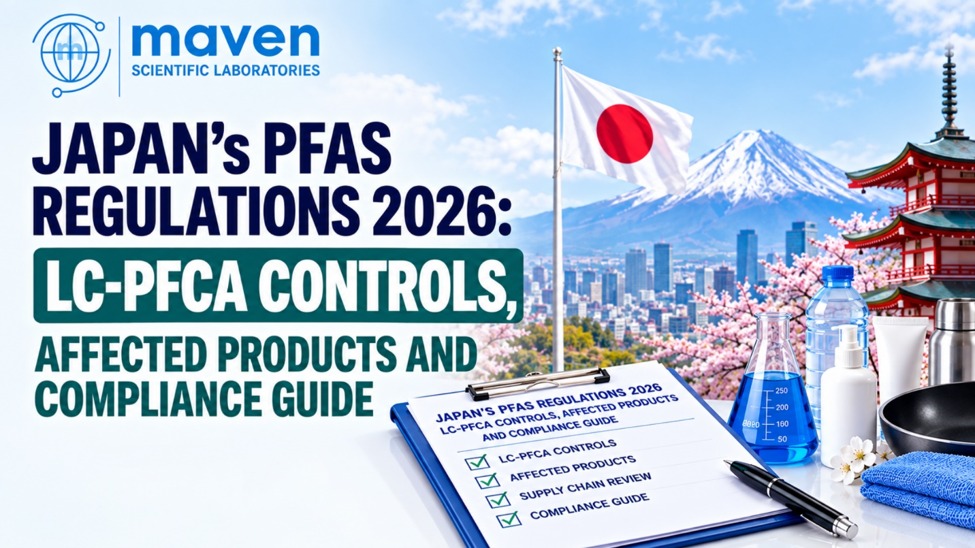
Japan is strengthening its controls on certain per- and polyfluoroalkyl substances (PFAS) through amendments under the Act on the Regulation of Manufacture and Evaluation of Chemical Substances (CSCL).
On 19 May 2026, Japan’s Cabinet approved amendments designating long-chain perfluoro carboxylic acids (LC-PFCA), their salts and LC-PFCA related compounds as Class I Specified Chemical Substances. The measures are scheduled to take effect on 22 November 2026.
The change follows the decision under the Stockholm Convention to bring LC-PFCA, their salts and related compounds under elimination controls.
For manufacturers and importers, development is important because Class I designation can trigger stringent controls covering manufacture, import, use and import of specified products containing these substances.
Companies supplying products to Japan should therefore review their chemical inventories, formulations, components, suppliers and import portfolios before the November 2026 effective date.
Why Japan’s PFAS Regulation Matters
PFAS are a large group of fluorinated substances used because of properties such as chemical resistance, thermal stability, water repellency and oil repellency.
They have historically been used in applications including:
- Industrial chemicals
- Fluoropolymer-related materials
- Electronics
- Medical devices
- Fire-fighting products
- Coatings
- Textiles
- Automotive applications
- Printing and industrial processes
Long-chain PFCAs and related substances have been identified internationally as persistent chemicals requiring strong controls. Japan’s latest measures bring LC-PFCA and related substances into its Class I Specified Chemical Substance framework.
For companies, this means PFAS compliance can no longer be treated solely as a product-level environmental issue.
It may require coordinated action across regulatory affairs, procurement, R&D, quality, supply chain, manufacturing and import compliance.
What Has Japan Designated?
The 2026 Cabinet Order designates the following as Class I Specified Chemical Substances:
- Long-chain perfluoro carboxylic acids (LC-PFCA)
- Salts of LC-PFCA
- LC-PFCA related compounds
The designation reflects Japan’s implementation of international controls following the Stockholm Convention decision to place these substances under elimination measures.
Class I Specified Chemical Substances are subject to stringent regulatory controls because of their persistence, bioaccumulation and long-term toxicity concerns.
Companies should therefore determine whether substances used in their products fall within the applicable LC-PFCA definitions or related compound categories.
When Do the New Requirements Take Effect?
The revised Cabinet Order was promulgated on 22 May 2026, with the relevant provisions scheduled to enter into force on:
22 November 2026
This provides a six-month period between promulgation and enforcement for businesses to assess affected substances, products and supply chains.
Companies importing products into Japan should use this period to complete a structured regulatory assessment.
Waiting until enforcement begins may create avoidable supply-chain and compliance risks.
What Products Are Affected?
The revised framework specifically identifies certain products associated with the newly designated substances.
For LC-PFCA, their salts and related compounds, the Cabinet Order designates:
1. Lubricating oils
Lubricating oils containing the designated LC-PFCA substances are subject to import prohibition under the specified-product provisions.
2. Fire extinguishers
Fire extinguishers using LC-PFCA, their salts or related compounds are subject to specified technical handling requirements.
3. Fire-extinguishing agents for fire extinguishers
These products are also covered by technical standards where the designated substances are used.
4. Foam fire-extinguishing agents
Foam fire-extinguishing agents containing the relevant LC-PFCA substances are subject to prescribed handling requirements.
Japan has therefore adopted a targeted approach that combines import restrictions for specified products with technical standards for other products.
Companies should assess both the substance itself and whether it is present in a product specifically covered by the Cabinet Order.
Import Restrictions Under the New Framework
The Class I designation creates significant implications for companies importing affected products into Japan.
The amended framework designates lubricating oils as products that businesses are not permitted to import when they contain LC-PFCA, their salts or related compounds covered by the regulation.
This means companies should not rely solely on supplier statements such as:
- “PFAS compliant”
or
- “Fluorine-free”
Instead, importers should obtain sufficiently detailed information to determine whether regulated substances are present and whether the specific product falls within the applicable Japanese requirements.
Technical Standards for Fire-Fighting Products
The new requirements also cover certain fire-fighting products.
Japan has designated:
- Fire extinguishers
- Fire-extinguishing agents for fire extinguishers
- Foam fire-extinguishing agents
containing LC-PFCA, their salts or related compounds as products subject to government-prescribed technical standards regarding handling.
Manufacturers and importers supplying these products should therefore review:
- Product composition
- Chemical inventories
- Supplier declarations
- Technical documentation
- Handling procedures
- Import controls
- Product-specific requirements
This is particularly important for companies whose products are manufactured outside Japan but imported into the Japanese market.
Who Should Pay Attention?
The updated requirements may be particularly relevant to:
| Business / Product Area | Key Compliance Consideration |
| Chemical manufacturers | Substance classification |
| Chemical importers | Import controls |
| Lubricant manufacturers | Restricted product assessment |
| Lubricant importers | Product composition review |
| Fire-extinguisher manufacturers | Technical standards |
| Fire-fighting chemical suppliers | Substance and product assessment |
| Foam-agent suppliers | Handling requirements |
| Electronics manufacturers | PFAS-containing components |
| Industrial manufacturers | Supplier declarations |
| Global companies | Japan-specific regulatory assessment |
Companies should evaluate not only direct chemical imports but also finished products, components and materials sourced through international supply chains.
Supply Chain and Supplier Controls
PFAS compliance can become challenging when manufacturers do not have complete information about chemical substances used in raw materials or components.
A strong supplier-control program should include:
- Substance declarations
- Material composition information
- Supplier questionnaires
- Certificates and supporting documentation
- Change notifications
- Restricted-substance controls
- Periodic compliance reviews
Companies should also consider whether suppliers use PFAS-containing processing aids, coatings or additives that may not be clearly identified in commercial product specifications.
2026 Japan PFAS Compliance Readiness Checklist
| Assessment Area | Objective |
| Substance Inventory | Identify potentially affected PFAS |
| LC-PFCA Assessment | Determine regulatory applicability |
| Product Portfolio | Identify affected products |
| Lubricating Oils | Check import restrictions |
| Fire-Fighting Products | Assess technical requirements |
| Supplier Data | Obtain composition information |
| Import Portfolio | Review Japanese imports |
| Technical Documentation | Confirm regulatory evidence |
| Change Control | Monitor formulation changes |
| Supply Chain | Strengthening supplier oversight |
| Regulatory Classification | Confirm CSCL status |
| Compliance Procedures | Update internal controls |
| Regulatory Intelligence | Monitor future PFAS developments |
Impact on Manufacturers and Importers
The new requirements may affect businesses in several ways.
Manufacturers may need to:
- Review formulations
- Identify regulated PFAS
- Assess alternative materials
- Update supplier requirements
- Review product specifications
- Strengthening restricted substance controls
Importers may need to:
- Review of imported product portfolios
- Confirm substance composition
- Assess affected product categories
- Verify supplier declarations
- Update import compliance procedures
- Maintain supporting documentation
The objective should be to establish a documented, risk-based PFAS compliance strategy before the November 2026 enforcement date.
Existing Products and Formulation Changes
Companies with existing products should evaluate whether PFAS-related materials are present in:
- Lubricants
- Coatings
- Processing aids
- Fluorinated materials
- Fire-fighting products
- Industrial formulations
- Components and assemblies
Where regulated substances are identified, companies should assess whether reformulation or substitution is required.
Any material change should also be evaluated for its potential impact on product performance, quality, safety, specifications and regulatory documentation.
Practical Japan PFAS Compliance Roadmap
A practical implementation approach can include:
- Identify products and materials supplied to Japan.
- Inventory PFAS-containing substances and components.
- Determine whether LC-PFCA, salts or related compounds are present.
- Review applicable CSCL classifications.
- Identify affected lubricating oils.
- Assess fire-extinguishing and foam-agent products.
- Obtain updated supplier declarations.
- Review product specifications and technical documentation.
- Assess import restrictions and technical standards.
- Evaluate potential alternatives where necessary.
- Update supplier and change-control procedures.
- Maintain ongoing Japanese PFAS regulatory monitoring.
Early implementation can help companies identify potential compliance gaps before the 22 November 2026 enforcement date.
Common PFAS Compliance Challenges
Companies may face:
- Incomplete chemical composition data
- Unclear PFAS definitions
- Insufficient supplier information
- Legacy formulations
- PFAS-containing components
- Complex global supply chains
- Inconsistent supplier declarations
- Limited alternative materials
- Insufficient regulatory documentation
- Failure to distinguish substance-level and product-level requirements
A structured regulatory assessment can help organizations identify these issues early.
Frequently Asked Questions
1. What is changing in Japan?
Japan is designating LC-PFCA, their salts and LC-PFCA related compounds as Class I Specified Chemical Substances under the CSCL framework.
2. When do the new requirements take effect?
The relevant provisions are scheduled to take effect on 22 November 2026.
3. Which products are specifically affected?
Lubricating oils containing the designated LC-PFCA substances are subject to import prohibition, while certain fire extinguishers and fire-extinguishing products are subject to technical handling standards.
4. Does the regulation affect manufacturers outside Japan?
Yes. Companies manufacturing products outside Japan should assess whether their products or materials are imported into Japan and whether the applicable requirements are triggered.
5. Should suppliers be contacted?
Yes. Supplier declarations and composition information can be important for determining whether regulated substances are present.
6. Are all PFAS prohibited in Japan?
No. This specific amendment concerns LC-PFCA, their salts and related compounds and specified products. Companies should assess the exact substance and applicable regulatory provisions rather than treating all PFAS as automatically prohibited.
7. Should existing products be reassessed?
Companies supplying affected products to Japan should review existing formulations, components, supplier information and import portfolios before the enforcement date.
Conclusion
Japan's 2026 PFAS regulatory update represents another important development in the global management of persistent, fluorinated chemicals.
The designation of LC-PFCA, their salts and related compounds as Class I Specified Chemical Substances introduces significant compliance considerations for manufacturers and importers.
The requirements specifically affect products such as lubricating oils and certain fire-fighting products, while broader supply-chain and substance-management implications should also be considered.
Companies should use the period before 22 November 2026 to review their chemical inventories, product portfolios, supplier declarations, import activities and technical documentation.
A proactive approach can help organizations identify regulated substances, assess affected products, evaluate alternatives and strengthen Japan-specific compliance controls.
How Maven Regulatory Solutions Can Help
Maven Regulatory Solutions can support companies with:
- Japan PFAS regulatory assessments
- CSCL compliance reviews
- LC-PFCA applicability assessments
- Product portfolio screening
- Supplier compliance assessments
- Chemical inventory reviews
- Import compliance assessments
- Restricted-substance evaluations
- Regulatory gap assessments
- Product and formulation change assessments
- Regulatory intelligence
- Lifecycle compliance support
Our approach helps manufacturers and importers identify potential PFAS compliance risks and develop practical strategies aligned with Japan's evolving chemical regulatory requirements.

Post a comment