
July 04, 2026
Understanding the IMDRF Draft Technical Framework for Artificial Intelligence Life Cycle Management, Adaptive AI, Generative AI, Post-Market Monitoring, and Best Practices for Global Regulatory Compliance
The International Medical Device Regulators Forum (IMDRF) has taken a major step toward shaping the future of Artificial Intelligence (AI) regulation in healthcare with the publication of its Draft Technical Framework for Artificial Intelligence Life Cycle Management (AILCM) on 7 April 2026.
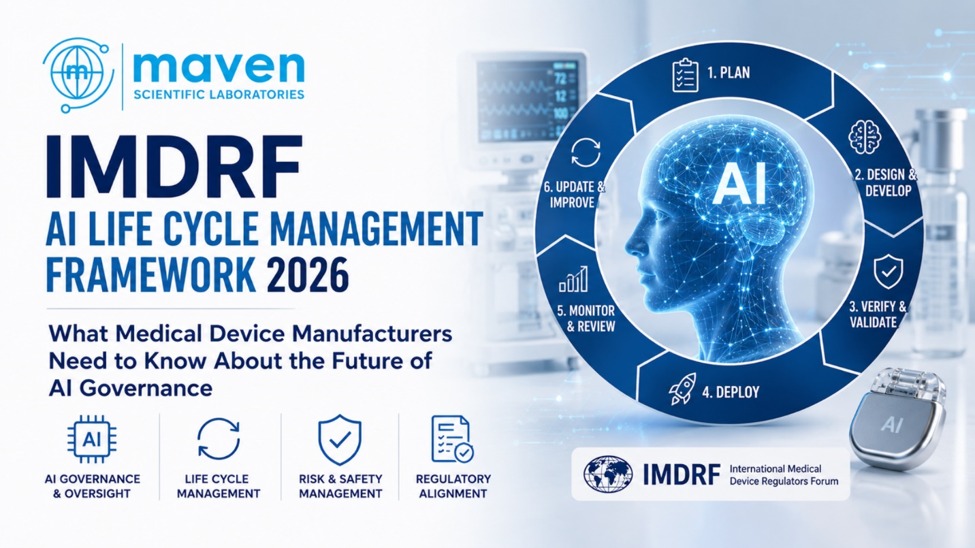
Rather than focusing solely on pre-market approval, the draft framework introduces a comprehensive, globally harmonized approach that emphasizes the entire AI life cycle from design and development through deployment, post-market monitoring, maintenance, updates, and retirement.
As AI-enabled medical devices become increasingly sophisticated, including adaptive and Generative AI systems, regulators expect manufacturers to demonstrate continuous oversight, risk management, transparency, and real-world performance throughout the product lifecycle.
This draft framework signals a fundamental shift in regulatory expectations: AI governance is no longer a one-time submission activity it is a continuous responsibility.
Without proactive preparation, organizations may encounter:
- Regulatory compliance challenges
- Delays in product approvals
- Increased regulatory scrutiny
- AI model drift risks
- Cybersecurity vulnerabilities
- Insufficient post-market surveillance
- Documentation gaps
- Change management issues
- Higher compliance costs
- Product lifecycle management challenges
As global regulators move toward lifecycle-based AI governance, MedTech companies should strengthen their AI quality management systems, regulatory strategies, and continuous monitoring programs.
Executive Overview
The IMDRF Draft Technical Framework establishes a globally harmonized approach for managing Artificial Intelligence throughout the medical device lifecycle.
Rather than regulating AI only at the time of market authorization, the framework promotes continuous oversight of AI systems to ensure they remain safe, effective, reliable, and trustworthy during real-world use.
A future-ready AI governance program should be:
- IMDRF aligned
- Risk based
- Lifecycle managed
- Transparent
- Explainable
- Cybersecure
- Quality integrated
- Change controlled
- Inspection ready
Organizations investing in proactive AI governance will be better positioned for future regulatory requirements across multiple jurisdictions.
Why This Framework Matters
Artificial Intelligence is rapidly transforming healthcare by improving diagnostics, clinical decision support, imaging analysis, personalized treatment, and workflow automation.
However, AI systems continue learning, adapting, and interacting with real-world data after deployment.
Unlike conventional software, AI models may experience:
- Model drift
- Data bias
- Performance degradation
- Data set changes
- Cybersecurity threats
- Algorithm updates
The IMDRF framework recognizes these unique characteristics and promotes continuous lifecycle management rather than one-time regulatory evaluation.
Understanding AI Life Cycle Management
The framework encourages manufacturers to manage AI systems throughout every stage of development.
Lifecycle activities include:
- AI design
- Data management
- Model development
- Validation
- Clinical evaluation
- Deployment
- Performance monitoring
- Software updates
- Risk management
- Product retirement
Continuous governance helps maintain safety and effectiveness over time.
Key Drivers Behind the IMDRF AI Framework
| Regulatory Driver | Industry Impact |
| AI Lifecycle Governance | Continuous Compliance |
| Adaptive AI | Ongoing Risk Management |
| Generative AI | New Regulatory Expectations |
| Cybersecurity | Stronger Digital Protection |
| Transparency | Increased Regulatory Trust |
| Real-World Monitoring | Improved Patient Safety |
The framework reflects the growing importance of responsible AI governance across the global healthcare ecosystem.
Top 5 Compliance Priorities for Medical Device Manufacturers
1. Establish AI Governance from Day One
AI governance should begin during product development rather than after regulatory submission.
Organizations should be established:
- AI quality systems
- Risk management plans
- Governance policies
- Documentation procedures
- Lifecycle oversight
2. Strengthen Data Governance
AI performance depends on high-quality data.
Manufacturers should evaluate:
- Data quality
- Dataset diversity
- Data bias
- Data integrity
- Traceability
- Data governance controls
Strong data governance supports reliable AI performance.
3. Monitor Model Drift and Performance
AI models may evolve over time due to changing clinical environments or new data.
Organizations should implement:
- Performance monitoring
- Drift detection
- Validation updates
- Risk reassessments
- Continuous verification
Post-market monitoring becomes a core regulatory expectation.
4. Improve Transparency and Explainability
Manufacturers should ensure AI systems remain understandable to regulators and healthcare professionals.
Best practices include:
- Explainable AI
- Decision traceability
- Model documentation
- Clinical justification
- User communication
Transparent AI builds regulatory confidence.
5. Integrate Cybersecurity into AI Governance
Cybersecurity should be incorporated throughout the AI lifecycle.
Organizations should review:
- Secure software development
- Threat monitoring
- Vulnerability management
- Patch management
- Incident response
- Security updates
Cybersecurity is becoming inseparable from AI safety.
The Growing Importance of Continuous AI Governance
Healthcare AI continues evolving through:
- Adaptive learning
- Generative AI
- Machine learning
- Large Language Models (LLMs)
- Digital health technologies
- Software as a Medical Device (SaMD)
These innovations require continuous oversight throughout the product lifecycle.
Practical Benefits of Early AI Governance
| Business Area | Potential Benefit |
| Regulatory Compliance | Reduced Approval Risk |
| Patient Safety | Better Clinical Performance |
| AI Governance | Stronger Risk Control |
| Cybersecurity | Improved Resilience |
| Product Lifecycle | Continuous Compliance |
| Regulatory Readiness | Faster Market Access |
Organizations adopting lifecycle governance today will be better prepared for tomorrow's AI regulations.
Important Compliance Considerations
Successful implementation should include:
- AI lifecycle documentation
- Risk assessments
- Model validation
- Human oversight
- Data governance
- Post-market surveillance
- Cybersecurity management
- Change control
- Regulatory intelligence
- Continuous performance evaluation
AI governance should become an ongoing quality activity rather than a one-time regulatory milestone.
Best Practices for AI Compliance Excellence
Build Cross-Functional AI Governance
Successful implementation requires collaboration among:
- Regulatory Affairs
- Software Engineering
- Artificial Intelligence Teams
- Clinical Affairs
- Cybersecurity
- Quality Assurance
- Risk Management
- Medical Affairs
- Product Management
Strengthening Regulatory Intelligence
Companies should continuously monitor:
- IMDRF publications
- FDA AI guidance
- EU AI Act developments
- MDR and IVDR updates
- Global AI regulations
- Cybersecurity guidance
- International best practices
Emerging Trends in AI Medical Device Regulation
| Emerging Trend | Industry Impact |
| Lifecycle AI Governance | Continuous Compliance |
| Adaptive AI Regulation | Ongoing Monitoring |
| Generative AI Oversight | New Documentation Requirements |
| Explainable AI | Greater Regulatory Confidence |
| Cybersecurity Integration | Enhanced Device Security |
| Real-World Performance Monitoring | Better Patient Outcomes |
Modern AI regulation is becoming increasingly lifecycle-focused, risk-based, and data-driven.
Why the IMDRF Framework Represents a Regulatory Milestone
The Draft Technical Framework demonstrates that global regulators are moving beyond traditional device approval models toward continuous AI governance.
Manufacturers that proactively strengthen:
- AI governance
- Data quality
- Risk management
- Cybersecurity
- Human oversight
- Documentation
- Lifecycle monitoring
will be better positioned for future international AI regulatory expectations.
AI governance is rapidly becoming a competitive advantage across the MedTech industry.
How Maven Supports Medical Device Companies
Our Expertise Includes
- AI medical device regulatory consulting
- IMDRF compliance support
- Software as a Medical Device (SaMD) consulting
- AI lifecycle management
- Regulatory strategy
- Risk management
- Technical documentation
- Cybersecurity consulting
- Clinical evaluation support
- Global regulatory compliance
Why Companies Choose Maven
- Deep MedTech Regulatory Expertise
- AI compliance specialists
- Risk-based regulatory approach
- End-to-end compliance support
- Global market experience
- Technical documentation expertise
- Practical implementation strategies
Conclusion
The IMDRF Draft Technical Framework for Artificial Intelligence Life Cycle Management marks a significant shift in the global regulation of AI-enabled medical devices.
By emphasizing continuous governance, post-market monitoring, transparency, cybersecurity, and human oversight, the framework establishes a new regulatory paradigm that extends beyond product approval.
Organizations that strengthen AI governance, lifecycle monitoring, quality systems, and regulatory intelligence today will be better prepared for the next generation of AI medical device regulations.
The future of AI regulation is not defined by a single approval it is built on continuous oversight throughout the entire product lifecycle.
Frequently Asked Questions
1. What is the IMDRF AI Life Cycle Management Framework?
It is a draft technical framework published by IMDRF that provides globally harmonized guidance for managing AI-enabled medical devices throughout their entire lifecycle.
2. Why is this framework significant?
It shifts the regulatory focus from pre-market approval to continuous AI lifecycle governance, including monitoring, updates, and post-market oversight.
3. Which AI technologies are covered?
The framework applies broadly to AI-enabled medical devices, including adaptive AI, machine learning systems, and Generative AI used in healthcare.
4. What is model drift?
Model drift occurs when an AI model's performance changes over time due to new data, evolving clinical environments, or changing patient populations.
5. Why is human oversight important?
Human oversight helps ensure AI decisions remain safe, transparent, and clinically appropriate while reducing the risk of unintended outcomes.
6. How does cybersecurity relate to AI medical devices?
Cybersecurity protects AI systems from unauthorized access, data breaches, manipulation, and other threats that could impact patient safety and device performance.
7. How should manufacturers prepare?
Companies should implement AI governance frameworks, strengthen data management, establish continuous monitoring processes, and integrate lifecycle risk management into their quality systems.
8. How can Maven help?
Maven provides regulatory consulting for AI-enabled medical devices, IMDRF compliance, SaMD, lifecycle management, technical documentation, cybersecurity, and global regulatory strategy.

Post a comment