
August 22, 2026
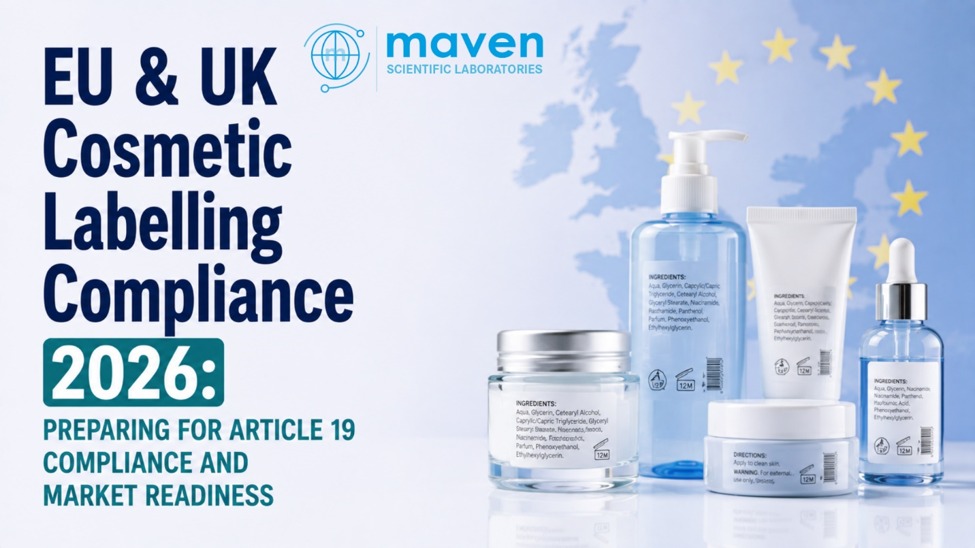
How Article 19 Compliance, Responsible Person Requirements, Ingredient Declarations, Artwork Review, Regulatory Intelligence, and Label Governance Support Successful Cosmetic Market Access in the EU and UK
Cosmetic product labelling is far more than a marketing element it is a legal requirement that determines whether a product can be placed on the EU or UK market. Under Article 19 of Regulation (EC) No. 1223/2009, every cosmetic product must display specific mandatory information to ensure consumer safety, product traceability, and regulatory compliance.
Following Brexit, the UK Cosmetics Regulation maintains equivalent labelling obligations, meaning manufacturers, brand owners, importers, and Responsible Persons must ensure product artwork complies with the applicable jurisdiction before commercialization.
As regulatory scrutiny continues to increase across Europe and the UK, companies should proactively review labels, strengthen artwork governance, maintain regulatory intelligence, and establish robust compliance processes to minimize enforcement risks, avoid costly relabeling, and accelerate product launches.
Why EU & UK Cosmetic Labelling Compliance Is a Strategic Priority
Labelling is one of the first areas reviewed during regulatory inspections and market surveillance activities. Even minor omissions can lead to non-compliance, product withdrawal, enforcement actions, delayed product launches, and reputational damage.
Growing regulatory focus is driven by:
- Increasing cosmetic market surveillance
- Greater consumer transparency requirements
- Expansion of ingredient disclosure obligations
- Enhanced enforcement across EU Member States
- UK regulatory oversight post-Brexit
- Rising cross-border cosmetic trade
- Digital product information initiatives
- Greater scrutiny of product claims and artwork
Without effective label compliance, organizations may encounter:
- Market access delays
- Product recalls
- Enforcement notices
- Artwork revisions
- Import restrictions
- Increased compliance costs
- Customs clearance issues
- Regulatory inspections
- Consumer complaints
- Brand reputation risks
Robust labelling governance has become an essential capability for cosmetic manufacturers seeking successful commercialization across Europe and the United Kingdom.
Executive Overview
Successful cosmetic labelling requires more than adding mandatory information to product artwork. Companies should establish an integrated compliance program combining:
- Article 19 compliance
- UK Cosmetics Regulation Compliance
- Responsible Person verification
- Ingredient declaration accuracy
- Artwork review processes
- Claims compliance
- Regulatory intelligence
- Packaging governance
- Label change control
- Lifecycle management
- Inspection readiness
Organizations implementing these capabilities reduce compliance risks while improving market readiness and operational efficiency.
Understanding Article 19 of Regulation (EC) No. 1223/2009
Article 19 specifies the mandatory information that cosmetic products must display before being placed on the EU market.
The regulation ensures consumers receive accurate information regarding product identity, safe use, and traceability.
Mandatory information supports:
- Consumer protection
- Product identification
- Supply chain traceability
- Safe product use
- Regulatory oversight
- Market surveillance
- Product recalls
- Compliance verification
Equivalent requirements apply under the UK Cosmetics Regulation for products marketed in Great Britain.
Key Regulatory Authorities
| Authority | Responsibility |
| European Commission | EU Cosmetics Regulation |
| Competent Authorities | Market surveillance and enforcement |
| UK Office for Product Safety and Standards (OPSS) | UK cosmetics enforcement |
| Responsible Person | Product compliance and market responsibility |
| Customs Authorities | Import compliance |
Why Cosmetic Labelling Matters
Product labels directly influence:
- Legal market access
- Consumer safety
- Product traceability
- Inspection outcomes
- Import approvals
- Regulatory compliance
- Brand credibility
- Commercial success
Organizations that integrate labelling compliance early during product development significantly reduce regulatory risk.
Mandatory Labelling Requirements Under Article 19
Every cosmetic product should include the following mandatory information:
- Name and address of the Responsible Person
- Country of origin (for imported products)
- Nominal content
- Date of minimum durability or Period After Opening (PAO)
- Precautions for use
- Batch number or reference
- Product function
- Ingredient list (INCI)
Failure to include any mandatory element may result in the product being considered non-compliant.
Responsible Person Requirements
The Responsible Person plays a central role in ensuring cosmetic compliance.
Responsibilities include:
- Regulatory compliance
- Product Information File (PIF)
- Cosmetic Product Safety Report (CPSR)
- Label accuracy
- Market surveillance cooperation
- Serious undesirable effect reporting
- Corrective actions
- Regulatory communication
Ingredient Declaration Requirements
Ingredient declarations should:
- Follow INCI nomenclature
- Be accurate and complete
- Reflect formulation changes
- Include fragrance allergens where applicable
- Comply with ingredient restrictions
- Match approved formulation documentation
Incorrect ingredient listings remain one of the most common compliance findings.
Country of Origin Requirements
Imported cosmetic products placed on the EU or UK market should clearly indicate their country of origin where required.
This assists:
- Customs authorities
- Market surveillance
- Product traceability
- Consumer transparency
Nominal Content Requirements
Labels should clearly display:
- Product quantity
- Metric units
- Net content
- Packaging consistency
Accurate quantity declarations support fair trade practices and consumer confidence.
PAO and Minimum Durability
Depending on product characteristics, labels should include either:
- Period After Opening (PAO) symbol, or
- Date of minimum durability
These requirements provide consumers with information regarding safe product use.
Batch Number and Traceability
Every cosmetic product should include:
- Batch number
- Manufacturing reference
- Product identification code
Traceability supports:
- Recall management
- Complaint investigations
- Quality assurance
- Regulatory inspections
Product Function
Unless obvious from presentation, labels should clearly state the intended function of the cosmetic product.
Examples include:
- Shampoo
- Moisturizer
- Sunscreen
- Facial cleanser
- Hair conditioner
Precautions for Use
Labels should communicate any applicable precautions necessary for safe product use, including warnings required under the Cosmetics Regulation.
Artwork Review Process
An effective artwork review program should verify:
- Mandatory information
- Typography and readability
- Ingredient declarations
- Responsible Person details
- Claims consistency
- Language requirements
- Regulatory references
- Packaging accuracy
Structured artwork approval minimizes costly post-production corrections.
UK Cosmetic Labelling Requirements
Following Brexit, cosmetic products marketed in Great Britain must comply with the UK Cosmetics Regulation.
Companies should verify:
- UK Responsible Person details
- UK-specific regulatory information
- Updated contact information
- Market-specific artwork
- Packaging consistency
Organizations selling in both markets should maintain separate compliance review procedures where necessary.
Label Change Control
Companies should establish formal procedures covering:
- Formula changes
- Packaging updates
- Regulatory amendments
- Ingredient revisions
- Supplier changes
- Claims modifications
- Artwork approvals
- Version control
Effective change management reduces compliance risks throughout the product lifecycle.
Regulatory Intelligence
Organizations should continuously monitor:
- EU regulatory updates
- UK cosmetic legislation
- SCCS opinions
- Ingredient restrictions
- Labelling guidance
- Market surveillance findings
- Public consultations
- Enforcement trends
Regulatory intelligence enables proactive compliance planning.
Digital Transformation
Cosmetic companies are increasingly adopting:
- Digital artwork management
- Electronic approval workflows
- Regulatory content management
- Label lifecycle systems
- AI-assisted artwork review
- Digital compliance tracking
- Structured product information
Digital solutions improve efficiency while reducing manual review errors.
Common Compliance Challenges
Organizations frequently encounter:
- Missing mandatory information
- Incorrect Responsible Person details
- Ingredient declaration errors
- Artwork inconsistencies
- Translation issues
- Label version control problems
- Regulatory updates
- Cross-market differences
- Packaging redesign delays
- Resource limitations
Readiness Assessment
| Assessment Area | Objective |
| Article 19 Compliance | Legal market access |
| Artwork Review | Label accuracy |
| Responsible Person | Regulatory accountability |
| Ingredient Compliance | Consumer safety |
| Packaging Governance | Consistent compliance |
| Change Control | Lifecycle management |
| Regulatory Intelligence | Proactive planning |
| Inspection Readiness | Regulatory confidence |
Best Practices
Organizations should:
- Develop compliant artwork early
- Verify all Article 19 requirements
- Confirm Responsible Person information
- Maintain ingredient accuracy
- Conduct label compliance reviews
- Monitor regulatory updates
- Implement change control
- Standardize artwork approval workflows
- Strengthen cross-functional collaboration
Common Mistakes
Avoid:
- Missing mandatory label elements
- Incorrect Responsible Person details
- Incomplete ingredient lists
- Poor artwork governance
- Delayed regulatory reviews
- Outdated packaging information
- Weak version control
- Inconsistent multilingual labels
Compliance Roadmap
| Activity | Frequency | Benefit |
| Artwork review | Before approval | Improved compliance |
| Regulatory intelligence | Monthly | Regulatory readiness |
| Ingredient verification | Each formulation update | Label accuracy |
| Packaging review | Ongoing | Market compliance |
| Internal audits | Periodically | Inspection readiness |
| Team training | Annually | Stronger compliance culture |
Future Trends
Emerging developments include:
- Increased digital product information
- AI-assisted label verification
- Greater market surveillance
- Enhanced ingredient transparency
- Stronger sustainability disclosures
- Improved artwork automation
- Digital lifecycle management
- Regulatory harmonization
- Smarter compliance technologies
- Expanded regulatory intelligence
Business Benefits
| Business Function | Key Benefit |
| Regulatory Affairs | Reduced compliance risk |
| Quality | Improved label accuracy |
| Marketing | Faster artwork approval |
| Manufacturing | Fewer packaging changes |
| Supply Chain | Better product traceability |
| Executive Leadership | Reduced regulatory exposure |
Frequently Asked Questions
1. What is Article 19 of Regulation (EC) No. 1223/2009?
It defines the mandatory labelling requirements for cosmetic products placed on the EU market.
2. Do UK cosmetic products meet similar requirements?
Yes. The UK Cosmetics Regulation contains equivalent labelling requirements with UK specific obligations.
3. What information must appear on cosmetic labels?
Mandatory information includes:
- Responsible Person name and address
- Country of origin (where applicable)
- Nominal content
- PAO or minimum durability
- Precautions for use
- Batch number
- Product function
- Ingredient list
4. Is the Responsible Person mandatory?
Yes. Every cosmetic product placed on the EU or UK market must have a designated Responsible Person.
5. Why is artwork review important?
Artwork reviews help identify missing information, prevent compliance issues, and reduce costly packaging revisions.
6. What are the most common labelling errors?
Missing mandatory information, incorrect ingredient declarations, outdated Responsible Person details, and artwork inconsistencies.
7. Why is regulatory intelligence important?
It enables organizations to anticipate regulatory changes and maintain ongoing compliance.
8. How can companies improve label compliance?
By implementing structured artwork reviews, maintaining regulatory intelligence, verifying mandatory information, and applying effective change control procedures.
9. What happens if labels are non-compliant?
Products may face enforcement actions, relabeling requirements, import delays, or removal from the market.
10. How can Maven Regulatory Solutions help?
Maven supports:
- EU cosmetic labelling compliance
- UK cosmetic labelling compliance
- Article 19 assessments
- Artwork review
- Ingredient verification
- Responsible Person compliance
- Gap assessments
- Regulatory intelligence
- Packaging governance
- Global Cosmetic Regulatory Consulting
Conclusion
Accurate cosmetic labelling is essential for successful market access in both the European Union and the United Kingdom. Compliance with Article 19 and equivalent UK requirements extends beyond simply adding mandatory information to packaging it requires effective artwork governance, ingredient accuracy, Responsible Person oversight, regulatory intelligence, and lifecycle management.
By investing in robust labelling compliance processes, organizations can reduce regulatory risk, improve inspection readiness, accelerate product launches, and strengthen consumer confidence across global cosmetic markets.
Why Choose Maven Regulatory Solutions?
Maven Regulatory Solutions provides comprehensive support for cosmetic companies seeking compliance with EU and UK cosmetic labelling requirements. Our expertise includes Article 19 compliance assessments, artwork review, ingredient verification, Responsible Person support, packaging governance, regulatory intelligence, gap assessments, and lifecycle management. We help organization\\s build compliant labelling strategies that support faster market access while maintaining global regulatory standards.141

Post a comment