
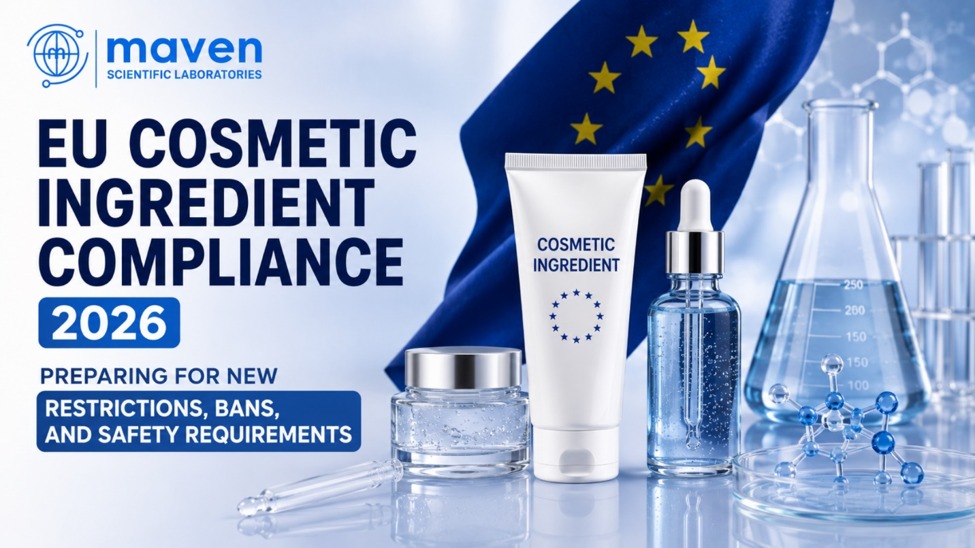
July 15, 2026
What Updated EU Cosmetic Regulations, Ingredient Safety Assessments, Restricted Substances, Safety Documentation, and Regulatory Compliance Are Reshaping Cosmetic Formulations
Ingredient safety remains a key focus of the European cosmetics regulatory landscape. As scientific evidence evolves, the European Union continues to update the Cosmetics Regulation (EC) No. 1223/2009, introducing new restrictions, prohibitions, and revised conditions for the use of cosmetic ingredients.
The latest regulatory updates affect 12 cosmetic ingredients, including fragrances, hair dye substances, oral care ingredients, and certain impurities. Cosmetic companies should proactively review formulations, assess ingredient portfolios, update Product Information Files (PIFs), and strengthen regulatory compliance to ensure products remain compliant within the applicable transition periods.
Why These Regulatory Updates Matter
The EU regularly evaluates cosmetic ingredients through scientific opinions issued by the Scientific Committee on Consumer Safety (SCCS) to ensure consumer protection and product safety.
Recent amendments introduce:
- New ingredient restrictions
- Revised concentration limits
- Additional labeling requirements
- Ingredient reclassifications
- New prohibited substances
- Stricter impurity controls
- Updated safety assessment expectations
- Compliance transition deadlines
Without timely preparation, companies may face:
- Non-compliant formulations
- Product withdrawal risks
- Delayed product launches
- Reformulation costs
- Supply chain disruptions
- Regulatory enforcement actions
- Increased documentation requirements
- Market access challenges
Executive Overview
The latest EU cosmetic ingredient updates require manufacturers and brand owners to strengthen formulation review and regulatory compliance processes.
A future-ready compliance strategy should be:
- Regulatory complaint
- Consumer safety focused
- Scientifically supported
- Risk-based
- Well documented
- Lifecycle managed
- Globally aligned
- Inspection ready
- Supported by robust safety assessments
- Backed by continuous regulatory intelligence
Organizations adopting these practices can reduce regulatory risks while maintaining uninterrupted market access.
Understanding the Latest EU Cosmetic Ingredient Updates
The recent amendments impact 12 cosmetic ingredients, introducing:
- New restrictions on ingredient use
- Revised maximum concentration limits
- Updated conditions of use
- New labeling obligations
- Ingredient prohibitions
- Additional impurity limits
- Enhanced safety evaluation requirements
The updates reflect ongoing scientific assessments and evolving consumer safety expectations.
Key Benefits of Early Compliance
- Reduced regulatory risk
- Smoother market access
- Improved consumer confidence
- Better formulation consistency
- Faster regulatory readiness
- Stronger product safety documentation
- More efficient compliance management
- Better supplier oversight
What Is Cosmetic Ingredient Compliance Readiness?
Cosmetic ingredient compliance readiness is an organization's ability to evaluate, document, and manage formulations in accordance with current EU cosmetic legislation.
Core capabilities include:
- Ingredient portfolio review
- Formula compliance assessment
- SCCS opinion monitoring
- Product Information File (PIF) updates
- Cosmetic Product Safety Report (CPSR) reviews
- Supplier documentation verification
- Label compliance
- Regulatory gap assessments
- Change management
- Regulatory intelligence
Traditional Compliance vs. Proactive Compliance
| Traditional Approach | Proactive Compliance |
| Reactive reformulation | Early regulatory planning |
| Manual ingredient reviews | Continuous compliance monitoring |
| Limited supplier oversight | Strong supplier qualification |
| Periodic documentation | Continuous documentation updates |
| Compliance after publication | Regulatory intelligence-driven decisions |
| Higher compliance risk | Improved regulatory readiness |
Key Drivers Behind the New Restrictions
1. Consumer Safety
Scientific evaluations continue to identify ingredients requiring updated safety measures.
2. Scientific Progress
New toxicological data supports revised restrictions and concentration limits.
3. Regulatory Modernization
The EU continues to strengthen ingredient oversight through regular regulatory updates.
4. Transparency
Consumers increasingly expect clear labeling and safe product formulations.
5. Global Regulatory Alignment
International markets are placing greater emphasis on ingredient safety, documentation, and traceability.
Key Drivers of Cosmetic Ingredient Compliance
| Industry Driver | Business Impact |
| Scientific assessments | Improved product safety |
| Updated restrictions | Better regulatory compliance |
| Consumer expectations | Increased transparency |
| Regulatory modernization | Stronger market confidence |
| Supplier oversight | Better ingredient quality |
| Safety documentation | Reduced compliance risk |
Why Ingredient Portfolio Reviews Matter
Many cosmetic companies continue using formulations developed years ago.
As regulations evolve, organizations should routinely review:
- Raw materials
- Ingredient specifications
- Supplier declarations
- Concentration limits
- Restricted substances
- Impurity profiles
- Safety documentation
- Label claims
Regular portfolio reviews reduce compliance risks before products reach the market.
Benefits of Proactive Ingredient Management
| Capability | Business Benefit |
| Formula review | Improved compliance |
| Supplier verification | Better traceability |
| Documentation updates | Regulatory readiness |
| Safety assessments | Enhanced consumer protection |
| Regulatory intelligence | Faster response to changes |
| Lifecycle management | Greater operational efficiency |
Building a Future-Ready Compliance Strategy
Successful organizations should focus on:
- Ingredient portfolio reviews
- Continuous regulatory monitoring
- Safety assessment updates
- Supplier qualification
- Documentation management
- Label verification
- Change control
- Cross-functional collaboration
Assessing Ingredient Compliance Readiness
1. Formulation Review
Evaluation:
- Restricted ingredients
- Maximum concentration
- Ingredient substitutions
- Safety margins
- Product categories
2. Safety Documentation
Review:
- CPSRs
- PIFs
- Toxicological assessments
- Stability data
- Supporting evidence
3. Supplier Management
Assess:
- Technical documentation
- Certificates
- Ingredient specifications
- Impurity information
- Compliance declarations
4. Label Compliance
Verify:
- Ingredient listings
- Warnings
- Claims
- Usage instructions
- Regulatory statements
5. Regulatory Intelligence
Monitor:
- SCCS opinions
- European Commission amendments
- New ingredient restrictions
- Safety guidance
- Future regulatory proposals
Compliance Readiness Assessment
| Assessment Area | Objective |
| Ingredient Review | Ensure formulation compliance |
| Safety Documentation | Maintain regulatory readiness |
| Supplier Management | Improve traceability |
| Label Compliance | Meet legal requirements |
| Regulatory Intelligence | Anticipate future changes |
| Change Management | Support continuous compliance |
Best Practices
1. Review Formulations Early
Identify impacted ingredients before regulatory deadlines.
2. Strengthen Supplier Oversight
Maintain updated technical documentation and compliance declarations.
3. Update Safety Documentation
Ensure CPSRs and PIFs reflect the latest regulatory requirements.
4. Monitor Regulatory Changes
Track SCCS opinions, Commission Regulations, and ingredient amendments.
5. Promote Cross-Functional Collaboration
Engage:
- Regulatory Affairs
- Product Development
- R&D
- Toxicology
- Quality Assurance
- Procurement
- Manufacturing
- Marketing
Common Challenges
Organizations often face:
- Legacy formulations
- Incomplete supplier documentation
- Changing ingredient specifications
- Reformulation complexity
- Tight compliance timelines
- Global regulatory differences
- Resource limitations
- Label update requirements
Common Mistakes
Avoid:
- Waiting until transition deadlines
- Ignoring supplier documentation
- Delaying safety assessment updates
- Weak regulatory monitoring
- Inadequate formulation reviews
- Poor change management
EU Cosmetic Ingredient Compliance Roadmap
| Activity | Frequency | Benefit |
| Monitor regulatory updates | Monthly | Regulatory readiness |
| Review formulations | Ongoing | Better compliance |
| Update CPSRs | As needed | Improved safety documentation |
| Review supplier files | Periodically | Stronger traceability |
| Train compliance teams | Annually | Greater awareness |
| Conduct gap assessments | Before implementation | Reduced compliance risk |
Future Trends
Emerging developments include:
- Increased SCCS safety evaluations
- Additional ingredient restrictions
- Greater focus on impurities
- Enhanced digital compliance systems
- AI-supported ingredient assessments
- Sustainable ingredient evaluation
- Greater supply chain transparency
- Stronger global regulatory harmonization
Business Benefits
| Business Function | Key Benefit |
| Regulatory Affairs | Improved compliance |
| Product Development | Faster reformulation |
| Quality Assurance | Better documentation |
| Procurement | Stronger supplier oversight |
| Marketing | Increased consumer confidence |
| Executive Leadership | Reduced regulatory risk |
Frequently Asked Questions
1. Why has the EU updated cosmetic ingredient requirements?
To strengthen consumer safety based on new scientific evidence and risk assessments.
2. How many ingredients are affected?
The latest update impacts 12 cosmetic ingredients, including fragrances, hair dyes, oral care ingredients, and certain impurities.
3. Do companies need to reformulate products?
Products containing affected ingredients may require reformulation, updated labeling, or revised safety documentation depending on the regulatory changes.
4. What documentation should be reviewed?
Product Information Files (PIFs), Cosmetic Product Safety Reports (CPSRs), supplier documentation, ingredient specifications, and labeling.
5. What are the biggest compliance challenges?
Managing reformulations, updating safety assessments, supplier verification, and meeting transition timelines.
6. How can companies prepare?
- Review formulations
- Verify ingredient concentrations
- Update PIFs and CPSRs
- Assess supplier documentation
- Monitor regulatory developments
- Conduct compliance gap assessments
7. How can Maven Regulatory Solutions help?
Maven supports:
- Cosmetic regulatory compliance
- Formula reviews
- CPSR preparation
- PIF compilation
- Ingredient compliance assessments
- Regulatory gap analysis
- Label compliance reviews
- Supplier documentation support
- Regulatory intelligence
- EU cosmetics consulting
Conclusion
The latest EU cosmetic ingredient restrictions reinforce the importance of continuous regulatory monitoring, robust safety assessments, and proactive formulation management. Companies that review affected ingredients early, strengthen supplier oversight, and update compliance documentation will be better positioned to maintain uninterrupted access to the EU market while protecting consumer safety.
Why Choose Maven Regulatory Solutions?
Maven Regulatory Solutions helps cosmetic manufacturers and brand owners navigate evolving EU cosmetic regulations through ingredient compliance assessments, formulation reviews, CPSR preparation, PIF compilation, regulatory gap assessments, labeling compliance, supplier documentation reviews, and ongoing regulatory intelligence. Our experts support organizations in maintaining compliant, safe, and market-ready cosmetic products.

Post a comment