
July 08, 2026
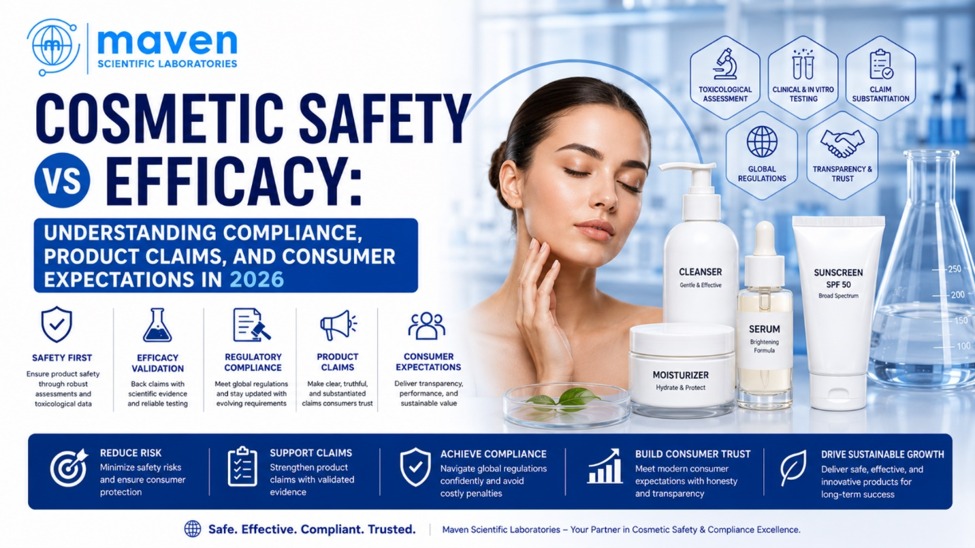
What Cosmetic Product Safety Assessments (CPSR), Claims Substantiation, EU Cosmetics Regulation, and Scientific Evidence Help Manufacturers Build Compliant and Trusted Cosmetic Products
A cosmetic product can be safe without being highly effective, and effective without being suitable for every consumer. Under EU Cosmetics Regulation (EC) No. 1223/2009, every cosmetic product must undergo a Cosmetic Product Safety Assessment (CPSR) before being placed on the market. However, efficacy is only required when a product makes specific claims, which must be truthful, supported by adequate evidence, and comply with Commission Regulation (EU) No. 655/2013. For cosmetic manufacturers, balancing product safety, scientifically substantiated claims, and regulatory compliance is essential for successful market access and consumer trust.
Why Understanding Cosmetic Safety and Efficacy Matters
Consumers frequently ask:
- "Is this cream good?"
- "Does this serum really work?"
- "Is this product safe for my skin?"
While these questions seem straightforward, they combine two completely different regulatory concepts safety and efficacy.
For manufacturers, importers, and brand owners, understanding this distinction is critical. Safety determines whether a cosmetic product can legally enter the market, while efficacy determines whether marketing claims can be made and defended with scientific evidence.
Misunderstanding these concepts may lead to:
- Non-compliant marketing claims
- Regulatory enforcement
- Product recalls
- Consumer complaints
- Reputational damage
- Increased regulatory scrutiny
- Loss of customer confidence
- Delayed product launches
Today, cosmetic compliance extends beyond product formulation it includes robust safety assessments, scientifically substantiated claims, and transparent communication.
Executive Overview
A modern cosmetic compliance program should ensure products are:
- Safe for intended use
- Scientifically assessed
- Claims substantiated
- Consumer-focused
- Legally compliant
- Well documented
- Risk managed
- Inspection ready
- Supported by regulatory intelligence
- Continuously monitored throughout the product lifecycle
Companies adopting these practices strengthen regulatory compliance while building long-term consumer confidence.
Cosmetic Safety: A Legal Requirement Before Market Placement
Within the European Union, cosmetic products cannot be marketed unless they meet the requirements of Regulation (EC) No. 1223/2009.
Before commercialization, every cosmetic product requires:
- Cosmetic Product Safety Assessment (CPSA)
- Cosmetic Product Safety Report (CPSR)
- Ingredient safety evaluation
- Exposure assessment
- Toxicological review
- Margin of Safety (MoS) evaluation
- Qualified Safety Assessor approval
- Product Information File (PIF)
Safety assessment considerations:
- Ingredient toxicology
- Ingredient concentration
- Intended use
- Frequency of application
- Area of exposure
- Target population
- Foreseeable misuse
Only after demonstrating acceptable safety can a cosmetic product legally enter the EU market.
Safety Does Not Mean Zero Risk
A common misconception is that regulatory approval guarantees every consumer will have the same experience.
Even compliant cosmetic products may cause:
- Allergic reactions
- Individual intolerance
- Skin irritation
- Contact sensitivity
- Misuse-related effects
Regulatory safety assessments evaluate population-level risk rather than guaranteeing identical outcomes for every individual.
Appropriate labeling, warnings, instructions for use, and allergen declarations help minimize these residual risks.
What Cosmetic Efficacy Really Means
Unlike safety, efficacy is not a pre-market authorization requirement.
Instead, efficacy becomes relevant whenever a cosmetic product claims to:
- Moisturize
- Smooth wrinkles
- Brighten skin
- Improve elasticity
- Reduce redness
- Enhance radiance
- Strengthen hair
- Improve appearance
Under Commission Regulation (EU) No. 655/2013, cosmetic claims must be:
- Truthfully
- Honest
- Fair
- Supported by scientific evidence
- Understandable
- Not misleading
Products may be legally marketed without demonstrating efficacy provided they do not make unsupported performance claims.
Safety vs. Efficacy: What's the Difference?
| Cosmetic Safety | Cosmetic Efficacy |
| Required before market placement | Required only for product claims |
| Protects consumer health | Supports marketing statements |
| Based on toxicological assessment | Based on scientific studies |
| Governed by EU Cosmetics Regulation | Governed by Cosmetic Claims Regulation |
| Evaluates risk | Evaluates product performance |
| Mandatory | Conditional |
Why Consumers Often Confuse Safety and Effectiveness
When consumers ask whether a product is "good," they often mean several different things:
- Is it safe?
- Will it work?
- Is it better than another product?
- Will I see visible results?
- Is it suitable for my skin?
Each question requires a different scientific and regulatory answer.
A product may be:
- Extremely safe but modest cosmetic benefits
- Highly effective for one skin type but not another
- Suitable for one intended use but inappropriate for different expectations
Individual Variability Influences Cosmetic Performance
Unlike medicines, cosmetic performance is highly dependent on individual characteristics.
Results vary according to:
- Skin type
- Age
- Climate
- Lifestyle
- Genetics
- Existing skin conditions
- Product usage
- Frequency of application
Even well-designed efficacy studies cannot guarantee identical outcomes across every consumer.
How Cosmetic Claims Are Scientifically Substantiated
Manufacturers support cosmetic claims using various forms of evidence, including:
- Instrumental testing
- Clinical evaluations
- Dermatological assessments
- Consumer perception studies
- Scientific literature
- Published research
- In Vitro Studies
- Expert evaluations
Examples include:
- Craniometry for hydration
- Profilometry for wrinkle analysis
- Skin elasticity measurements
- Consumer satisfaction questionnaires
Study outcomes represent average results under controlled conditions, not guaranteed individual performance.
Building a Strong Cosmetic Compliance Strategy
Successful cosmetic companies integrate:
- Product safety assessments
- Claims substantiation
- Scientific documentation
- Regulatory intelligence
- Risk management
- Internal quality systems
- Product lifecycle management
- Cross-functional collaboration
This approach minimizes compliance risks while supporting responsible innovation.
Assessing Cosmetic Compliance Readiness
1. Product Safety
Evaluation:
- Ingredient safety
- Toxicological profiles
- Exposure calculations
- Margin of Safety
- Safety documentation
2. Claims Compliance
Review:
- Marketing claims
- Scientific support
- Consumer communication
- Advertising materials
- Product labeling
3. Regulatory Documentation
Ensure:
- Product Information File (PIF)
- CPSR
- Ingredient specifications
- Stability data
- Compatibility studies
- Supporting evidence
4. Quality Management
Assess:
- Manufacturing controls
- GMP compliance
- Batch consistency
- Supplier qualification
- Change management
5. Regulatory Intelligence
Monitor:
- EU Cosmetics Regulation updates
- SCCS Opinions
- Ingredient restrictions
- Claims guidance
- Emerging scientific evidence
Cosmetic Compliance Readiness Assessment
| Assessment Area | Objective |
| Product Safety | Protect consumer health |
| CPSR | Demonstrate compliance |
| Claims Substantiation | Support marketing claims |
| Regulatory Documentation | Maintain inspection readiness |
| Quality Systems | Improve product consistency |
| Regulatory Intelligence | Monitor legislative changes |
Best Practices
1. Conduct Robust Safety Assessments
Focus on:
- Toxicological evaluation
- Exposure assessment
- Margin of Safety calculations
- Ingredient review
- Scientific documentation
2. Strengthen Claims Substantiation
Implement:
- Clinical testing
- Instrumental studies
- Consumer evaluations
- Scientific literature reviews
- Expert assessments
3. Maintain Comprehensive Documentation
Include:
- CPSR
- Product Information File
- Stability reports
- Compatibility studies
- Labeling documentation
- Claims evidence
4. Encourage Cross-Functional Collaboration
Engage:
- Regulatory Affairs
- Product Development
- Toxicologists
- Quality Assurance
- Marketing
- Clinical teams
- Manufacturing
- Scientific Affairs
5. Strengthen Regulatory Intelligence
Continuous monitor:
- EU regulatory updates
- SCCS Opinions
- Ingredient restrictions
- Cosmetic claims guidance
- International regulatory trends
6. Common Challenges
Organizations frequently encounter:
- Unsupported marketing claims
- Weak scientific documentation
- Inconsistent product labeling
- Limited claims evidence
- Regulatory changes
- Global market differences
- Consumer misconceptions
- Resource limitations
- Cross-functional communication gaps
- Documentation inconsistencies
7. Common Mistakes
Avoid:
- Assuming safety equals efficacy
- Making exaggerated claims
- Using insufficient scientific evidence
- Overlooking regulatory updates
- Poor documentation practices
- Inadequate post-market monitoring
Cosmetic Compliance Implementation Roadmap
| Activity | Frequency | Benefit |
| Review CPSRs | Periodically | Continued compliance |
| Update claims evidence | Ongoing | Stronger substantiation |
| Monitor regulations | Monthly | Regulatory readiness |
| Review product labels | Quarterly | Compliance assurance |
| Train internal teams | Annually | Better awareness |
| Conduct compliance audits | Periodically | Reduced regulatory risk |
Future Trends
Emerging developments include:
- AI-assisted safety assessments
- Digital Product Information
- Advanced in vitro testing
- Sustainable cosmetic formulations
- Personalized skincare
- Alternative toxicology methods
- Enhanced claims substantiation
- Digital compliance management
- Global regulatory harmonization
- Increased transparency requirements
- Data-driven product development
- Consumer-centric labeling
Business Benefits
| Business Function | Key Benefit |
| Regulatory Affairs | Improved compliance |
| Product Development | Stronger formulations |
| Marketing | Credible product claims |
| Quality Assurance | Better documentation |
| Executive Leadership | Reduced regulatory risk |
| Brand Management | Increased consumer trust |
Frequently Asked Questions
1. Is cosmetic safety mandatory before marketing?
Yes. Every cosmetic product marketed in the EU must undergo a Cosmetic Product Safety Assessment (CPSA) and have a Cosmetic Product Safety Report (CPSR) in accordance with Regulation (EC) No. 1223/2009.
2. Does safe cosmetics always work?
Not necessarily. Safety ensures the product does not pose unacceptable risks under normal conditions of use. Product performance depends on its intended purpose, claims, and individual user response.
3. What is the difference between safety and efficacy?
Safety protects consumer health, while efficacy demonstrates whether a product achieves its claimed cosmetic effect.
4. Are efficacy studies mandatory?
Only when cosmetic claims require scientific substantiation.
5. Can safe products still cause allergic reactions?
Yes. Individual sensitivity, allergies, or misuse may still result in adverse reactions.
6. How are cosmetic claims substantiated?
Through clinical studies, instrumental testing, consumer perception studies, scientific literature, and expert evaluations.
7. Does "natural" automatically mean safer?
No. Natural and synthetic ingredients are evaluated using the same scientific safety principles.
8. Why is scientific evidence important?
It ensures cosmetic claims are truthful, reliable, and compliant with EU regulations.
9. How can companies maintain compliance?
By conducting robust CPSRs, substantiating claims, maintaining regulatory documentation, monitoring legislation, and implementing strong quality systems.
10. How can Maven Regulatory Solutions help?
Maven supports:
- Cosmetic Product Safety Reports (CPSR)
- Cosmetic safety assessments
- Claims substantiation strategy
- Product Information File (PIF) preparation
- Ingredient compliance reviews
- Regulatory intelligence
- EU cosmetic compliance
- Gap assessments
- Labeling compliance
- Global Cosmetic Regulatory Consulting
Conclusion
Safety and efficacy are complementary but distinct pillars of cosmetic compliance. While safety is a legal prerequisite for placing products on the market, efficacy becomes essential when manufacturers communicate product benefits through claims.
Companies that combine scientifically robust safety assessments, well-substantiated claims, comprehensive regulatory documentation, and proactive regulatory intelligence can achieve compliance, reduce business risk, and strengthen consumer confidence in an increasingly competitive global cosmetics market.
Why Choose Maven Regulatory Solutions?
Maven Regulatory Solutions provides end-to-end cosmetic regulatory support, helping manufacturers and brand owners navigate global cosmetic compliance through CPSR preparation, Product Information File (PIF) development, ingredient safety assessments, claims substantiation strategies, labeling compliance, regulatory intelligence, and international market access consulting. Our expert-driven approach enables organizations to launch safe, compliant, and commercially successful cosmetic products across global markets.

Post a comment