
March 28, 2025
The European fertilizer market is governed by a robust regulatory framework designed to ensure product safety, environmental sustainability, and seamless trade within the EU Single Market. The cornerstone of this framework is the EU Fertilizing Products Regulation, which establishes harmonized rules for the manufacture, labeling, and commercialization of fertilizing products across Europe.
For manufacturers of synthetic fertilizers, compliance with this regulation is critical to achieving CE marking, market access, and long-term regulatory success.
This comprehensive guide by Maven Regulatory Solutions explores key regulatory requirements, contaminant limits, CE marking pathways, and sustainability objectives under EU law.
What Are Synthetic Fertilizers?
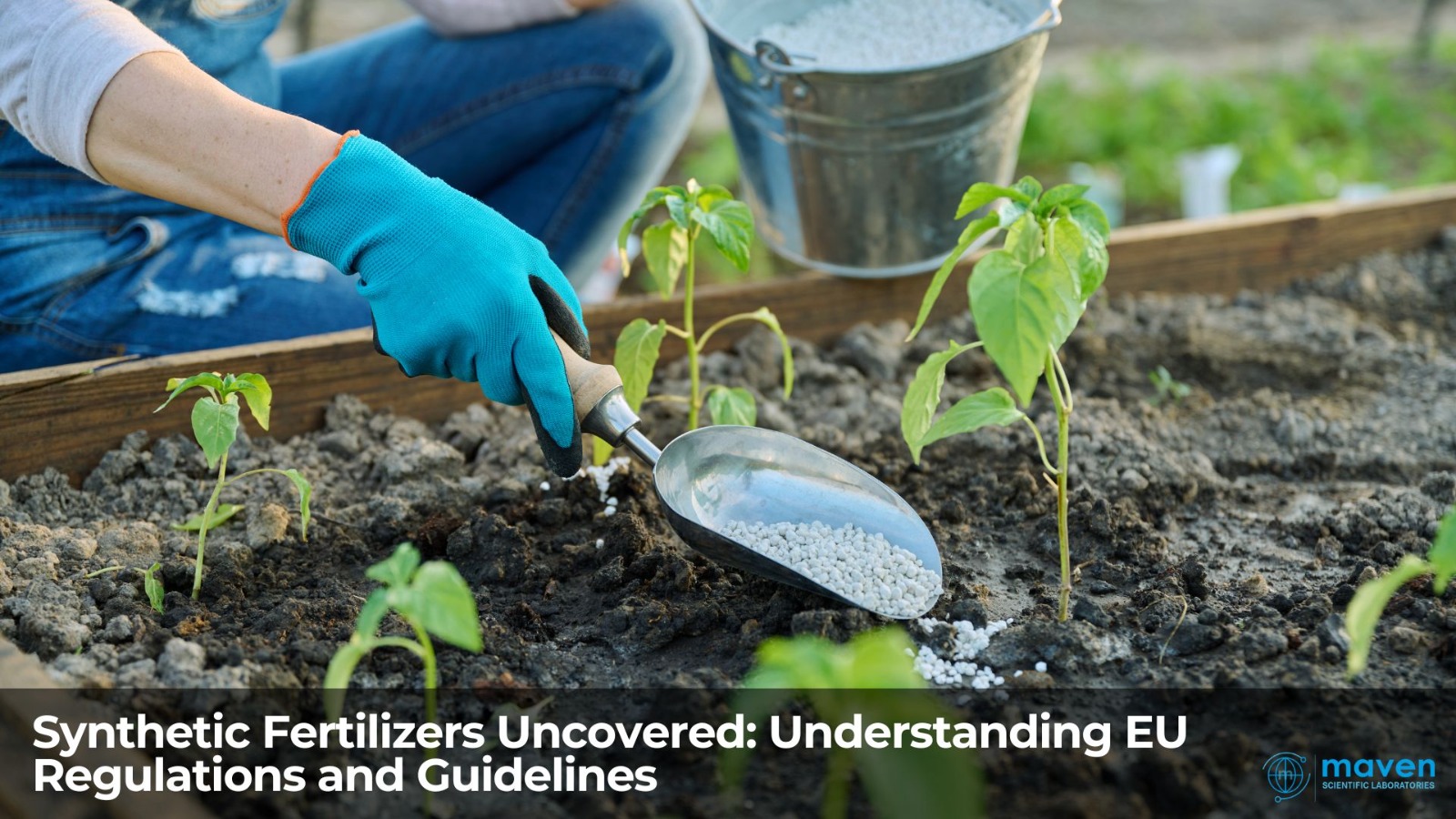
Synthetic fertilizers are chemically manufactured nutrient products designed to enhance plant growth by delivering essential macronutrients:
- Nitrogen (N)
- Phosphorus (P)
- Potassium (K)
Key Characteristics
- Fast-acting performance: Water-soluble and rapidly absorbed
- Precision formulation: Custom NPK ratios for specific crops
- Multiple formats: Granules, liquids, and controlled-release forms
While highly effective, excessive use may contribute to:
- Soil degradation
- Nutrient runoff
- Water pollution
Overview of EU Fertilizing Products Regulation (EU) 2019/1009
The EU Fertilizing Products Regulation (FPR), applicable since July 2022, replaces earlier legislation and expands regulatory scope beyond mineral fertilizers.
Expanded Product Categories
| Category | Examples |
| Mineral Fertilizers | Synthetic NPK fertilizers |
| Organic Fertilizers | Compost-based nutrients |
| Soil Improvers | Lime, soil conditioners |
| Growing Media | Substrates for plant growth |
| Plant Biostimulants | Microbial and non-microbial enhancers |
Core Objectives of the Regulation
- Harmonization – Uniform safety and quality standards across the EU
- Sustainability – Support circular economy initiatives
- Market Access – Enable free movement via CE marking
Key Compliance Requirements for Synthetic Fertilizers
1. CE Marking and Conformity Assessment
To place products on the EU market, manufacturers must obtain CE marking, demonstrating compliance with FPR requirements.
Key Steps
- Perform conformity assessment through notified bodies
- Comply with Component Material Categories (CMCs)
- Meet labeling and safety requirements
CE marking enables free circulation across all EU Member States.
2. Component Material Categories (CMCs)
CMCs define permissible raw materials used in fertilizers.
| CMC Category | Description |
| CMC 1 | Virgin materials (e.g., mined minerals) |
| CMC 3 | Compost |
| CMC 5 | Digestate |
| CMC 11 | By-products under specific conditions |
3. Contaminant Limits and Safety Standards
The FPR sets strict thresholds for hazardous substances to protect human health and the environment.
Key Limits
- Cadmium (Cd): ≤ 60 mg/kg in phosphate fertilizers
- Restrictions on:
- Lead (Pb)
- Mercury (Hg)
- Arsenic (As)
These limits are critical for soil protection and long-term sustainability.
4. Labeling and Documentation Requirements
Fertilizer labels must include:
- Nutrient content (NPK values)
- Usage instructions
- Safety precautions
- Manufacturer/importer details
Accurate labeling ensures safe use and regulatory compliance.
5. Optional Harmonization Approach
Manufacturers can choose between:
| Pathway | Description |
| EU Harmonized (CE Marking) | Access entire EU market |
| National Rules | Limited to specific Member States |
Sustainability and Environmental Goals
The FPR aligns with broader EU policies such as:
- European Green Deal
- Circular Economy Action Plan
Key Sustainability Focus Areas
- Recycling organic and secondary raw materials
- Reducing greenhouse gas emissions
- Promoting low-carbon fertilizers
- Decreasing reliance on imported raw materials
Obligations for Economic Operators
Manufacturers
- Conduct conformity assessments
- Ensure compliance with CMCs and safety standards
- Maintain technical documentation
Importers and Distributors
- Verify CE marking compliance
- Ensure proper storage and transport
- Maintain traceability
Authorized Representatives
- Act on behalf of non-EU manufacturers
- Ensure regulatory documentation is complete
Post-Market Surveillance and Compliance
Manufacturers must:
- Monitor product performance
- Report on safety issues
- Implement corrective actions
Ensures continuous compliance and consumer protection.
Key Challenges in EU Fertilizer Compliance
1. Regulatory Complexity
- Detailed technical and safety requirements
2. Contaminant Control
- Maintaining compliance with strict thresholds
3. Supply Chain Constraints
- Sourcing compliant raw materials
4. Certification Costs
- CE marking and testing expenses
Latest Trends in EU Fertilizer Regulation
1. Increased Focus on Sustainable Fertilizers
- Bio-based and recycled nutrient products
2. Stricter Environmental Monitoring
- Soil and water protection initiatives
3. Digital Product Passports (Emerging)
- Enhanced traceability and compliance tracking
4. Innovation in Low-Carbon Fertilizers
- Green ammonia and eco-friendly production
Strategic Compliance Recommendations
| Area | Strategy |
| Product Development | Use compliant raw materials (CMC-aligned) |
| Testing | Conduct contamination and safety testing |
| Certification | Plan CE marking early |
| Documentation | Maintain robust technical files |
| Sustainability | Align with EU Green Deal goals |
Business Opportunities Under EU Regulations
Companies that comply with FPR can:
- Access the entire EU Single Market
- Build trust through certified quality
- Develop sustainable fertilizer innovations
- Gain competitive advantage in global markets
Conclusion
The EU Fertilizing Products Regulation represents a transformative step toward harmonized, safe, and sustainable fertilizer production in Europe.
For synthetic fertilizer manufacturers, compliance is not just a regulatory requirement, it is a strategic opportunity to:
- Expand market access
- Driving innovation
- Contribute to environmental sustainability
By adopting a proactive compliance strategy and aligning with EU sustainability goals, businesses can achieve long-term success in the evolving agricultural landscape.
Frequently Asked Questions
1. What is EU Regulation 2019/1009?
It governs fertilizer safety, labeling, and CE marking in the EU.
2. Is CE marking mandatory for fertilizers?
Only for products marketed under EU harmonized rules.
3. What are CMCs?
Categories define acceptable raw materials in fertilizers.
4. What is the cadmium limit in fertilizers?
Maximum 60 mg/kg for phosphate fertilizers.
5. Can fertilizers be sold without CE marking?
Yes, under national regulations within specific countries.

Post a comment