
November 01, 2025
EU Sustainability Regulations Are Reshaping Packaging Strategy
The European Union is aggressively driving sustainability transformation through regulatory frameworks aligned with the circular economy.
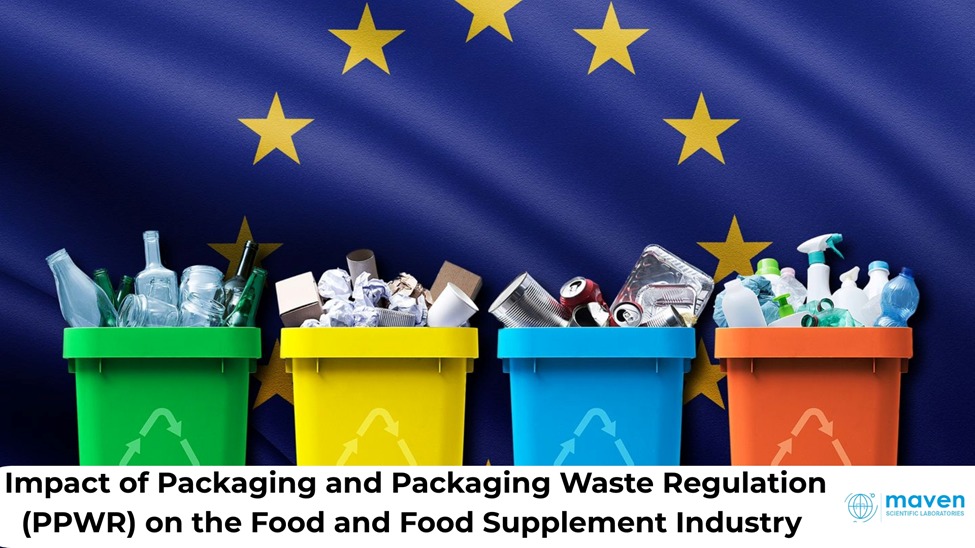
At the center of this shift is the Packaging and Packaging Waste Regulation (EU) 2025/40, a landmark regulation redefining packaging compliance across all industries.
Unlike the previous Packaging and Packaging Waste Directive, this regulation introduces:
- Legally binding requirements
- Harmonized EU-wide enforcement
- Strict sustainability targets
- Measurable compliance obligations
For the food and nutraceutical industry, this creates a new compliance reality where packaging decisions directly affect market access, regulatory approval, and brand positioning.
What is the EU PPWR regulation and its impact on food supplements?
The Packaging and Packaging Waste Regulation (EU) 2025/40 mandates recyclable or reusable packaging by 2030, strict labeling rules, and sustainability compliance, significantly impacting food and supplement companies’ packaging design, costs, and EU market access.
Scope of PPWR Across the Food & Supplement Value Chain
PPWR applies to all stakeholders:
- Food manufacturers
- Nutraceutical and dietary supplement brands
- Importers and exporters
- E-commerce food businesses
- Private label and contract manufacturers
Packaging Types Covered
- Primary (direct contact packaging)
- Secondary (group packaging)
- Transport packaging
- E-commerce packaging
This broad scope ensures that every packaging component must meet sustainability and compliance criteria.
Core Objectives Driving PPWR Compliance
| Objective | Description |
| Packaging Waste Reduction | Minimize material usage |
| Recyclability | 100% recyclable by 2030 |
| Reuse Systems | Promote refill & reuse |
| Transparency | Clear labeling rules |
| Circular Economy | Closed-loop systems |
Recyclability Mandate: The Biggest Compliance Shift
PPWR requires all packaging to be:
- Fully recyclable
- Compatible with EU recycling systems
- Economically viable for processing
High-Risk Materials
- Multi-layer plastics
- Composite laminates
- Non-recyclable polymers
Industry Impact
| Material Type | PPWR Risk Level | Required Action |
| Multi-layer plastic | High | Replace or redesign |
| Glass | Low | Maintain with optimization |
| Aluminum | Low | Recyclable but labeling required |
| Bioplastics | Medium | Certification needed |
Reuse and Refill Systems: A Structural Change
The regulation promotes reuse-driven packaging models, especially for:
- Beverage containers
- Ready-to-eat food packaging
- Supplement containers
Companies must integrate:
- Reverse logistics systems
- Cleaning and reuse cycles
- Deposit-return mechanisms
Packaging Minimization and Design Optimization
Excess packaging is now a regulatory risk.
Companies must:
- Justify packaging weight and volume
- Eliminate unnecessary layers
- Optimize material efficiency
This directly impacts premium supplement packaging strategies that rely on bulk and visual appeal.
Labeling and Environmental Claims Compliance
PPWR enforces strict labeling requirements:
- Recycling instructions
- Material Composition
- Disposal guidance
Green Claims Regulation
Claims such as:
- “Eco-friendly”
- “Sustainable”
- “Environmentally safe”
Must be:
- Scientifically proven
- Documented
- Verifiable
Failure results in greenwashing penalties and regulatory action.
Digital Product Passport: Future of Compliance
A digital transformation element under PPWR includes:
- QR-based packaging traceability
- Lifecycle sustainability data
- Consumer transparency tools
This enables regulators and consumers to verify compliance in real time.
Impact on Food Industry Operations
Operational Transformation
- Packaging redesign
- Material source changes
- Increased compliance documentation
Cost Implications
| Cost Driver | Impact Level |
| Packaging redesign | High |
| Sustainability testing | Medium |
| Compliance audits | Medium |
| Supply chain restructuring | High |
Impact on Food Supplement Industry
The supplement sector faces unique challenges:
- Small packaging formats
- Complex labeling requirements
- Shelf-life sensitivity
Key Risks
- Loss of product stability
- Label overcrowding
- Increased packaging costs
Supply Chain and Market Access Implications
Non-compliance may lead to:
- EU import rejection
- Delayed product launches
- Restricted distribution
Supply Chain Shifts
- Sustainable supplier sourcing
- Region-specific packaging design
- Increased compliance verification
Sustainability as a Business Advantage
Forward-thinking companies can leverage PPWR for:
- Brand differentiation
- Consumer trust
- Investor appeal
- ESG positioning
Strategic Compliance Framework
| Phase | Action | Outcome |
| Assessment | Packaging audit | Identify gaps |
| Analysis | Regulatory mapping | Compliance clarity |
| Redesign | Sustainable materials | Risk reduction |
| Validation | Testing | Approval readiness |
| Deployment | Market launch | Compliance assurance |
Consequences of non-compliance
Failure to comply can result in:
- Regulatory penalties
- Product recalls
- EU market bans
- Legal action
- Brand damage
PPWR transforms packaging into a regulated compliance asset.
Companies must move from:
- Reactive compliance
- To proactive regulatory strategy
Embedding compliance with product design and development is now essential.
How Maven Regulatory Solutions Supports PPWR Compliance
Maven Regulatory Solutions offers:
- Packaging compliance audits
- Recyclability assessments
- Label and claim validation
- Sustainable packaging strategy
- EU regulatory intelligence
Need help with EU PPWR packaging compliance?
- Avoid costly redesign errors
- Ensure faster EU approvals
- Achieve 100% compliance
- Strengthen sustainability positioning
Contact Maven Regulatory Solutions today
Frequently Asked Questions
1. What is PPWR in the EU?
PPWR (Packaging and Packaging Waste Regulation EU 2025/40) is a regulation requiring all packaging to be recyclable or reusable by 2030, with strict compliance and sustainability rules.
2. Does PPWR apply to food supplements?
Yes, all food and dietary supplement packaging sold in the EU must comply with PPWR requirements.
3. What are PPWR recyclability requirements?
Packaging must be technically and economically recyclable within EU waste management systems.
4. Are sustainability claims regulated under PPWR?
Yes, all environmental claims must be scientifically validated and cannot mislead consumers.
5. What happens if companies fail to comply with PPWR?
Non-compliance can lead to fines, product recalls, and restricted EU market access.
6. Do imported food products need PPWR compliance?
Yes, all imported products must meet EU packaging and labeling requirements.
7. What is a digital product passport in PPWR?
It is a digital system providing packaging sustainability data, traceability, and compliance information.
Outlook: Packaging Regulations Beyond 2026
- Increased enforcement across EU
- Expansion of sustainability laws globally
- AI-driven compliance tracking
- Mandatory digital transparency systems
Conclusion
The Packaging and Packaging Waste Regulation (EU) 2025/40 represents a major shift toward sustainable packaging.
For food and supplement companies:
- Compliance ensures market access
- Sustainability drives competitive advantage
- Early adoption reduces regulatory risk
Organizations that act now will lead to the evolving EU regulatory landscape.

Post a comment