
February 13, 2026
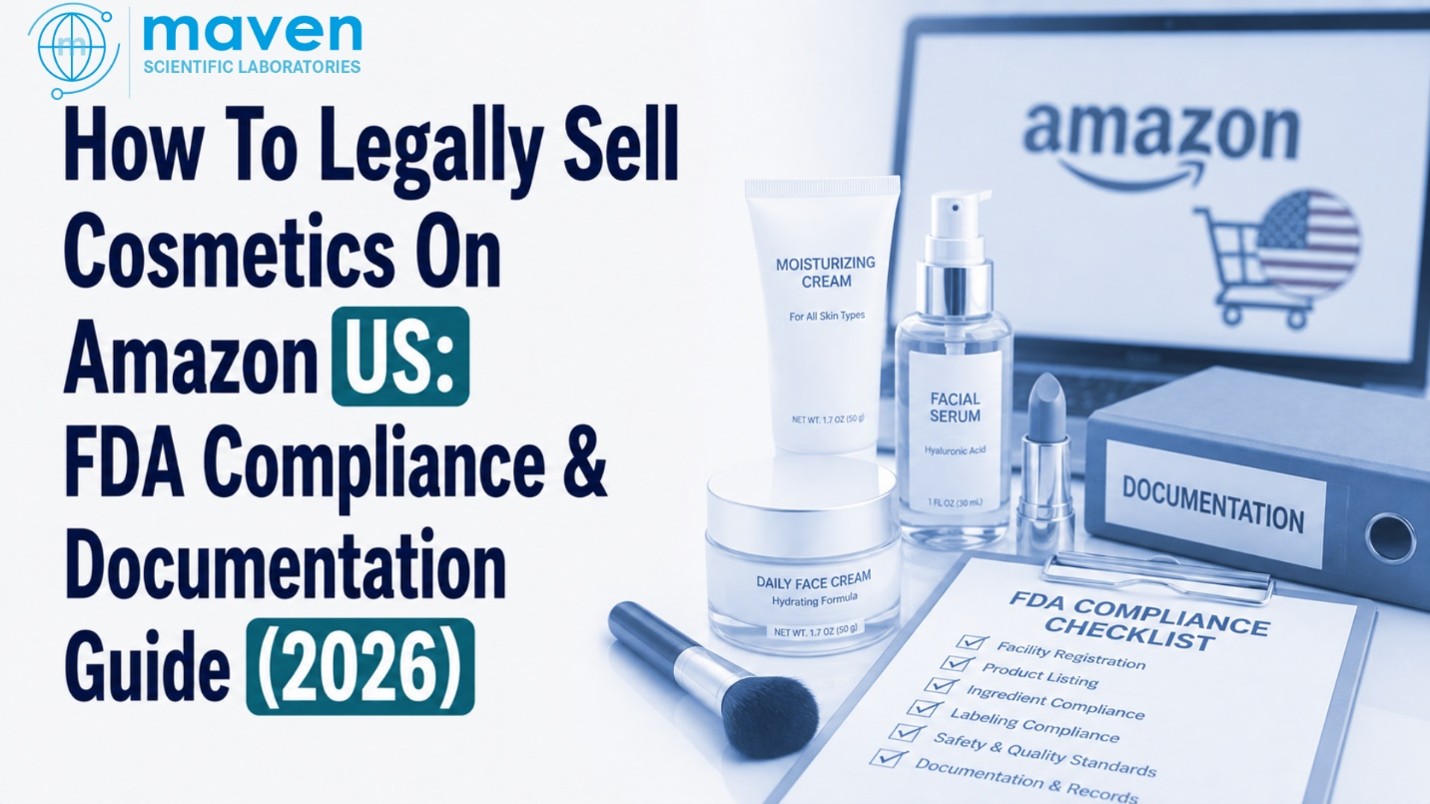
The United States remains one of the world's largest and most competitive cosmetic markets, and Amazon continues to be one of the leading sales channels for cosmetic brands, private label companies, importers, manufacturers, and distributors. However, selling cosmetics on Amazon US requires more than a high-quality product and effective marketing strategy. Brands must comply with FDA cosmetic regulations, Amazon marketplace policies, labeling standards, ingredient safety requirements, documentation obligations, and the expanding regulatory framework established under the Modernization of Cosmetics Regulation Act (MoCRA).
In recent years, both Amazon and U.S. regulators have significantly increased scrutiny of cosmetic products sold online. Non-compliant products may face listing removals, product suppression, account suspensions, regulatory warnings, recalls, import detentions, or enforcement actions.
Whether you are launching a skincare brand, importing beauty products, selling fragrances, marketing personal care items, or expanding into the U.S. market, regulatory readiness is essential.
This comprehensive guide by Maven Regulatory Solutions explains FDA cosmetic requirements, MoCRA obligations, Amazon compliance expectations, labeling standards, ingredient restrictions, documentation requirements, product safety considerations, and best practices for legally selling cosmetics on Amazon US in 2026.
Amazon Cosmetics Market Overview
Amazon has become one of the most important sales channels for cosmetic and personal care products in the United States.
Key Market Insights
- Beauty and personal care remain among Amazon's fastest-growing categories
- Regulatory enforcement for cosmetic products continues increasing
- Amazon frequently requests compliance documentation from sellers
- MoCRA has introduced additional FDA oversight requirements
- Consumer demand for ingredient transparency continues growing
- Product traceability expectations are becoming more stringent
Brands that establish strong compliance systems are better positioned for sustainable marketplace growth.
What Qualifies as a Cosmetic in the United States?
Under the Federal Food, Drug, and Cosmetic Act (FD&C Act), a cosmetic is generally defined as:
A product intended to be applied to the human body for cleansing, beautifying, promoting attractiveness, or altering appearance.
Common Cosmetic Categories
| Category | Examples |
| Skin Care | Creams, lotions, cleansers, serums, masks |
| Hair Care | Shampoos, conditioners, styling products |
| Makeup | Foundations, lipsticks, eye cosmetics |
| Fragrance | Perfumes, body sprays, colognes |
| Personal Care | Deodorants, nail products |
| Bath & Body | Scrubs, bath products, body lotions |
Products that claim to diagnose, treat, cure, mitigate, or prevent disease may be regulated as drugs rather than cosmetics.
Regulatory Authorities Governing Cosmetics
Cosmetics sold on Amazon US are primarily regulated by:
U.S. Food and Drug Administration (FDA)
Additional compliance requirements may involve:
- Consumer product safety regulations
- State-specific requirements
- Environmental regulations
- Amazon marketplace policies
Understanding both regulatory and marketplace obligations is critical for successful product commercialization.
Core U.S. Regulatory Framework for Cosmetics
Cosmetic products sold through Amazon must comply with several regulatory requirements.
Key Regulations
| Regulation | Purpose |
| Federal Food, Drug, and Cosmetic Act (FD&C Act) | Cosmetic safety and labeling |
| Modernization of Cosmetics Regulation Act (MoCRA) | Facility registration and product listing |
| Poison Prevention Packaging Act (PPPA) | Child-resistant packaging requirements |
| VOC Emission Standards | Regulation of aerosol and spray products |
| California Safe Cosmetics Program | Ingredient disclosure obligations |
Manufacturers, importers, and brand owners should assess all applicable requirements before product launch.
Understanding MoCRA Requirements
The Modernization of Cosmetics Regulation Act represents the most significant update to U.S. cosmetic regulation in decades.
Key MoCRA Requirements
- Cosmetic facility registration
- Cosmetic product listing
- Adverse event reporting systems
- Safety substantiation requirements
- Recordkeeping obligations
- FDA inspection authority expansion
MoCRA compliance is increasingly important for marketplace approval and long-term regulatory success.
Ingredient Compliance Requirements
Cosmetic ingredients must be safe for their intended use and comply with FDA restrictions.
Ingredient Compliance Expectations
Manufacturers should ensure products:
- Do not contain prohibited ingredients
- Meet safety requirements
- Are properly substantiated for intended use
- Comply with applicable state regulations
- Maintain ingredient traceability
Ingredient safety remains one of the most important aspects of cosmetic compliance.
Restricted and Prohibited Ingredients
Certain ingredients face significant regulatory restrictions.
Examples of Restricted or High-Risk Ingredients
| Ingredient Type | Regulatory Concern |
| Mercury Compounds | Toxicity risks |
| Chloroform | Carcinogenic concerns |
| Halogenated Salicylamides | Skin toxicity |
| Certain Drug Actives | Drug classification risks |
| Plastic Microbeads | Environmental restrictions |
Manufacturers should conduct ingredient reviews before commercialization.
Cosmetic Claims Compliance
Product claims can significantly impact regulatory classification.
Acceptable Cosmetic Claims
Examples include:
- Moisturizes skin
- Improve appearance
- Cleanses effectively
- Enhances shine
- Softens hair
High-Risk Claims
Examples include:
- Treats acne
- Eliminates eczema
- Heals skin disorders
- Stimulates hair growth as a medical treatment
- Prevents disease
Such claims may trigger drug classification and additional regulatory requirements.
Amazon-Specific Cosmetic Compliance Requirements
Amazon maintains its own compliance standards in addition to FDA requirements.
Sellers may be required to provide documentation during listing approval or compliance reviews.
Amazon Compliance Objectives
- Consumer safety protection
- Product authenticity verification
- Marketplace integrity
- Regulatory compliance support
Failure to meet Amazon requirements may result in listing restrictions.
Amazon Packaging Requirements
Cosmetic products should meet marketplace packaging expectations.
Packaging Standards
- Original manufacturer packaging
- Tamper-evident protection
- New and unused condition
- Secure shipping integrity
- Product identification systems
Proper packaging reduces compliance risks and consumer complaints.
Cosmetic Labeling Requirements
FDA labeling requirements apply to cosmetics sold through Amazon.
Required Label Elements
Manufacturers should generally include:
- Product identity statement
- Net contents declaration
- Ingredient declaration
- Manufacturer or distributor information
- Warning statements where applicable
- Directions for use when necessary
Labels must be truthful, accurate, and not misleading.
INCI Ingredient Labeling
Ingredient disclosure should follow recognized nomenclature practices.
Labeling Expectations
- International Nomenclature Cosmetic Ingredient (INCI) names
- Accurate ingredient order where applicable
- Complete ingredient declarations
- Consistent ingredient presentation
Clear labeling supports transparency and consumer confidence.
Labeling Practices to Avoid
Certain labeling practices create compliance risks.
Avoid Using
- FDA Approved statements
- FDA logos
- Disease treatment claims
- Misleading efficacy statements
- Tester or Not for Resale products
Misbranding violations can trigger enforcement actions.
Special Compliance Requirements for Certain Product Categories
Some cosmetic categories require additional review.
Hair Care Products
May require:
- VOC compliance assessments
- Aerosol safety reviews
- Ingredient evaluations
Skin Care Products
May require:
- Safety substantiation
- Claims review
- Stability assessments
Children's Cosmetics
May require:
- Additional safety testing
- Lead content evaluations
- Consumer product safety compliance
Category-specific requirements should be assessed during product development.
Hazardous Cosmetic Products
Certain cosmetic products may be classified as hazardous for transportation or storage purposes.
Products Often Requiring Additional Documentation
- Aerosol sprays
- Perfumes
- Essential oils
- Hair dyes
- Nail products
Hazard classifications may impact shipping, warehousing, and marketplace requirements.
Safety Data Sheets (SDS)
Amazon may request Safety Data Sheets for specific product categories.
SDS Purposes
- Hazard communication
- Transportation compliance
- Emergency response information
- Workplace safety support
Manufacturers should maintain current SDS documentation when applicable.
Required Documentation for Amazon Approval
Amazon frequently requests documentation to verify compliance.
Common Documentation Requirements
| Document | Purpose |
| FDA Facility Registration | MoCRA compliance |
| Cosmetic Product Listing | Regulatory documentation |
| GMP Documentation | Manufacturing quality verification |
| Certificate of Analysis (COA) | Product testing evidence |
| Laboratory Reports | Safety verification |
| Safety Data Sheets (SDS) | Hazard communication |
| Manufacturer Invoices | Product authenticity verification |
Document readiness significantly improves approval efficiency.
Good Manufacturing Practices (GMP)
While FDA cosmetic GMP regulations continue evolving, quality manufacturing systems remain essential.
GMP Benefits
- Consistent product quality
- Reduced contamination risks
- Enhanced traceability
- Improved regulatory readiness
- Greater marketplace confidence
Amazon often favors brands with documented quality systems.
Product Traceability Requirements
Traceability is becoming increasingly important across cosmetic supply chains.
Traceability Elements
- Batch numbers
- Lot identification systems
- Supplier records
- Manufacturing documentation
- Distribution records
Strong traceability supports recalls, investigations, and compliance audits.
Amazon Approval Process
Obtaining approval may require structured preparation.
Typical Approval Steps
1. Verify Product Classification
Confirm the product qualifies as a cosmetic.
2. Review Ingredient Compliance
Conduct ingredient and claims assessments.
3. Validate Labeling
Ensure compliance with FDA and Amazon requirements.
4. Prepare Documentation
Compile supporting regulatory records.
5. Submit Approval Request
Upload required documentation through Seller Central.
6. Respond to Compliance Reviews
Provide additional information if requested.
Preparation significantly reduces approval delays.
Common Compliance Challenges
Sellers frequently encounter issues involving:
- Drug-like claims
- Incomplete labeling
- Missing documentation
- Ingredient concerns
- Product classification errors
- Lack of traceability records
- Insufficient safety substantiation
Early compliance reviews help prevent marketplace disruptions.
2026 Compliance Trends for Amazon Cosmetic Sellers
Several trends are expected to shape cosmetic compliance.
Emerging Developments
- Increased MoCRA enforcement
- Greater ingredient transparency expectations
- Expanded supply chain traceability
- Digital compliance monitoring systems
- AI-assisted marketplace surveillance
- Enhanced documentation reviews
- Stronger consumer safety oversight
Brands should prepare for more proactive compliance management.
Quick Facts
- Cosmetics are not generally FDA approved before marketing
- MoCRA introduces new compliance obligations
- Amazon may request regulatory documentation at any time
- Ingredient safety substantiation is essential
- Cosmetic claims must avoid drug implications
- Traceability systems are increasingly important
- SDS documents may be required for certain products
- GMP programs support marketplace success
Why Amazon Cosmetic Compliance Matters
Failure to comply may result in:
- Listing removals
- Product suppression
- Account suspensions
- Import delays
- Product recalls
- Regulatory enforcement actions
- Financial losses
- Brand reputation damage
Strong compliance systems help support long-term marketplace growth.
How Maven Regulatory Solutions Supports Cosmetic Brands
Our Services
- FDA cosmetic compliance consulting
- MoCRA implementation support
- Facility registration assistance
- Product listing support
- Ingredient safety reviews
- Labeling compliance assessments
- Amazon documentation preparation
- GMP consulting
- Regulatory gap assessments
- Compliance monitoring programs
Why Choose Maven
- Deep Cosmetic Regulatory Expertise
- Strong FDA compliance capabilities
- Marketplace compliance experience
- End-to-end regulatory support
- Practical commercialization strategies
- Current regulatory intelligence
Learn more at Maven Regulatory Solutions.
Planning to Sell Cosmetics on Amazon US?
Whether you manufacture skincare products, hair care products, fragrances, makeup, personal care products, or private label cosmetics, Maven Regulatory Solutions can help simplify compliance and support successful market entry.
Contact Maven Regulatory Solutions For:
- FDA cosmetic compliance reviews
- MoCRA registration support
- Ingredient assessments
- Labeling evaluations
- Amazon approval documentation
- GMP compliance consulting
- Regulatory risk assessments
Visit Maven Regulatory Solutions to connect with our cosmetic compliance experts.
Conclusion
Selling cosmetics on Amazon US offers substantial growth opportunities, but success requires careful alignment with FDA regulations, MoCRA requirements, ingredient safety expectations, labeling standards, and Amazon marketplace policies.
Organizations that establish robust compliance programs, maintain complete documentation, verify ingredient safety, and proactively manage regulatory risks will be better positioned to achieve sustainable growth and long-term success in the highly competitive U.S. cosmetic marketplace.
Frequently Asked Questions
Q1. Are cosmetics FDA approved before sale?
Generally, no. Most cosmetics do not require FDA premarket approval, although certain color additives may require authorization.
Q2. Is GMP required for cosmetic products sold on Amazon?
While not always legally mandated in every circumstance, GMP compliance is strongly recommended and often expected by retailers and marketplaces.
Q3. What happens if a cosmetic product makes anti-acne claims?
Anti-acne claims may cause the product to be regulated as an OTC drug, triggering additional regulatory requirements.
Q4. Does MoCRA apply to cosmetic brands selling on Amazon?
Yes. Many cosmetic manufacturers and facilities may be subject to applicable MoCRA requirements.
Q5. Can Amazon request compliance documents after a product is listed?
Yes. Amazon may request supporting documentation at any stage of the product lifecycle.
Q6. Are Safety Data Sheets required for all cosmetics?
No. SDS requirements generally depend on product composition and hazard classification.
Q7. Can Maven help with Amazon cosmetic compliance?
Yes. Maven supports FDA compliance, MoCRA implementation, labeling reviews, ingredient assessments, documentation preparation, and marketplace compliance strategies.

Post a comment