
October 27, 2026
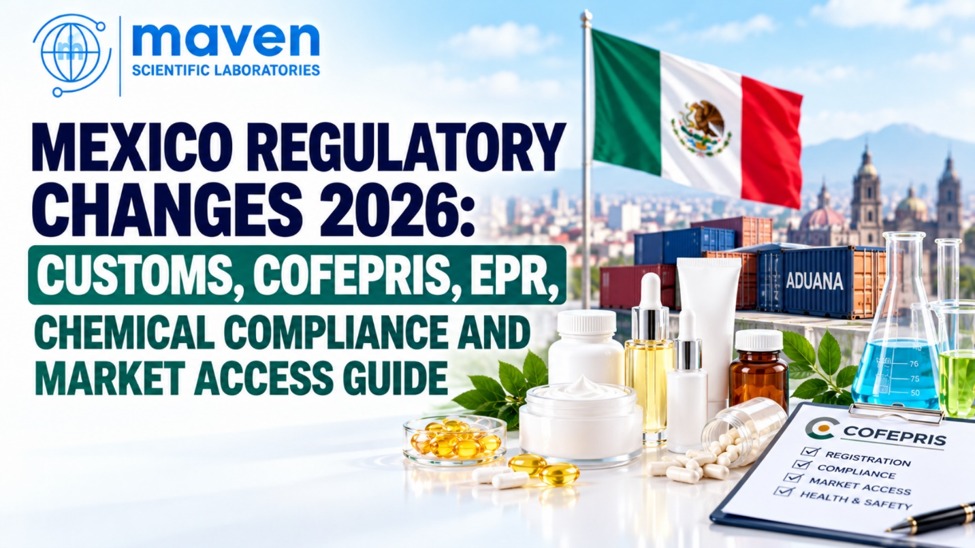
What Mexico’s 2026 Regulatory Changes Mean for Manufacturers, Importers, Chemical Suppliers and Product Compliance
Mexico has become a more demanding market for companies that want to enter, import, sell and remain compliant in 2026.
This year has brought significant changes across customs, tariffs, sanitary enforcement, agricultural products, circular economy and chemical management. The result is a regulatory environment where companies increasingly need to manage compliance across the entire product lifecycle from import documentation and customs valuation to advertising, registration, product stewardship and end-of-life obligations.
For importers, one of the biggest developments is the introduction of new tariffs affecting 1,463 tariff lines, particularly for goods originating from countries without a trade agreement with Mexico.
At the same time, Mexico is moving toward greater digitalization of customs processes. The Electronic Value Manifestation is implemented from 1 November 2026 through 15 January 2027, depending on the customs regime.
For companies already selling products in Mexico, COFEPRIS enforcement is also becoming more visible, particularly in digital advertising. More than 31,155 irregular advertisements had been suspended during 2026 by August, covering social media and e-commerce platforms.
Why Mexico Regulatory Compliance Matters in 2026
Mexico’s regulatory environment is increasingly connecting:
- Customs and import compliance
- Product classification
- Sanitary registration
- Advertising compliance
- Agricultural chemical protection
- Chemical management
- Circular economy
- Extended Producer Responsibility (EPR)
- Environmental product obligations
Companies therefore need to look beyond simply obtaining an import authorization or product registration.
A compliant product also needs accurate customs data, appropriate claims, compliant advertising, reliable supplier information and lifecycle controls.
Key Mexico Regulatory Developments in 2026
|
Regulatory Area |
2026 Development |
Business Impact |
|
Import Tariffs |
1,463 tariff lines affected by tariff reforms |
Higher import costs and need for tariff classification review |
|
Electronic Valuation |
MVE implementation begins 1 November 2026 and phases through 15 January 2027 |
Importers must prepare digital valuation processes |
|
Customs Compliance |
Changes to customs legislation and agency responsibilities |
Greater focus on broker/importer controls |
|
COFEPRIS Enforcement |
31,155 irregular online advertisements suspended by August 2026 |
Stronger monitoring of digital product claims |
|
Agricultural Products |
10-year protection for safety and efficacy data for new agricultural chemical products |
Greater protection for innovative active ingredients |
|
Circular Economy |
General Law of Circular Economy enacted in January 2026 |
Product stewardship and EPR obligations become increasingly important |
|
Chemical Management |
Potential national chemical framework remains an emerging regulatory signal |
Chemical manufacturers should prepare for future lifecycle controls |
The tariff reform covering 1,463 tariff lines entered into force on 1 January 2026 and covers sectors including automotive, textiles, apparel, plastics, steel, appliances, toys, furniture, footwear, paper and other products.
Mexico Import Compliance: New Tariffs and Electronic Valuation
One of the most significant changes for international businesses is the reform affecting 1,463 tariff classifications.
The measures primarily affect imports from countries where Mexico does not have an applicable free-trade agreement. Companies should therefore verify the country of origin, HS/TIGIE classification and preferential treatment eligibility before calculating landed costs.
The reform includes tariff rates ranging from 5% to 50%, depending on the product and classification.
Electronic Manifestation of Value
The MVE is being introduced gradually through Mexico’s foreign-trade single window.
|
Customs Regime |
MVE Implementation Date |
|
Manufacturing, transformation or repair in bonded premises |
1 November 2026 |
|
Strategic bonded premises |
15 November 2026 |
|
Transit of goods |
1 December 2026 |
|
Bonded warehouse |
15 December 2026 |
|
Temporary importation |
1 January 2027 |
|
Definitive importation |
15 January 2027 |
SAT, ANAM and ATDT confirmed the phased schedule in October 2026. gob.mx
Importers should therefore review commercial invoices, valuation information, contracts, supplier documentation and customs data flows before the applicable implementation date.
Customs Broker and Importer Responsibilities
Mexico’s customs reforms also reinforce the importance of clearly defined responsibilities between importers, customs agencies and customs brokers.
The amended Customs Law contains provisions under which certain infringements arising from the actions of customs agents or agencies may result in penalties being charged to them.
The national implementation of customs agencies was also completed in July 2026, giving greater operational significance to the agency model.
For companies, this makes broker governance and customs data quality increasingly important.
Recommended controls include:
- Tariff classification verification
- Origin determination
- Customs valuation review
- Product description controls
- Broker instructions
- Import documentation reconciliation
- Periodic customs audits
- Change-control procedures
COFEPRIS Enforcement: Digital Advertising Is Under Greater Scrutiny
Market access does not end when a product clears up customs.
COFEPRIS has significantly increased surveillance of product advertising on social media and e-commerce platforms.
By August 2026, authorities reported the suspension of 31,155 irregular advertisements, including advertisements on Facebook, Instagram, TikTok and Mercado Libre.
This is particularly relevant to companies’ marketing:
- Cosmetics
- Food supplements
- Medical products
- Health-related products
- OTC products
- Personal care products
- Other products subject to sanitary advertising requirements
Companies should review not only their product labels but also website content, marketplace listings, influencer content, social-media claims and promotional materials.
Agricultural Chemical Products: 10-Year Data Protection
Another important 2026 development concerns agricultural chemical products.
A reform published in April 2026 introduced a 10-year protection period for safety and efficacy relating to new agricultural chemical products, alongside other changes affecting registration and renewal procedures.
This can be particularly relevant for companies developing or commercializing:
- New active ingredients
- Agrochemical products
- Crop protection products
- Agricultural chemical formulations
- Innovative pesticide products
Companies should assess how the new data-protection framework affects registration strategy, intellectual-property planning, product lifecycle management and generic-entry strategies.
Circular Economy and Extended Producer Responsibility
Mexico also moved forward with a major environmental policy development in January 2026 by issuing the General Law of Circular Economy.
The law establishes mechanisms designed to increase product life, reduce waste, promote recovery and recycling, and strengthen Extended Producer Responsibility (EPR).
|
Business Area |
Potential Compliance Focus |
|
Product design |
Circular design principles |
|
Packaging |
Material use, recovery and waste management |
|
Manufacturing |
Resource efficiency and waste reduction |
|
Importers |
Product lifecycle responsibilities |
|
Waste management |
Recovery, recycling and valorization |
|
Reporting |
Information and documentation requirements |
|
EPR |
Producer/importer responsibilities |
|
Supply chain |
Circularity data and supplier controls |
The law also provides for implementation mechanisms, a national circular economy program and producer responsibility measures.
This means companies should begin evaluating product stewardship and end-of-life obligations, rather than treating environmental compliance as a separate issue from product commercialization.
Mexico’s Emerging Chemical Regulatory Framework
Mexico currently operates chemical management through a multi-agency regulatory structure, rather than a single comprehensive chemicals law.
However, a significant emerging development was highlighted at the Latin America Regulatory Cooperation Forum (LARCF) in Buenos Aires in September 2026.
Industry regulatory sources reported that Mexican officials indicated a draft national chemical framework law, under development for several years, could potentially be presented for public consultation as early as January 2027. This remains an emerging policy signal rather than an enacted requirement, so companies should not treat the timeline as confirmed legislation.
For chemical manufacturers and importers, this makes early regulatory readiness particularly valuable.
Who Should Pay Attention?
|
Business / Product Area |
Key Compliance Consideration |
|
Chemical manufacturers |
Chemical management and future framework readiness |
|
Chemical importers |
Import permits and substance classification |
|
Product manufacturers |
Customs and product compliance |
|
Cosmetics companies |
COFEPRIS and advertising controls |
|
Food supplement companies |
Claims and sanitary advertising |
|
Medical product companies |
Regulatory and promotional compliance |
|
Agrochemical companies |
Registration and data protection |
|
Importers |
Tariff classification and MVE |
|
E-commerce sellers |
Digital advertising compliance |
|
Packaging-intensive businesses |
Circular economy and EPR |
|
Global manufacturers |
Mexico-specific lifecycle assessment |
Frequently Asked Questions
1. What changed in Mexico in 2026?
Mexico introduced significant changes affecting tariffs, customs processes, sanitary enforcement, agricultural chemical products and circular economy obligations.
2. How many tariff lines were affected?
The major January 2026 reform covered 1,463 tariff lines, with rates ranging from 5% to 50% for affected imports, particularly from countries without applicable trade agreements.
3. When does MVE implementation begin?
The phased implementation begins 1 November 2026 and extends through 15 January 2027, depending on the customs regime.
4. Is COFEPRIS increasing digital enforcement?
Yes. More than 31,000 irregular online advertisements had been suspended during 2026 by August.
5. Does Mexico now have a circular economy law?
Yes. The General Law of Circular Economy was published on 19 January 2026 and introduces mechanisms including producer responsibility and circularity measures.
6. Is a national chemical law already in force?
No. Mexico does not currently have a single comprehensive national chemicals management law. A possible draft framework for public consultation in 2027 has been reported as an emerging development, but its timing and final content are not yet confirmed.
Conclusion
Mexico’s 2026 regulatory environment demonstrates a clear shift toward more structured, digital and lifecycle-based compliance.
For companies, entering Mexico increasingly requires more than customs clearance or product registration. Businesses need to consider tariffs, customs valuation, broker controls, COFEPRIS enforcement, product claims, agricultural data protection, circular economy responsibilities and emerging chemical regulation as connected elements of market access.
The key message for manufacturers, importers and global suppliers is simple:
Compliance in Mexico is becoming a lifecycle responsibility from getting the product through customs to keeping it compliant in the market and managing its end-of-life obligations.
Companies should use 2026 to review their product portfolio, customs processes, regulatory documentation, supplier controls, advertising claims and environmental responsibilities while preparing for further regulatory developments in 2027.
How Maven Regulatory Solutions Can Help
Maven Regulatory Solutions can support companies with:
- Mexico regulatory assessments
- Customs and import compliance reviews
- Tariff classification assessments
- MVE readiness assessments
- COFEPRIS regulatory support
- Advertising and claims compliance
- Agrochemical regulatory assessments
- Chemical regulatory assessments
- EPR and circular economy compliance
- Product lifecycle assessments
- Supplier compliance reviews
- Regulatory gap assessments
- Chemical inventory reviews
- Regulatory intelligence
- Market-entry strategy
- Lifecycle compliance support
Our approach helps manufacturers, importers and global companies identify regulatory gaps, manage market-access risks and prepare for Mexico’s evolving product and chemical compliance landscape.

Post a comment