
November 04, 2026
What Clinical Evidence, Reimbursement, Regulatory Compliance and Usability Are Shaping the Home Healthcare Market
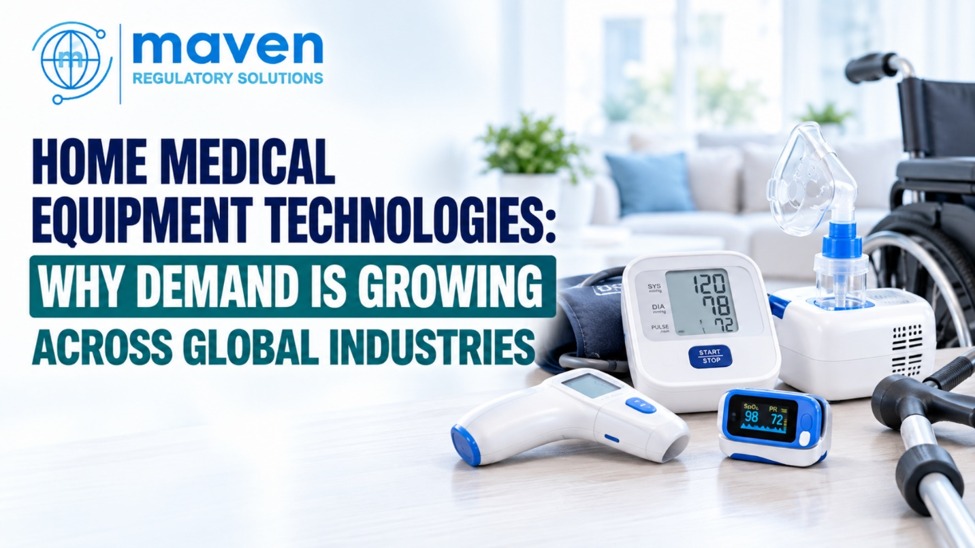
Home medical equipment technologies are gaining attention across global healthcare markets as healthcare providers, manufacturers, payers and patients evaluate alternatives to traditional facility-based care. From respiratory support and mobility assistance to remote patient monitoring and home diagnostic technologies, these solutions are becoming an important part of healthcare delivery.
However, market growth does not depend on technology alone. Clinical evidence, patient safety, reimbursement pathways, regulatory compliance, usability and after-sales support can determine whether a product progresses from initial interest to routine adoption.
For manufacturers and healthcare businesses, understanding these decision-making factors is essential for product development, market access and commercial planning.
Why Home Medical Equipment Technologies Are Gaining Attention
Home medical equipment supports healthcare activities outside conventional clinical settings, including private residences and other non-hospital environments. The category can include oxygen therapy equipment, mobility aids, hospital beds, patient monitoring devices, respiratory support equipment and other medical technologies intended for home use.
The US Food and Drug Administration (FDA) highlights the importance of considering users, use environments, device design and labeling when developing medical devices for home use. These considerations become particularly important when patients or caregivers operate equipment without continuous professional supervision.
Key factors influencing interest include:
- Home-based care: Healthcare delivery models increasingly include care and monitoring outside traditional facilities.
- Patient independence: Suitable equipment can support daily activities and prescribed care at home.
- Remote monitoring: Connected technologies can help healthcare teams review selected patient measurements remotely.
- Care delivery efficiency: Providers may evaluate home equipment as part of broader care pathways and resource planning.
- Technology innovation: Improvements in connectivity, device usability and digital health integration are creating new product opportunities.
- Commercial demand: Manufacturers are assessing opportunities across home healthcare providers, distributors, healthcare systems and direct-to-consumer channels, where permitted.
Actual adoption depends on the intended use, clinical suitability, local healthcare infrastructure, reimbursement arrangements and applicable regulatory requirements.
Where Decisions Are Changing
Home medical equipment is not subject to one uniform purchasing decision. Clinicians may prioritize clinical evidence and patient suitability, while procurement teams examine total cost, maintenance and delivery reliability. Payers may focus on coverage criteria and documented outcomes, and patients or caregivers may prioritize comfort, ease of use and support.
This distinction should influence market segmentation, sales messaging and product development.
Key Decision-Makers and Their Evaluation Priorities
|
Stakeholder |
Primary consideration |
Evidence to examine |
|
Clinicians |
Clinical suitability and patient safety |
Performance data, intended use and clinical evidence |
|
Patients and caregivers |
Easy of use and comfort |
Usability testing, instructions and training |
|
Hospitals and home-care providers |
Operational reliability |
Service records, implementation plans and maintenance |
|
Procurement teams |
Cost and supplier reliability |
Total cost of ownership, delivery performance and warranties |
|
Payers and reimbursement bodies |
Coverage and economic value |
Eligibility criteria, supporting evidence and applicable reimbursement policies |
|
Manufacturers and distributors |
Market access and commercial viability |
Regulatory status, demand validation and channel readiness |
Companies should identify which criteria are mandatory for each stakeholder and which preferences represent. This helps avoid investing in features that do not address the actual purchasing barriers.
What Types of Home Medical Equipment Technologies Are Relevant?
The market encompasses different technologies, each with distinct clinical, usability, servicing and regulatory considerations.
Equipment Categories and Key Evaluation Factors
|
Equipment category |
Typical application |
Key considerations |
|
Respiratory equipment |
Prescribed oxygen therapy and respiratory support |
Performance, alarms, maintenance and patient training |
|
Patient monitoring devices |
Measurement of selected physiological parameters |
Measurement accuracy, connectivity and data interpretation |
|
Mobility aids |
Assistance with movement and daily activities |
Stability, ergonomics, durability and fit |
|
Home hospital beds |
Positioning and support for home care |
Mechanical safety, caregiver access and cleaning |
|
Infusion equipment |
Delivery of prescribed fluids or therapies |
Dose accuracy, alarm performance and risk controls |
|
Home diagnostic devices |
Selected diagnostic measurements outside healthcare facilities |
Intended use, analytical performance and clear instructions |
|
Connected care technologies |
Remote transmission of device or patient data |
Data security, interoperability and system reliability |
This categorization is illustrative. Not every product in these categories is suitable for every patient or home environment. The required evidence, classification and regulatory pathway depend on the individual device and its intended purpose.
Clinical Evidence, Usability and Product Performance
Clinical evidence can determine whether a product meets the requirements of healthcare professionals, purchasers and applicable regulators. Manufacturers should establish claims that are supported by appropriate evidence rather than relying on general statements about innovation or convenience.
Evaluation should consider the intended patient population, relevant clinical endpoints, test conditions, limitations and the relationship between measured performance and the proposed use.
Usability is equally important. A device intended for home use may be operated by patients, family members or caregivers with varying levels of technical knowledge. Poorly designed controls, unclear instructions or misunderstood alarms can create use-related risks.
The FDA's August 2026 human factors and usability engineering guidance reinforces the importance of designing devices for their intended users and use environments.
What Manufacturers Should Examine
- Verify performance claims using documented test methods and conditions.
- Confirm that study populations and intended users match the proposed application.
- Assess foreseeable use errors, alarm comprehension and maintenance requirements.
- Review instructions for use, warnings, contraindications and cleaning procedures.
- Document on how identified risks are controlled and how design changes affect performance.
- Establish post-market processes for complaints, safety signals and corrective actions.
Regulatory Compliance and Global Market Access
Home medical equipment manufacturers must determine the regulatory requirements applicable to each target market. Product classification, conformity assessment, clinical evidence, labeling, registration and post-market obligations can vary by jurisdiction and intended use.
For example, medical devices marketed in the European Union are governed by the Medical Device Regulation (EU) 2017/745, where applicable. Manufacturers should assess the relevant conformity assessment route, technical documentation, clinical evaluation, quality management and post-market surveillance requirements.
In the United States, FDA requirements depend on the device and its regulatory pathway. Products intended for home use may also require particular attention to labeling, user comprehension, cleaning, maintenance and safe operation.
Regulatory approval or market authorization should not be assumed to establish reimbursement eligibility or guaranteed commercial demand.
Regulatory and Market-Readiness Checklist
|
Area |
Questions to address |
|
Intended use |
Is the intended purpose clearly defined and supported? |
|
Classification |
Has the applicable device classification been established? |
|
Clinical evidence |
Is the evidence appropriate for the device's claims and risk profile? |
|
Technical documentation |
Are design, testing, risk management and performance records complete? |
|
Quality management |
Are applicable quality system requirements implemented? |
|
Labeling |
Are instructions, warnings and maintenance information suitable for home users? |
|
Registration and conformity |
Are required registrations, clearances, approvals or conformity assessments complete? |
|
Post-market surveillance |
Are complaint handling, vigilance and corrective action processes established? |
|
Data protection |
Are applicable privacy and cybersecurity risks addressed for connected devices? |
|
Lifecycle management |
Are supplier changes, software updates and product modifications controlled? |
The checklist is a planning aid, not a substitute for market-specific regulatory assessment.
Reimbursement, Procurement and Commercial Viability
A technically capable product may still face adoption barriers if buyers cannot justify its cost or determine how it fits into existing care pathways.
Reimbursement is particularly important for equipment supplied through insurance programs, public healthcare systems or other structured funding arrangements. Coverage conditions, eligible patient populations, documentation requirements and payment mechanisms vary across markets and products.
Manufacturers should distinguish between three separate questions:
- Clinical qualification: Does the product meet the clinical and safety requirements for its intended use?
- Payment feasibility: Is reimbursement or another funding mechanism available to the relevant buyer?
- Operational feasibility: Can the supplier provide dependable delivery, training, maintenance and ongoing support?
Commercial evaluation should include the total cost of ownership, not just the initial purchase price. Relevant factors may include consumables, repairs, replacement parts, training, software, servicing and equipment downtime.
Companies should also distinguish expressed interest from verified demand. Qualified opportunities, successful evaluations, completed deployments and repeat orders provide more meaningful commercial signals than enquiries or promotional engagement alone.
Supplier Evaluation and Post-Sale Support
Home medical equipment frequently requires continued service, user education and technical assistance. Supplier evaluation should therefore extend beyond product specifications.
Manufacturers, distributors and healthcare providers should verify who is responsible for installation, user training, maintenance, troubleshooting, replacement equipment and escalation of safety concerns.
Supplier Evaluation Matrix
|
Evaluation area |
What to verify |
Commercial relevance |
|
Product performance |
Test results and documented specifications |
Supports evidence-based selection |
|
Traceability |
Device identification, batch or serial records where applicable |
Supports complaint investigation and corrective action |
|
Delivery |
Lead times and fulfilment performance |
Reduces deployment delays |
|
Service |
Response times, maintenance and repair arrangements |
Supports continuity of care |
|
Training |
User education and accessible instructions |
Helps reduce avoidable use errors |
|
Software and cybersecurity |
Update policy and vulnerability management for connected products |
Supports ongoing device security |
|
Regulatory documentation |
Current certificates, registrations and technical records, as applicable |
Helps demonstrate market readiness |
|
Post-market support |
Complaint handling and safety communication procedures |
Supports lifecycle oversight |
Supplier claims should be checked against documented evidence, actual service arrangements and relevant contractual commitments.
Practical Priorities for Manufacturers and Healthcare Businesses
Organizations evaluating opportunities in home medical equipment technologies should take a structured approach.
- Define the target application. Identify the intended users, patient population, care setting and clinical need before selecting product features.
- Build an evidence-based value proposition. Link performance claims to documented results and explains how the product addresses a specific clinical or operational requirement.
- Map the regulatory pathway. Assess classification, conformity assessment, evidence, labeling and post-market obligations in each target market.
- Validate reimbursement and purchasing conditions. Identify the relevant decision-makers, coverage requirements, procurement processes and funding constraints.
- Assess implementation and support. Confirm that training, delivery, maintenance and troubleshooting arrangements can support real-world deployment.
- Measure commercial progress. Track qualification milestones, evaluation outcomes, completed deployments, customer retention and repeat orders.
- Review of lifecycle risks. Maintain appropriate controls for complaints, product changes, supplier issues, software updates and emerging safety information.
Frequently Asked Questions
1. What are home medical equipment technologies?
They include medical equipment and related technologies intended to support healthcare activities outside conventional clinical facilities, subject to the product's intended use and applicable regulations.
2. Why are these technologies gaining attention?
Home-based care models, patient needs, digital connectivity and efforts to evaluate care delivery efficiency are contributing to interest. Adoption still depends on clinical suitability, funding and operational readiness.
3. What is most important when selecting home medical equipment?
Clinical suitability, safety, reliable performance, usability, regulatory status and ongoing support should be assessed against the intended application.
4. Why is clinical evidence important?
It supports product performance claims, risk assessment and clinical decision-making. The appropriate evidence depends on the device, its intended purpose and applicable regulatory requirements.
5. Does regulatory approval guarantee reimbursement?
No. Regulatory authorization and reimbursement are separate processes with different criteria.
6. What should buyers examine when evaluating suppliers?
Buyers should review documented performance, traceability, regulatory records, delivery reliability, training, maintenance and post-market support.
7. How can manufacturers assess market demand?
They can evaluate qualified opportunities, buyer requirements, procurement progress, completed deployments, actual utilization where measurable and repeat orders.
Conclusion
Home medical equipment technologies are gaining attention across healthcare markets, but successful adoption requires more than innovative product design. Clinical evidence, usability, regulatory compliance, reimbursement feasibility, supplier reliability and lifecycle support all influence purchasing and implementation decisions.
For manufacturers, distributors and healthcare organizations, the priority is to evaluate products against the needs of the specific patient population and care environment. A structured assessment can help identify regulatory gaps, validate product claims, strengthen supplier qualification and support more informed commercial decisions.
The central takeaway is clear: A successful home medical equipment strategy connects measurable performance with regulatory readiness, practical usability, reliable delivery and sustained customer support.
How Maven Regulatory Solutions Can Help
Maven Regulatory Solutions supports organizations with regulatory and compliance activities that may include:
- Medical device regulatory affairs and market access support
- Regulatory gap assessments
- Clinical and technical documentation support
- Product safety and risk assessment
- Quality and compliance reviews
- Supplier and third-party compliance assessments
- Labeling and instructions-for-use reviews
- Post-market surveillance and lifecycle compliance support
- Regulatory intelligence and monitoring
- Global regulatory strategy and documentation support
Our approach helps organizations align product requirements, evidence, documentation and market-specific compliance considerations to support informed product development and commercialization.

Post a comment