
August 15, 2026
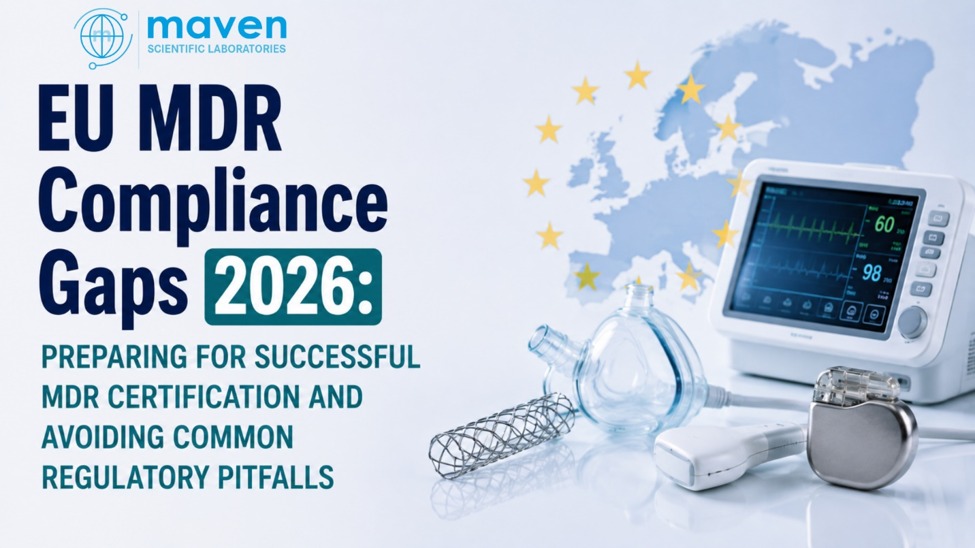
How Device Classification, Clinical Evaluation, Technical Documentation, PMS, Risk Management, and Notified Body Readiness Are Driving Successful EU MDR Compliance
The European Union Medical Device Regulation (EU MDR 2017/745) has fundamentally reshaped the regulatory landscape for medical devices. While many manufacturers understand the regulation, a significant number of non-conformities identified during conformity assessments arise not from a lack of awareness, but from recurring compliance gaps that remain unaddressed until the Notified Body review.
Organizations often invest considerable effort in documentation preparation but overlook critical areas such as device classification, clinical evidence, post-market surveillance (PMS), risk management integration, and technical documentation completeness. These issues frequently result in additional questions, extended review timelines, costly remediation activities, and delayed market access.
As regulatory expectations continue to evolve, manufacturers should adopt a proactive compliance strategy that combines robust quality systems, comprehensive technical documentation, continuous regulatory intelligence, and early engagement with Notified Bodies to reduce regulatory risk and accelerate certification.
Why EU MDR Compliance Is a Strategic Priority
EU MDR represents one of the world's most comprehensive regulatory frameworks for medical devices. Compliance is no longer simply a requirement for obtaining CE marking it has become a critical business capability that directly impacts product commercialization, market access, and long-term regulatory sustainability.
Manufacturers benefit from:
- Continued access to the European market
- Improved patient safety
- Greater regulatory confidence
- Stronger global market acceptance
- Enhanced product quality
- Better lifecycle management
- Reduced compliance risks
- Improved competitive positioning
Without an effective MDR strategy, organizations may encounter:
- Delayed CE certification
- Notified Body non-conformities
- Additional evidence requests
- Technical documentation deficiencies
- Clinical evaluation gaps
- PMS weaknesses
- Increased compliance costs
- Market launch delays
- Transition timeline challenges
- Commercial risks
EU MDR readiness has become a strategic advantage for manufacturers seeking sustainable growth in Europe and other global markets.
Executive Overview
Successful EU MDR compliance requires much more than preparing documentation. Organizations should establish an integrated compliance program that includes:
- MDR regulatory strategy
- Device classification verification
- Clinical Evaluation Report (CER) readiness
- Technical Documentation completeness
- ISO 14971 risk management integration
- Post-Market Surveillance (PMS)
- Post-Market Clinical Follow-up (PMCF)
- Quality Management System (QMS)
- Regulatory intelligence
- Notified Body engagement
- Legacy device transition planning
- Lifecycle management
Organizations adopting these capabilities reduce regulatory risk while improving certification success.
Understanding the Most Common EU MDR Compliance Gaps
Most EU MDR findings arise from a relatively small number of recurring issues. Addressing these areas early significantly improves submission quality and reduces certification delays.
1. Incorrect Device Classification
One of the most common compliance issues involves improper application of MDR Annex VIII classification rules.
Manufacturers should ensure:
- Rule-by-rule classification assessment
- Documented rationale
- Consistent intended purpose
- Appropriate conformity assessment route
- Regulatory justification
Incorrect classification can affect the entire regulatory pathway.
2. Weak Clinical Evaluation
Clinical evidence often appears sufficient until subjected to detailed Notified Body review.
Manufacturers should ensure:
- Comprehensive literature review
- Clinical data adequacy
- State-of-the-art assessment
- Benefit-risk evaluation
- Clinical evidence consistency
- PMCF integration
Robust clinical evaluation strengthens regulatory confidence.
3. Reactive Post-Market Surveillance (PMS)
Many PMS systems focus only on complaint handling instead of proactive trend identification.
Effective PMS should include:
- Complaint analysis
- Trend monitoring
- Signal detection
- Vigilance reporting
- PMCF integration
- Corrective actions
- Continuous improvement
Strong PMS demonstrates ongoing regulatory compliance.
4. Incomplete Technical Documentation
Technical documentation frequently contains gaps that become apparent during detailed Notified Body assessment.
Documentation should comprehensively address:
- Annex II requirements
- Annex III requirements
- Device description
- Design documentation
- Manufacturing information
- Verification and validation
- Labeling
- Instructions for Use (IFU)
- Clinical evidence
- PMS documentation
Complete documentation significantly reduces review questions.
5. Unclear Intended Purpose
The intended purpose defines the regulatory pathway for every medical device.
Manufacturers should ensure consistency across:
- Labeling
- IFU
- Marketing materials
- Clinical evaluation
- Risk management
- Technical documentation
- Device claims
Misalignment creates downstream regulatory challenges.
6. Poor Integration Between Risk Management and CER
Risk management and clinical evaluation should support one another throughout the product lifecycle.
Organizations should align:
- ISO 14971 risk files
- Hazard identification
- Benefit-risk analysis
- Clinical evidence
- Residual risks
- PMS findings
- PMCF outcomes
Integrated documentation improves regulatory consistency.
7. Delayed Legacy Device Transition
Many manufacturers postpone MDR transition activities until timelines become critical.
Organizations should proactively manage:
- Legacy portfolio review
- Gap assessments
- Documentation updates
- Clinical evidence generation
- Resource planning
- Certification scheduling
Early planning minimizes business disruption.
8. Late Notified Body Engagement
Limited Notified Body capacity continues to affect certification timelines.
Manufacturers should:
- Identify suitable Notified Bodies early
- Reserve assessment capacity
- Conduct pre-submission readiness reviews
- Resolve documentation gaps
- Prepare technical experts
- Plan for review questions
Early engagement improves project predictability.
Core MDR Compliance Requirements
Successful MDR certification typically includes:
- Regulatory strategy
- Device classification
- Technical Documentation
- Clinical Evaluation Report (CER)
- Risk Management File
- Quality Management System
- PMS Plan
- PMCF Plan
- Labeling compliance
- UDI implementation
- EUDAMED readiness
- Notified Body assessment
Compliance Readiness Assessment
| Assessment Area | Objective |
| Device Classification | Correct regulatory pathway |
| Clinical Evaluation | Strong clinical evidence |
| Technical Documentation | Complete submission |
| Risk Management | ISO 14971 compliance |
| PMS | Continuous surveillance |
| PMCF | Clinical follow-up |
| Labeling | MDR compliance |
| Notified Body Readiness | Successful certification |
Common Challenges
Organizations frequently encounter:
- Classification errors
- Clinical evidence deficiencies
- Documentation inconsistencies
- Weak PMS systems
- Poor CER integration
- Resource limitations
- Transition planning delays
- Regulatory updates
- Notified Body availability
- Lifecycle management complexity
Best Practices
Organizations should:
- Perform early MDR gap assessments
- Verify device classification rule by rule
- Strengthen clinical evidence
- Maintain complete technical documentation
- Integrate CER with ISO 14971
- Develop proactive PMS systems
- Begin legacy transition early
- Engage Notified Bodies well in advance
- Monitor MDR guidance updates
- Strengthen cross-functional collaboration
Common Mistakes
Avoid:
- Incorrect device classification
- Weak clinical evidence
- Incomplete technical documentation
- Reactive PMS programs
- Disconnected CER and risk files
- Delayed legacy transition
- Late Notified Body engagement
- Inconsistent intended purpose statements
MDR Readiness Roadmap
| Activity | Frequency | Benefit |
| Regulatory gap assessment | Annually | Improved compliance |
| Technical documentation review | Before submission | Better quality |
| CER update | Ongoing | Stronger evidence |
| PMS review | Quarterly | Early issue detection |
| Risk management review | Ongoing | Regulatory consistency |
| Team training | Annually | Improved capability |
Future Trends
Emerging developments include:
- Greater scrutiny of clinical evidence
- Increased PMS expectations
- Expanded PMCF activities
- Digital technical documentation
- AI-supported regulatory reviews
- Enhanced regulatory harmonization
- Improved EUDAMED implementation
- Risk-based conformity assessments
- Stronger lifecycle management
- Continued MDR guidance updates
Business Benefits
| Business Function | Key Benefit |
| Regulatory Affairs | Faster certification |
| Quality | Improved compliance |
| Clinical | Stronger evidence |
| Manufacturing | Reduced delays |
| Executive Leadership | Lower regulatory risk |
| Commercial | Earlier market access |
Frequently Asked Questions
1. Why do most EU MDR non-conformities occur?
Most findings result from recurring documentation, clinical evidence, PMS, and risk management gaps rather than a lack of awareness of the regulation.
2. What is the biggest MDR documentation issue?
Incomplete Technical Documentation against Annex II and Annex III remains one of the most common deficiencies.
3. Why is device classification so important?
Incorrect classification affects the conformity assessment route, documentation requirements, and certification pathway.
4. How important is the Clinical Evaluation Report?
The CER provides evidence supporting the device's safety and clinical performance and is a core MDR requirement.
5. Why should CER and ISO 14971 be aligned?
Both documents should present a consistent benefit-risk story supported by clinical evidence and risk controls.
6. Why is PMS important under MDR?
PMS demonstrates continuous monitoring of device safety and performance after commercialization.
7. When should manufacturers engage a Notified Body?
As early as possible to reduce scheduling risks and allow sufficient time for review and remediation.
8. What challenges do legacy devices face?
Legacy devices often require documentation updates, additional clinical evidence, and transition planning before MDR certification.
9. How can manufacturers improve MDR readiness?
By performing early gap assessments, strengthening documentation, integrating risk management and CER, and implementing proactive PMS.
10. How can Maven Regulatory Solutions help?
Maven supports:
- EU MDR regulatory strategy
- MDR gap assessments
- Device classification reviews
- Technical Documentation preparation
- Clinical Evaluation Reports (CER)
- ISO 14971 Risk Management
- PMS and PMCF support
- Notified Body readiness
- Regulatory intelligence
- Lifecycle management
Conclusion
Most EU MDR compliance challenges do not stem from misunderstanding the regulation they arise from recurring gaps in documentation, clinical evidence, risk management, PMS, and regulatory planning. Organizations that proactively address these areas can significantly reduce regulatory delays, strengthen certification readiness, and improve long-term compliance.
Building an integrated MDR strategy that aligns technical documentation, clinical evaluation, risk management, lifecycle management, and Notified Body engagement enables manufacturers to achieve faster certification while maintaining compliance throughout the product lifecycle.
Why Choose Maven Regulatory Solutions?
Maven Regulatory Solutions provides comprehensive EU MDR consulting services to support manufacturers throughout the entire compliance lifecycle. Our expertise includes MDR gap assessments, device classification reviews, Technical Documentation preparation, Clinical Evaluation Reports (CER), ISO 14971 risk management, PMS and PMCF implementation, Notified Body readiness, regulatory intelligence, and post-certification lifecycle management. We help organizations reduce regulatory risk, streamline MDR certification, and achieve sustainable market access across Europe.

Post a comment