
January 29, 2026
Understanding How EUDR Is Reshaping Global Supply Chain Compliance
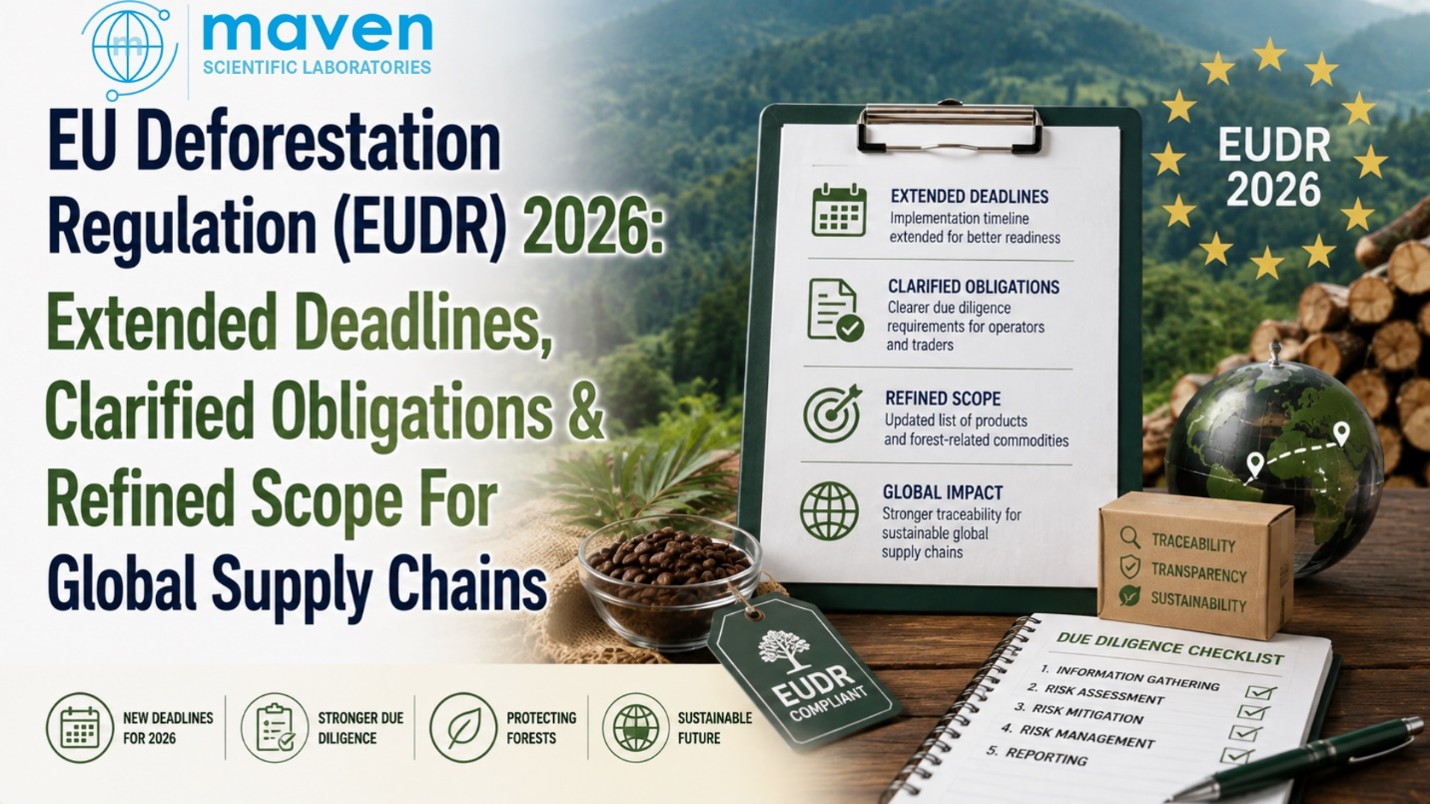
The EU Deforestation Regulation (EUDR) represents one of the most significant sustainability and trade compliance frameworks introduced by the European Union in recent years. Designed to ensure that products entering or leaving the EU market are deforestation-free, EUDR fundamentally transforms how global supply chains are traced, documented, verified, and governed.
In late 2025, the European Commission announced a provisional political agreement between the European Parliament and the Council introducing targeted amendments intended to improve practical implementation while preserving the regulation’s core environmental objectives.
These updates include:
- Extended enforcement deadlines
- Clarified due diligence obligations
- Simplified reporting mechanisms
- SME proportionality measures
- Refined product scope
- More practical implementation pathways
For companies sourcing, manufacturing, importing, exporting, or placing regulated commodities on the EU market, EUDR compliance remains mandatory, enforceable, and strategically important.
This comprehensive guide by Maven Regulatory Solutions explains EUDR requirements, updated timelines, due diligence obligations, traceability expectations, enforcement trends, and supply-chain readiness strategies for 2026 and beyond.
What Is the EU Deforestation Regulation (EUDR)?
The EU Deforestation Regulation is a sustainability-focused legal framework designed to prevent products linked to deforestation and forest degradation from entering or existing the EU market.
Under EUDR, companies must demonstrate that covered products are:
- Deforestation-free
- Produced in compliance with local legislation
- Fully traceable to plot-level origin
- Supported by documented due diligence systems
The regulation applies to a broad range of operators, traders, importers, exporters, manufacturers, and brand owners involved in regulated commodities and derived products.
Why EUDR Matters In 2026
Global supply chains are under increasing scrutiny due to:
- Rising sustainability expectations
- Climate-related regulatory initiatives
- Deforestation concerns
- ESG reporting requirements
- Responsible sourcing obligations
- Supply-chain transparency demands
The EU is positioning EUDR as a key pillar of its broader sustainability and biodiversity agenda.
Key Objectives Of EUDR
- Preventing deforestation-linked trade
- Improve global supply-chain transparency
- Strengthening responsible sourcing practices
- Support biodiversity protection
- Reduce Environmental Degradation
- Enhance traceability and accountability
EUDR significantly raises the compliance expectations for organizations trading regulated commodities globally.
Annex I Commodities Covered Under EUDR
The regulation applies to specific commodities and many derived products listed under Annex I.
Key Commodities Covered
| Regulated Commodity | Examples Of Included Products |
| Cattle | Beef, leather |
| Cocoa | Cocoa beans, chocolate |
| Coffee | Green coffee, roasted coffee |
| Oil Palm | Palm oil derivatives |
| Soy | Soybeans, soy meal |
| Rubber | Natural rubber products |
| Wood | Timber, furniture, pulp and paper |
Companies must carefully evaluate product portfolios to determine EUDR applicability.
EUDR 2025–2026 Agreement: What Has Changed?
The targeted amendments introduced through the provisional political agreement are intended to improve implementation practicality while maintaining the EU’s zero-deforestation commitments.
Updated Enforcement Deadlines
| Business Category | New Enforcement Deadline |
| Large & Medium Operators | 30 December 2026 |
| Small & Micro Enterprises (SMEs) | 30 June 2027 |
Although enforcement timelines have been extended, the European Commission has emphasized that core compliance obligations remain unchanged.
Clarified Due Diligence Responsibilities
One of the most significant clarifications introduced by the updated agreement concerns allocation of due diligence obligations across the supply chain.
Key Clarifications
- Only the operator first places the product on the EU market must submit the Due Diligence Statement (DDS)
- Downstream traders may reference verified DDS documentation
- Traceability obligations remain applicable throughout the supply chain
- Risk mitigation responsibilities continue across all affected operators
This clarification aims to reduce duplication while preserving accountability and traceability.
Key Measures Introduced Under the Updated EUDR Framework
Major Regulatory Updates
| Measure | Regulatory Impact |
| Deadline extensions | Additional preparation time for businesses |
| Simplified reporting | Reduced administrative burden |
| Clarified obligation allocation | DDS responsibility limited to first EU operator |
| SME proportionality | Reduced compliance complexity for smaller businesses |
| Scope refinement | Exclusion of certain low-risk printed products |
| Streamlined implementation | Improved operational practicality |
Certain low-risk printed materials such as books and newspapers are excluded under the revised scope, while Annex I commodities remain fully covered.
Core EUDR Compliance Requirements
Organizations subject to EUDR must establish comprehensive due diligence systems capable of demonstrating supply-chain transparency and sustainability compliance.
Key Compliance Expectations
- Supply-chain mapping to plot-level origin
- Geolocation data collection
- Risk-assessment procedures
- Risk-mitigation controls
- Supplier due diligence processes
- Audit-ready documentation systems
- Ongoing monitoring and governance
Failure to establish effective traceability systems may result in significant enforcement exposure.
What Businesses Should Do to Prepare for EUDR Compliance
Although enforcement deadlines have shifted, early preparation remains critical.
Immediate Compliance Priorities
- Identify regulated commodities within product portfolios
- Determine operator and trader responsibilities
- Map supply chains to source origin
- Collect geolocation and supplier data
- Implement EUDR-aligned due diligence frameworks
- Strengthen supplier sustainability governance
- Develop audit-ready documentation systems
Organizations delaying preparation may face operational disruption, shipment delays, and EU market-access challenges.
EUDR Due Diligence & Traceability Expectations
Regulators increasingly expect organizations to demonstrate proactive, evidence-based sustainability oversight.
Core Due Diligence Components
| Compliance Area | Key Requirement |
| Supply Chain Mapping | Plot-level traceability |
| Risk Assessment | Deforestation risk evaluation |
| Documentation | Audit-ready compliance evidence |
| Supplier Oversight | Sustainability verification |
| Monitoring Systems | Ongoing risk management |
Traceability and documentation quality are expected to become central enforcement focus areas.
Enforcement Risks & Regulatory Consequences
Failure to comply with EUDR obligations may expose organizations to significant regulatory and commercial consequences.
Potential Enforcement Actions
- Administrative penalties and fines
- Product withdrawal orders
- Shipment detention or blocking
- Confiscation of non-compliant products
- Increased regulatory inspections
- Reputational damage and ESG risk exposure
Regulators are expected to apply increasingly data-driven enforcement methodologies.
EUDR & The Broader EU Sustainability Strategy
EUDR forms part of the EU’s wider environmental and sustainability agenda, including:
- European Green Deal
- EU Biodiversity Strategy
- Circular economy initiatives
- Sustainable supply-chain governance frameworks
- Climate-related ESG objectives
The regulation reinforces the EU’s commitment to responsible sourcing and sustainable global trade practices.
Emerging EUDR Compliance Trends In 2026
Global supply-chain governance expectations continue evolving rapidly.
Key Trends
Increased Supply Chain Transparency
Organizations are expected to maintain:
- End-to-end supplier visibility
- Real-time traceability systems
- Enhanced documentation governance
Digital Sustainability Platforms
Businesses are increasingly implementing:
- Cloud-based traceability systems
- ESG data-management platforms
- Supplier risk-monitoring tools
Greater Regulatory Collaboration
Authorities are increasing cooperation related to:
- Customs monitoring
- Sustainability inspections
- Cross-border data sharing
ESG Integration
EUDR compliance is increasingly connected to:
- Corporate sustainability reporting
- ESG investment expectations
- Responsible sourcing programs
Common EUDR Compliance Challenges
Many organizations face operational and regulatory challenges including:
- Limited supply-chain visibility
- Incomplete supplier traceability
- Inconsistent geolocation data
- Weak sustainability governance systems
- Cross-border data-management complexity
- Supplier engagement difficulties
- Unclear Operator responsibility allocation
Strategic planning and early implementation significantly reduce future compliance risks.
EUDR Compliance Readiness Checklist
Supply Chain Governance
- Regulated commodities identified
- Operator’s responsibilities defined
- Supplier sustainability oversight implemented
Traceability Systems
- Plot-level mapping completed
- Geolocation data collected
- Traceability documentation maintained
Due Diligence Frameworks
- Risk assessments performed
- Mitigation measures documented
- DDS procedures established
Documentation & Readiness
- Audit-ready records maintained
- Sustainability evidence verified
- Regulatory monitoring procedures active
ESG & Sustainability Alignment
- Sustainability reporting integrated
- Responsible sourcing programs strengthened
- Internal governance structures established
Why Early EUDR Investment Matters
Organizations proactively preparing for EUDR often achieve:
- Reduced regulatory exposure
- Improved EU market continuity
- Stronger ESG positioning
- Greater supply-chain transparency
- Enhanced sustainability credibility
- Better investor and customer confidence
EUDR compliance is increasingly viewed as both a legal requirement and a strategic sustainability advantage.
How Maven Regulatory Solutions Supports EUDR Compliance
Our Services
- EUDR applicability assessments
- Operator responsibility evaluations
- Due diligence framework development
- Supply-chain traceability and mapping support
- Risk classification and mitigation planning
- Sustainability governance assessments
- Audit readiness and documentation support
- Ongoing EU regulatory intelligence monitoring
Why Choose Maven
- Deep EU sustainability compliance expertise
- Strong global supply-chain regulatory capabilities
- Practical implementation-focused strategies
- End-to-end EUDR readiness support
- Risk-based compliance planning
- Up-to-date regulatory intelligence
Learn more at Maven Regulatory Solutions
Preparing Your Supply Chain for EUDR Compliance?
Whether your organization sources cocoa, coffee, soy, rubber, palm oil, wood, cattle products, or derived materials, Maven Regulatory Solutions can help strengthen your EUDR readiness and support sustainable EU market access.
Contact Maven Regulatory Solutions For:
- EUDR applicability and risk assessments
- Due diligence system implementation
- Supply-chain traceability mapping
- Supplier sustainability governance support
- ESG and sustainability compliance alignment
- Audit and inspection readiness preparation
Visit Maven Regulatory Solutions to connect with our sustainability compliance experts.
Conclusion
The EU Deforestation Regulation (EUDR) represents a major transformation in global sustainability and trade compliance expectations. While the 2025–2026 amendments provide organizations with additional preparation time and greater implementation clarity, the EU’s commitment to deforestation-free supply chains remains unchanged.
Organizations that proactively invest in traceability systems, due diligence, governance, supplier oversight, and sustainability infrastructure will be better positioned to achieve:
- Sustainable EU market access
- Reduced regulatory risk
- Stronger ESG credibility
- Improved supply-chain resilience
- Long-term commercial sustainability
In 2026 and beyond, EUDR compliance will remain a defining factor for responsible global sourcing and environmental accountability.
Frequently Asked Questions
Q1. Is EUDR already in force?
Yes. The regulation has been formally adopted, with phased enforcement timelines beginning from 2026 onward.
Q2. Who must submit the Due Diligence Statement (DDS)?
The operator first placing the regulated product on the EU market is responsible for submitting the DDS.
Q3. Are SMEs exempt from EUDR?
No. SMEs receive extended timelines and proportional obligations, but they are not exempt from compliance.
Q4. Does EUDR apply to processed products?
Yes. Processed products containing Annex I commodities may fall within EUDR scope.
Q5. What is the biggest EUDR compliance challenge?
Supply-chain traceability and reliable geolocation data collection remain major challenges for many organizations.
Q6. What happens if a company fails to comply?
Potential consequences include fines, shipment blocking, product withdrawal, reputational harm, and restricted EU market access.
Q7. Can Maven support EUDR compliance programs?
Yes. Maven Regulatory Solutions supports due diligence systems, traceability programs, sustainability governance, and EUDR readiness initiatives.

Post a comment