
June 30, 2026
Understanding ECHA's CLH Consultation Process, Industry Responsibilities, Hazard Classification Updates, and Best Practices for EU Chemical Compliance
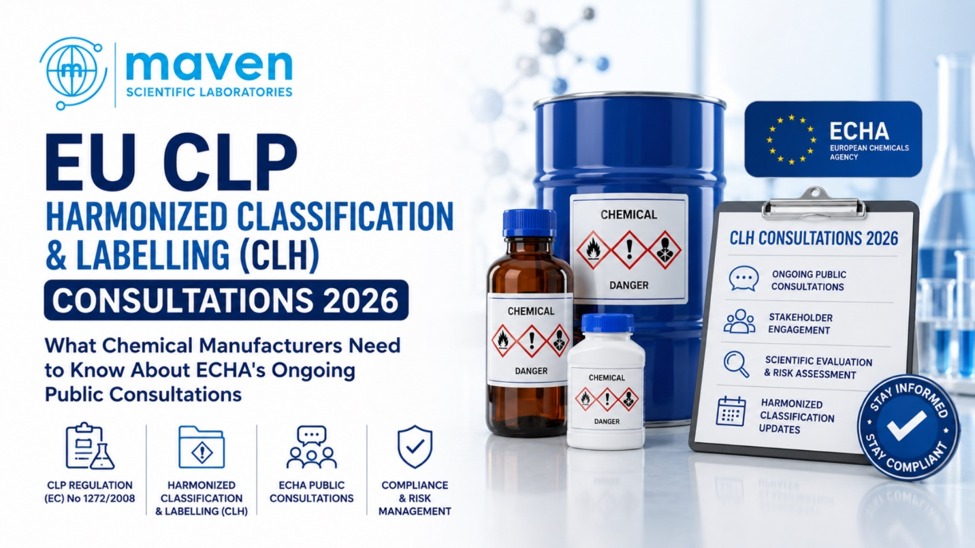
The European Chemicals Agency (ECHA) is continuing its public consultations on proposals for Harmonized Classification and Labelling (CLH) of chemicals under the EU Classification, Labelling and Packaging (CLP) Regulation, with multiple consultation deadlines scheduled between June and August 2026.
These consultations provide manufacturers, importers, downstream users, Only Representatives, industry associations, academic experts, and other stakeholders with the opportunity to review scientific proposals and submit evidence before final harmonized classifications are adopted across the European Union.
As regulatory expectations continue to evolve, participation in ECHA's consultation process has become an important component of proactive regulatory compliance. Companies that monitor and contribute to these consultations can better anticipate future regulatory changes, evaluate business impacts, and prepare product portfolios for upcoming classification updates.
Without early preparation, organizations may encounter:
- Regulatory compliance challenges
- Product reclassification requirements
- Label and Safety Data Sheet (SDS) revisions
- Supply chain disruptions
- Market access delays
- Increased compliance costs
- Inventory management challenges
- Customer notification obligations
- Additional regulatory documentation
- Operational inefficiencies
With the European Union placing greater emphasis on chemical safety, hazard communication, and evidence-based regulation, companies should begin reviewing ongoing CLH consultations and evaluating potential impacts on their products and regulatory strategies.
Executive Overview
ECHA's ongoing Harmonized Classification and Labelling consultations represent a critical part of the EU chemical regulatory framework.
Rather than simply updating hazard classifications, these consultations allow scientific evidence from industry, regulatory authorities, and other stakeholders to be considered before harmonized classifications are finalized under Annex VI of the CLP Regulation.
A future-ready CLP compliance program should be:
- CLP compliant
- Scientifically robust
- Evidence based
- Risk focused
- Technically documented
- Quality integrated
- Inspection ready
- Change controlled
- Lifecycle managed
Organizations investing in proactive regulatory intelligence and consultation monitoring will be better positioned for future EU chemical regulatory developments.
Why These CLH Consultations Matter
Harmonized Classification and Labelling forms the foundation of hazard communication throughout the European Union.
When a substance receives a harmonized classification, manufacturers and importers must classify products consistently throughout the EU, ensuring that workers, consumers, regulators, and downstream users receive accurate hazard information.
Public consultations improve:
- Scientific transparency
- Regulatory consistency
- Hazard communication
- Worker protection
- Environmental protection
- Public health
- Industry engagement
- Evidence-based decision making
Ultimately, harmonized classifications support safer manufacturing, transportation, storage, handling, and use of chemicals across Europe.
Understanding the CLH Consultation Process
Under the EU CLP Regulation, proposals for harmonized classification are prepared by Member State Competent Authorities or manufacturers in specific circumstances.
Once a proposal is submitted:
- ECHA publishes the CLH dossier.
- A public consultation period opens.
- Stakeholders submit scientific comments and supporting evidence.
- ECHA's Risk Assessment Committee (RAC) evaluates all available information.
- RAC adopts an opinion.
- The European Commission decides whether to include the classification in Annex VI of the CLP Regulation.
This transparent process ensures that harmonized classifications are supported by the best available scientific evidence.
Key Drivers Behind the 2026 CLH Consultations
| Regulatory Driver | Industry Impact |
| Ongoing CLH Consultations | Opportunity for Scientific Input |
| Hazard Reclassification | Updated Product Classifications |
| New Toxicological Evidence | Revised Hazard Communication |
| Regulatory Transparency | Greater Stakeholder Participation |
| Worker & Environmental Protection | Improved Chemical Safety |
| Annex VI Updates | Mandatory Compliance Requirements |
Chemical classification continues evolving alongside emerging scientific knowledge and regulatory priorities.
Top 5 Compliance Priorities for Chemical Manufacturers
1. Review Products Affected by Current CLH Proposals
Organizations should identify whether any raw materials or finished products contain substances currently under consultation.
Areas requiring review include:
- Product formulations
- Raw materials
- Mixtures
- Imported substances
- Supply chain inventories
- Registration dossiers
- Product specifications
Potential Impact
| Compliance Challenge | Business Impact |
| Substance Reclassification | Product Compliance Updates |
| New Hazard Classes | Label Changes |
| Revised Classification | SDS Updates |
| Supply Chain Impact | Customer Notifications |
A comprehensive portfolio review helps reduce future compliance risks.
2. Participate in Public Consultations
Companies possessing relevant scientific information should consider contributing during consultation periods.
Potential submissions may include:
- Toxicological studies
- Exposure information
- Human health data
- Environmental studies
- Classification evidence
- Scientific literature
- Industry experience
Active participation supports evidence-based regulatory decisions.
3. Prepare for Label and SDS Updates
- Future harmonized classifications may require updates to:
- Product labels
- Safety Data Sheets
- Hazard statements
- Precautionary statements
- Signal words
- Pictograms
- Packaging information
Early planning minimizes implementation delays once classifications become legally applicable.
4. Assess Supply Chain Impacts
Changes to harmonized classifications can affect suppliers, distributors, importers, and downstream users.
Organizations should evaluate:
- Supplier communications
- Customer notifications
- Contractual obligations
- Inventory planning
- Market access
- Product stewardship
Strong supply chain coordination supports smooth regulatory implementation.
5. Strengthen Regulatory Intelligence
Companies should integrate ongoing CLH monitoring into broader regulatory governance.
Best practices include:
- Monitoring ECHA consultations
- Reviewing RAC opinions
- Tracking Annex VI updates
- Scientific literature surveillance
- Internal change management
- Cross-functional regulatory reviews
Proactive monitoring supports long-term compliance.
The Growing Importance of Dynamic Chemical Classification
Chemical hazard classification is increasingly influenced by:
- New toxicological research
- Environmental monitoring
- Alternative testing methods
- Scientific consensus
- Regulatory modernization
- Sustainability initiatives
- International regulatory alignment
Organizations should view classification as an ongoing lifecycle activity rather than a one-time regulatory requirement.
Practical Benefits of Early Engagement
| Business Area | Potential Benefit |
| Regulatory Compliance | Reduced Risk |
| Product Stewardship | Improved Hazard Communication |
| Market Access | Better Regulatory Readiness |
| Supply Chain | Fewer Disruptions |
| Label Management | Greater Consistency |
| Operational Efficiency | Reduced Rework |
Companies that monitor consultations early are often better prepared for regulatory implementation.
Important Compliance Considerations
Successful implementation should include:
- Product portfolio assessments
- Gap analysis
- Classification reviews
- Scientific evidence evaluations
- SDS revision planning
- Label update strategies
- Internal change control
- Cross-functional coordination
- Documentation updates
- Continuous regulatory monitoring
Chemical compliance should be treated as an ongoing business process rather than a one-time regulatory exercise.
Best Practices for CLP Compliance Excellence
Conduct Comprehensive Classification Reviews
Organizations should periodically evaluate:
- Hazard classifications
- Mixture classifications
- Label content
- SDS accuracy
- Scientific evidence
- Supplier information
Strengthening Cross-Functional Collaboration
Successful implementation requires coordination among:
- Regulatory Affairs
- Product Stewardship
- Toxicology
- Environmental Health & Safety
- Quality Assurance
- Supply Chain
- Manufacturing
- Legal
- Research & Development
Improve Regulatory Intelligence
Companies should continuously monitor:
- ECHA consultations
- RAC opinions
- European Commission decisions
- Annex VI updates
- Scientific publications
- Industry guidance
- Regulatory best practices
Emerging Trends in EU Chemical Regulation
| Emerging Trend | Industry Impact |
| Evidence-Based Classification | Greater Scientific Transparency |
| Expanded CLH Activity | Increased Regulatory Oversight |
| Digital Regulatory Intelligence | Faster Compliance |
| Hazard Communication Improvements | Better Worker Protection |
| Sustainability Integration | Stronger Environmental Protection |
| Lifecycle Chemical Management | Continuous Compliance |
Modern chemical regulation increasingly emphasizes scientific evidence, transparency, and lifecycle management.
Why the 2026 CLH Consultations Represent an Important Regulatory Milestone
The ongoing ECHA consultations highlight the European Union's continued commitment to ensuring that harmonized classifications remain scientifically accurate and aligned with evolving knowledge.
Organizations that proactively strengthen:
- Regulatory intelligence
- Scientific review
- Product stewardship
- Change management
- Documentation quality
- Cross-functional collaboration
- Supply chain communication
will be better positioned for future CLP amendments and broader EU chemical regulatory developments.
Regulatory excellence is becoming a strategic advantage across the global chemical industry.
How Maven Supports Chemical Companies
Our Expertise Includes
- EU CLP compliance consulting
- Harmonized Classification & Labelling (CLH) support
- Chemical regulatory strategy
- Classification gap assessments
- Safety Data Sheet (SDS) reviews
- Label compliance
- Scientific dossier support
- Regulatory intelligence
- Product stewardship consulting
- Global chemical regulatory compliance
Why Companies Choose Maven
- Deep EU regulatory expertise
- Chemical compliance specialists
- Risk-based regulatory approach
- End-to-end compliance support
- Scientific and technical expertise
- Global market experience
- Practical implementation strategies
Conclusion
ECHA's ongoing Harmonized Classification and Labelling consultations provide industry with an important opportunity to contribute scientific expertise while preparing for future regulatory changes under the EU CLP Regulation.
Organizations that proactively monitor consultations, evaluate product impacts, strengthen regulatory intelligence, and prepare for classification updates will be better positioned to maintain compliance, protect market access, and support safer chemical management across the European Union.
The future of chemical compliance extends beyond regulatory submissions it requires continuous monitoring, scientific engagement, and lifecycle management throughout the product journey.
Frequently Asked Questions
1. What are ECHA CLH consultations?
They are public consultations where stakeholders can review and comment on proposed Harmonized Classification and Labelling (CLH) dossiers before final regulatory decisions are made.
2. Why are these consultations important?
They allow industry and scientific experts to provide evidence that may influence the final harmonized classification of chemical substances.
3. Who can participate?
Manufacturers, importers, downstream users, Only Representatives, industry associations, researchers, public authorities, NGOs, and other interested stakeholders.
4. What happens after the consultation closes?
ECHA's Risk Assessment Committee evaluates all submitted comments before adopting an opinion, which supports the European Commission's final decision.
5. How could new classifications affect companies?
They may require updates to product classifications, labels, Safety Data Sheets, packaging, supply chain communications, and internal compliance documentation.
6. Does every consultation result in a classification change?
No. ECHA reviews all scientific evidence before recommendations are finalized, and not every proposal is adopted without modification.
7. How should companies prepare?
Organizations should monitor consultations, review affected substances, assess product portfolios, evaluate regulatory impacts, and plan any necessary compliance updates.
8. How can Maven help?
Maven supports organizations with CLP compliance, classification reviews, SDS and labeling support, regulatory intelligence, scientific assessments, product stewardship, and global chemical regulatory consulting.

Post a comment