
November 25, 2026
How Evolving Chemical Regulations Are Reshaping Ingredient Safety, Product Formulation, Supply Chain Transparency and Market Opportunities
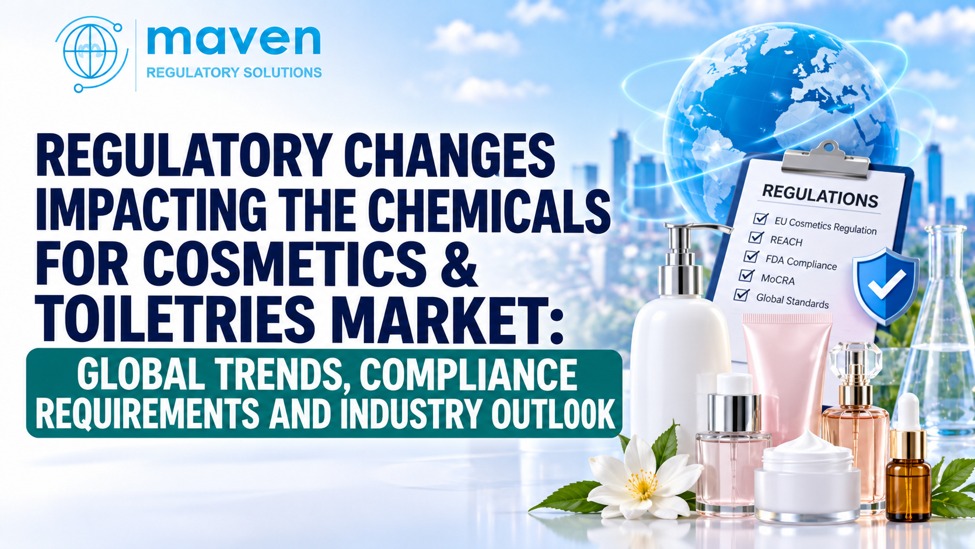
The global chemicals for cosmetics and toiletries industry are undergoing significant transformation as regulatory authorities introduce stricter requirements for ingredient safety, chemical disclosures, product labelling, toxicological assessments and supply chain transparency. These developments are influencing how cosmetic manufacturers, chemical suppliers, brand owners and distributors develop, source and commercialize personal care products.
From skincare formulations and shampoos to fragrances, deodorants and hygiene products, chemicals play an essential role in product performance, stability and consumer safety. However, increasing regulatory scrutiny is requiring businesses to demonstrate that cosmetic ingredients are appropriately assessed, documented and compliant with applicable regional requirements.
Regulatory frameworks such as the EU Cosmetics Regulation (EC) No. 1223/2009, REACH and CLP, the US Modernization of Cosmetics Regulation Act (MoCRA), and India's Cosmetics Rules, 2020 are important considerations for companies operating across international markets.
For the chemicals for cosmetics and toiletries market, regulatory compliance is no longer limited to finished-product safety. It increasingly involves ingredient traceability, supplier accountability, documentation management and continuous regulatory monitoring.
Why Regulatory Changes Are Shaping the Chemicals for Cosmetics and Toiletries Market
Regulatory changes are becoming important drivers of market development as governments strengthen consumer protection and chemical safety requirements.
The growing focus on ingredient transparency, restricted substances, environmental considerations and alternative testing methods is influencing product development strategies across the cosmetics industry.
For manufacturers and suppliers, these changes create both compliance challenges and commercial opportunities.
Key regulatory drivers include:
- Ingredient safety and toxicological assessments: Increasing expectations for scientifically supported ingredient safety evaluations.
- Chemical restrictions: Greater scrutiny of prohibited restricted and potentially hazardous substances.
- Ingredient disclosure: More attention to accurate ingredient declarations and transparent product information.
- Supply chain accountability: greater reliance on supplier documentation, traceability and regulatory declarations.
- Animal testing alternatives: Increasing adoption of validated non-animal testing approaches where appropriate.
- Environmental compliance: Growing attention to sustainable ingredients, chemical emissions and environmental impact.
Companies that proactively address these developments can strengthen regulatory readiness, reduce reformulation risks and improve access to international markets.
Key Regulatory Developments Affecting Cosmetic Chemicals
Different jurisdictions apply distinct regulatory frameworks to cosmetic ingredients and finished products. Businesses must understand the requirements relevant to their product categories and target markets.
|
Regulatory Framework |
Key Compliance Focus |
Industry Implications |
|
EU Cosmetics Regulation (EC) No. 1223/2009 |
Cosmetic product safety, prohibited and restricted ingredients, Product Information File (PIF) and safety assessments |
Requires appropriate product safety documentation and ingredient compliance |
|
EU REACH and CLP |
Chemical registration, restrictions, hazard classification and labelling |
Influences chemical sourcing, hazard communication and ingredient management |
|
US MoCRA |
Cosmetic facility registration, product listing, safety substantiation and adverse event requirements |
Increases regulatory responsibilities for responsible persons and relevant facilities |
|
India Cosmetics Rules, 2020 |
Import, manufacture, quality and labelling requirements |
Requires businesses to evaluate applicable Indian cosmetic regulatory obligations |
|
UK Cosmetics Regulation |
Product safety, responsible person and notification requirements |
Requires market-specific compliance arrangements for Great Britain |
Important: These frameworks are not interchangeable. A chemical or cosmetic ingredient accepted in one market may be subject to additional restrictions, documentation or assessment requirements in another.
Key Factors Driving Compliance Demand in Cosmetic Ingredients
1. Ingredient Safety and Toxicological Substantiation
Ingredient safety is a fundamental requirement for cosmetic product development.
Regulatory authorities increasingly expect companies to maintain appropriate scientific evidence supporting the safety of cosmetic formulations and their ingredients.
Depending on the applicable framework, assessments may consider:
- Toxicological profiles of individual ingredients.
- Exposure levels and intended product use.
- Dermal absorption and potential systemic exposure.
- Local irritation and sensitization.
- Impurities and contaminants.
- Consumer exposure and foreseeable use conditions.
Manufacturers must ensure that ingredient safety assessments are supported by relevant scientific data and appropriate documentation.
2. Chemical Restrictions and Ingredient Transparency
Regulatory restrictions on certain chemical substances can influence formulation decisions and ingredient sourcing.
Cosmetic manufacturers should monitor applicable restrictions covering preservatives, colorants, UV filters, fragrance ingredients and other regulated substances.
Ingredient transparency is also becoming increasingly important, particularly where labelling requirements, allergen disclosures and consumer information obligations apply.
Accurate ingredient inventories and regulatory screening are essential for identifying substances that may require substitution, additional assessment or market-specific controls.
3. Supply Chain Transparency and Traceability
Cosmetic manufacturers frequently depend on multiple chemical suppliers, distributors and contract manufacturing partners.
Regulatory compliance therefore requires reliable information throughout the supply chain.
Companies should obtain:
- Ingredient specifications and technical data.
- Safety Data Sheets (SDS), where applicable.
- Certificates of Analysis (CoA).
- Regulatory compliance declarations.
- Impurity and contaminant information.
- Origin and sourcing information.
- Relevant toxicological documentation.
Supplier transparency is becoming a competitive advantage because incomplete ingredient information can delay product approvals, reformulations and market launches.
4. Labelling, Claims and Consumer Protection
Cosmetic labelling requirements are evolving alongside consumer expectations for transparent product information.
Companies must evaluate ingredient declarations, warnings, mandatory product information and marketing claims under the applicable market requirements.
Claims such as natural, organic, hypoallergenic, dermatologically tested and cruelty-free should be supported by appropriate evidence and must not mislead consumers.
Marketing claims should be scientifically substantiated and aligned with applicable advertising and consumer protection requirements.
Key Industry Players in the Chemicals for Cosmetics and Toiletries Market
The global specialty chemicals industry includes several major companies supplying ingredients, functional materials and formulation technologies for personal care applications.
Key industry participants include:
- BASF
- Dow
- Evonik Industries
- Clariant
- Ashland
- Croda International
- Solvay
- Lubrizol
- Eastman Chemical Company
- Wacker Chemie
These companies participate in different segments of the specialty chemicals and personal care value chain, including surfactants, emollients, polymers, conditioning agents and functional ingredients.
Market Segmentation and Regulatory Impact
The chemicals for cosmetics and toiletries market covers several product categories and applications, each with distinct regulatory and safety considerations.
|
Segmentation Category |
Major Segments |
Regulatory Considerations |
|
Product Type |
Surfactants, emollients, preservatives, colorants, polymers and specialty ingredients |
Ingredient restrictions, purity, safety and permitted uses |
|
Application |
Skincare, haircare, oral care, fragrances and personal hygiene |
Product-specific safety, exposure and labelling requirements |
|
Physical Form |
Liquid, powder, cream, gel and solid |
Stability, handling, quality and product safety |
|
End Users |
Personal care manufacturers, cosmetic brands, private labels and professional salons |
Supplier qualification, formulation compliance and documentation |
|
Technology |
Natural and organic ingredients, synthetic chemicals and biotechnology-derived ingredients |
Ingredient identity, safety substantiation and applicable regulatory requirements |
How Regulation-Driven Technology Is Changing Market Demand
Regulatory pressure is encouraging businesses to invest in technologies that improve chemical safety assessments, documentation and formulation management.
Several developments are particularly relevant.
1. Alternative Toxicological Testing
The cosmetics industry is increasingly exploring in vitro, computational toxicology and other scientifically appropriate non-animal approaches.
These methods can support safety assessments while helping businesses respond to regulatory restrictions and consumer expectations concerning animal testing.
2. Digital Regulatory Documentation
Digital platforms are helping companies centralize:
- Safety Data Sheets.
- Ingredient specifications.
- Supplier declarations.
- Regulatory dossiers.
- Certificates and compliance records.
- Product safety documentation.
Digital documentation management can improve audit readiness, data accessibility and regulatory change control.
3. Formulation Intelligence
Specialized formulation tools can help manufacturers identify restricted ingredients, evaluate potential substitutes and assess the regulatory implications of formulation changes.
This is particularly valuable when a substance becomes restricted or when businesses expand into additional geographical markets.
4. Supply Chain Traceability
Digital traceability systems are improving visibility into ingredient sourcing, manufacturing information and supplier documentation.
These technologies can help companies identify supply chain risks and maintain consistent compliance records.
Impact of Regulatory Changes Across Major Industry Segments
1. Raw Material and Chemical Suppliers
Chemical suppliers are increasingly expected to provide comprehensive technical and regulatory information for ingredients supplied to cosmetic manufacturers.
Supplier compliance documentation, ingredient specifications and safety data are becoming important factors in purchasing decisions.
Suppliers with strong regulatory support capabilities may gain an advantage in markets where customers demand higher levels of transparency.
2. Cosmetic Manufacturers and Brand Owners
Manufacturers and brand owners must balance product performance, consumer expectations and regulatory compliance.
They may need to review formulations, assess restricted substances, update product safety documentation and identify suitable alternative ingredients.
Regulatory screening during product development can reduce the likelihood of costly reformulations and delayed launches.
3. Contract and Private-Label Manufacturers
Contract manufacturers must manage regulatory requirements across multiple customer portfolios and target markets.
This increases the importance of ingredient verification, formulation control, batch documentation and supplier qualification.
4. Retailers and E-Commerce Platforms
Retailers and online marketplaces increasingly consider product documentation, labelling accuracy and regulatory compliance during product onboarding.
Businesses selling internationally should ensure that product information and claims meet the applicable market requirements.
Regional Regulatory Trends and Emerging Opportunities
Regulatory expectations differ across major cosmetics markets, creating opportunities for companies that can manage multiple regulatory frameworks.
|
Region |
Regulatory Focus |
Business Considerations |
|
European Union |
Cosmetics Regulation, REACH, CLP and ingredient restrictions |
Product safety reports, PIF, ingredient screening and chemical compliance |
|
United States |
MoCRA, applicable FDA requirements and state-level restrictions |
Facility registration, product listing, safety substantiation and state-specific monitoring |
|
United Kingdom |
UK Cosmetics Regulation and applicable chemical controls |
Responsible person arrangements, notification and product compliance |
|
India |
Cosmetics Rules, 2020 and applicable BIS standards |
Import and manufacturing compliance, quality and labelling |
|
Asia-Pacific |
Diverse national cosmetics and chemical regulatory frameworks |
Market-specific ingredient reviews, notifications and supplier documentation |
For global cosmetic businesses, regulatory harmonization does not mean identical compliance requirements. Companies must maintain region-specific regulatory assessments before placing products on the market.
Challenges Companies Need to Consider
Despite the opportunities created by regulatory developments, several challenges remain:
- Complex regulatory landscapes: Different countries apply different ingredient restrictions, safety requirements and labelling rules.
- Increasing compliance costs: Toxicological assessments, documentation and supplier audits require resources.
- Reformulation difficulties: Replacing restricted ingredients without compromising product performance can be challenging.
- Supplier information gaps: Incomplete ingredient and testing information can affect compliance assessments.
- Regulatory change management: Companies must continuously monitor amendments and emerging requirements.
- Data management risks: Digital regulatory records require appropriate governance, accuracy and information security.
Addressing these challenges requires collaboration between regulatory affairs, research and development, procurement, quality assurance and supply chain teams.
Future Opportunities in the Chemicals for Cosmetics and Toiletries Market
The changing regulatory environment is also creating opportunities for innovation and business development.
Important areas include:
- Safer ingredient development: Greater interest in ingredients supported by robust safety information and suitable regulatory profiles.
- Green chemistry: Development of alternatives that consider safety, sustainability and environmental performance.
- Advanced testing technologies: Wider use of scientifically validated non-animal testing methods where applicable.
- Regulatory intelligence: Increased demand for monitoring services, ingredient screening and international compliance assessments.
- Digital product documentation: Improved management of ingredient data, product safety records and supplier declarations.
- Strategic supplier partnerships: Stronger collaboration between chemical suppliers, formulators and regulatory specialists.
Companies investing in regulatory readiness and safer formulation strategies can strengthen market positioning while responding to changing consumer and regulatory expectations.
Frequently Asked Questions
1. Why are regulatory changes important for the chemicals for cosmetics and toiletries market?
They influence ingredient selection, product safety assessments, labelling, chemical restrictions, supplier documentation and international market access.
2. Which regulations are important for cosmetic chemical compliance?
Important frameworks include the EU Cosmetics Regulation, REACH, CLP, US MoCRA, UK Cosmetics Regulation and India's Cosmetics Rules, 2020.
3. Do cosmetic ingredient suppliers need to comply with cosmetic regulations?
Suppliers should understand the applicable requirements affecting their ingredients and provide accurate technical, safety and regulatory information to customers.
4. How do chemical restrictions affect cosmetic formulations?
Restrictions may require ingredient substitution, additional safety assessments, reformulation or market-specific product adjustments.
5. Why is supplier traceability important?
Traceability helps manufacturers verify ingredient identity, sourcing information, safety documentation and compliance status throughout the supply chain.
6. How does technology support cosmetic regulatory compliance?
Digital SDS management, formulation screening, regulatory intelligence platforms and alternative testing technologies can improve documentation and compliance workflows.
7. What are the major challenges for global cosmetic manufacturers?
Key challenges include regulatory complexity, ingredient restrictions, supplier information gaps, reformulation costs and continuous regulatory monitoring.
8. How can businesses prepare for future regulatory changes?
Businesses should conduct ingredient assessments, strengthen supplier qualification, maintain regulatory documentation and establish ongoing regulatory monitoring programmers.
Conclusion: Regulatory Readiness Will Shape the Future of Cosmetic Chemicals
Regulatory changes are reshaping the chemicals for cosmetics and toiletries market by increasing expectations for ingredient safety, chemical transparency, supplier accountability and product compliance.
For manufacturers, chemical suppliers, brand owners and distributors, regulatory compliance is becoming an important part of product development and international business strategy.
Companies must move beyond basic documentation and adopt a proactive approach involving ingredient screening, toxicological assessments, supplier verification, formulation reviews and continuous regulatory intelligence.
Businesses that integrate regulatory compliance into their product lifecycle can reduce market-entry risks, improve supply chain resilience and support the development of safer and more competitive cosmetic products.
How Maven Regulatory Solutions Can Help
Maven Regulatory Solutions supports cosmetic manufacturers, chemical suppliers, importers and brand owners in navigating evolving global cosmetics and chemical regulations.
Our services include:
- Global cosmetics regulatory assessments.
- Cosmetic ingredient regulatory screening.
- REACH and CLP compliance assessments.
- US cosmetics regulatory assessments.
- MoCRA compliance support.
- Cosmetic product portfolio screening.
- Ingredient and formulation assessments.
- Safety Data Sheet (SDS) review and compliance.
- Toxicological and product safety assessments.
- Supplier compliance assessments.
- Restricted-substance evaluations.
- Regulatory gap assessments.
- Product labelling and claims reviews.
- Regulatory intelligence and monitoring.
- Lifecycle compliance support.
Our approach helps businesses identify regulatory risks, evaluate ingredient compliance, strengthen supplier documentation and develop practical strategies for global market access.
Visit www.mavenrs.com to explore our regulatory services and support for the cosmetics, chemicals and personal care industries.

Post a comment