
October 12, 2026
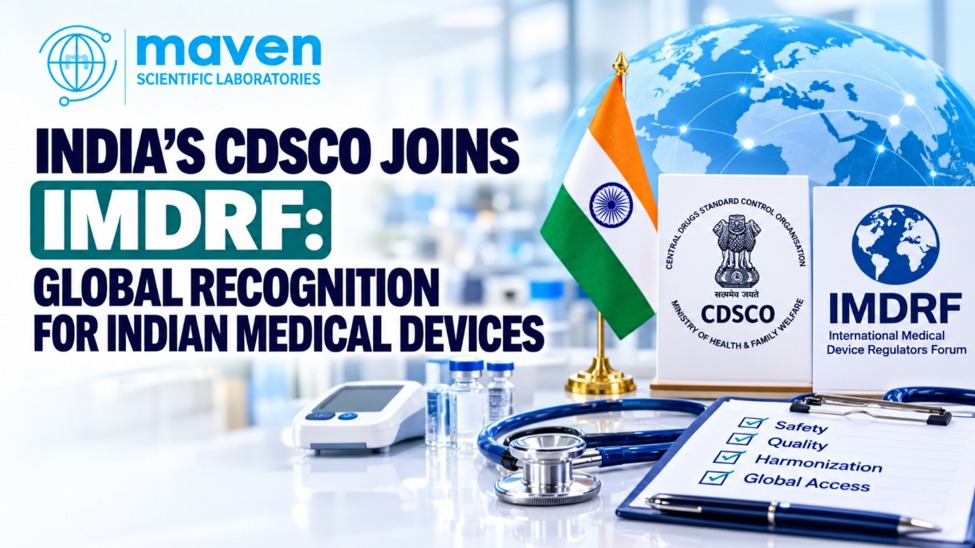
India has taken an important step toward greater international alignment of its medical device regulatory framework. On October 3, 2024, the Central Drugs Standard Control Organization (CDSCO), under India's Ministry of Health and Family Welfare (MoHFW), was approved as an Affiliate Member of the International Medical Device Regulators Forum (IMDRF).
The development follows India's application for Affiliate Membership in 2024 and discussions between senior CDSCO officials and the IMDRF Management Committee (MC) during the 26th IMDRF Session held in Seattle, Washington, United States, in September 2024.
For India's medical technology sector, this represents more than an international recognition milestone. Affiliate Membership creates opportunities for regulatory information exchange, greater convergence with international approaches and stronger collaboration with global medical device regulators.
India's medical device framework is currently governed primarily through the Medical Devices Rules, 2017 (MDR 2017) under the Drugs and Cosmetics Act, 1940. CDSCO regulates medical devices and in vitro diagnostic medical devices (IVDs) through a risk-based regulatory framework.
What Is the IMDRF?
The International Medical Device Regulators Forum (IMDRF) is a voluntary group of medical device regulatory authorities established in 2011 to accelerate international regulatory harmonization and convergence.
The Forum brings together major regulatory authorities and jurisdictions, including the:
- United States Food and Drug Administration (US FDA)
- European Union (EU)
- Health Canada
- Ministry of Health, Labour and Welfare (MHLW) / Pharmaceuticals and Medical Devices Agency (PMDA), Japan
- Therapeutic Goods Administration (TGA), Australia
- Medicines and Healthcare products Regulatory Agency (MHRA), United Kingdom
- Regulatory authorities from Brazil, China, Singapore, South Korea and other jurisdictions.
India's Affiliate Membership provides CDSCO with opportunities to participate in IMDRF Open Sessions, exchange technical information, discuss regulatory strategies and trends, provide Indian regulatory perspectives and use IMDRF documents as a basis, in whole or in part, for India's medical device regulatory framework.
Why Is CDSCO's IMDRF Affiliate Membership Important?
India's participation comes at an important stage in the development of the domestic medical device industry.
The Government of India has been progressively strengthening India's medical device regulatory framework and aligning it with internationally accepted regulatory principles.
The IMDRF relationship can support:
1. Regulatory Harmonization
Greater interaction with international regulators can support convergence between India's regulatory requirements and internationally recognized approaches.
This may help manufacturers better understand common regulatory concepts relating to:
- Risk classification
- Quality management systems (QMS)
- Clinical evidence
- Performance evaluation
- Software as a medical device (SaMD)
- Post-market surveillance
- Regulatory reliance
- Medical device submissions
CDSCO already operates a risk-based framework under MDR 2017, under which medical devices are classified into Class A, Class B, Class C and Class D according to risk.
2. Stronger International Regulatory Cooperation
Affiliate Membership provides a formal channel for CDSCO to exchange regulatory experience and technical information with international authorities.
This can support India's ability to respond to emerging technologies and increasingly complex medical device regulatory challenges.
3. Greater Export Readiness
Indian manufacturers seeking international market access can benefit from greater awareness of global regulatory expectations.
However, IMDRF Affiliate Membership does not automatically grant Indian medical devices approval in the United States, European Union, United Kingdom, Australia, Japan or other markets.
Manufacturers must still satisfy the individual regulatory requirements of each destination market.
The benefit is that greater regulatory convergence and familiarity with international approaches may help Indian companies build more globally aligned regulatory strategies.
4. Supporting "Brand India"
The Government of India has specifically linked the development to strengthening the competitiveness and international prominence of India's medical device industry.
For Indian manufacturers, stronger regulatory alignment can support the broader Make in India and Aatmanirbhar Bharat objectives by encouraging globally competitive medical device manufacturing.
India's Medical Device Regulatory Framework
India regulates medical devices under the Drugs and Cosmetics Act, 1940 and Medical Devices Rules, 2017 (MDR 2017).
CDSCO describes medical devices broadly to include instruments, apparatus, appliances, implants, materials, software and accessories intended for specified medical purposes, where the principal intended action is not achieved through pharmacological, immunological or metabolic means.
The MDR 2017 framework applies to areas including:
- Medical device manufacture
- Medical device import
- Sales and distribution
- Clinical investigation
- Performance evaluation
- In vitro diagnostic medical devices
- Licensing and regulatory submissions
- Post-market regulatory activities
The framework uses a risk-based classification system:
| Risk Class | General Risk Level |
| Class A | Low risk |
| Class B | Low-moderate risk |
| Class C | Moderate-high risk |
| Class D | High risk |
CDSCO also provides application pathways for import and manufacturing, including relevant applications through its online regulatory systems.
What Does IMDRF Affiliate Membership Mean for Indian Manufacturers?
Indian medical device manufacturers should view this development as a strategic regulatory opportunity, rather than an automatic international approval mechanism.
Companies preparing for global expansion should consider strengthening their regulatory systems in areas such as:
1. Regulatory Classification
Confirm the intended use, indications, technology and risk profile of each device and determine the appropriate classification in India and target international markets.
2. Quality Management Systems
Manufacturers should maintain robust Quality Management Systems (QMS) appropriate for their products and markets, including manufacturing controls, document control, design controls, corrective and preventive action (CAPA), supplier controls and change management.
3. Clinical and Performance Evidence
Companies developing higher-risk devices, innovative technologies or in vitro diagnostic medical devices should establish evidence strategies that can support Indian and international regulatory submissions.
4. Technical Documentation
Manufacturers expanding globally should maintain structured technical documentation covering device description, intended use, risk management, verification and validation, clinical or performance evidence, labeling and post-market information.
5. Post-Market Surveillance
Regulatory readiness does not end after authorization. Manufacturers should establish systems for complaint handling, vigilance, adverse event reporting, corrective actions and ongoing safety monitoring.
| Regulatory Area | India – CDSCO | Global / IMDRF-Aligned Consideration |
| Regulatory Authority | Central Drugs Standard Control Organization (CDSCO) | International medical device regulatory authorities |
| Key Regulation | Medical Devices Rules, 2017 (MDR 2017) | Jurisdiction-specific medical device regulations |
| Risk Classification | Class A, B, C & D | Risk-based classification approaches |
| Quality Management | Quality Management System (QMS) requirements under applicable Indian rules | Internationally aligned QMS principles |
| Clinical Evidence | Clinical investigation / clinical evaluation requirements as applicable | Evidence requirements vary by market |
| IVD Regulation | In vitro diagnostic medical devices regulated under India's medical device framework | International IVD requirements vary by jurisdiction |
| Market Authorization | CDSCO licensing / applicable registration pathway | Separate authorization may be required in each target market |
| Post-Market Activities | Vigilance, adverse event reporting and post-market obligations | Market-specific post-market surveillance requirements |
| Regulatory Convergence | CDSCO participates in international regulatory collaboration | IMDRF supports international regulatory harmonization and convergence |
| Global Market Access | Indian authorization does not automatically provide overseas approval | Separate requirements apply in the US, EU, UK, Australia, Japan and other markets |
Opportunities for IVD and Digital Health Companies
The IMDRF relationship is also relevant to India's rapidly developing in vitro diagnostic (IVD) and digital health sectors.
Modern medical device regulation increasingly involves technologies such as:
- Artificial intelligence (AI)-enabled medical devices
- Machine learning-enabled devices
- Software as a medical device (SaMD)
- Companion diagnostics (CDx)
- Molecular diagnostics
- Point-of-care testing
- Connected medical devices
- Wearable medical technologies
- Remote monitoring technologies
International regulatory convergence can become increasingly important as Indian companies develop products intended for simultaneous or sequential launch across multiple jurisdictions.
What Indian Medical Device Companies Should Do Now
IMDRF Affiliate Membership is an opportunity for manufacturers to strengthen their global regulatory strategy.
Companies should consider:
1. Review their Indian regulatory classification
Confirm that each product is appropriately classified under MDR 2017.
2. Assess international market requirements
Compare CDSCO requirements with the requirements of target markets such as the United States, European Union, United Kingdom, Australia, Canada and Japan.
3. Strengthen QMS compliance
Evaluate quality systems against applicable Indian and international expectations.
4. Improve technical documentation
Maintain documentation that can support multiple regulatory pathways where appropriate.
5. Build an evidence strategy
Identify clinical, analytical, performance and validation evidence needed for Indian and international submissions.
6. Monitor IMDRF developments
Track new IMDRF guidance and regulatory convergence initiatives that may influence future medical device requirements.
7. Prepare for lifecycle management
Establish procedures for change control, post-market surveillance, vigilance, labeling updates and regulatory submissions.
FAQs
1. What is IMDRF?
The International Medical Device Regulators Forum (IMDRF) is an international group of medical device regulators established to accelerate regulatory harmonization and convergence.
2. When did CDSCO become an IMDRF Affiliate Member?
The Government of India announced CDSCO's approval as an IMDRF Affiliate Member on October 3, 2024, following discussions during the 26th IMDRF Session in September 2024.
3. Is India a full IMDRF member?
CDSCO is an Affiliate Member of IMDRF. Affiliate Membership provides opportunities for information exchange, participation in Open Sessions and use of IMDRF documents as a basis for India's regulatory framework.
4. Does IMDRF Affiliate Membership automatically approve Indian devices overseas?
No. Manufacturers must continue to meet the regulatory requirements of each target market. IMDRF Affiliate Membership supports regulatory cooperation and convergence but does not replace individual market authorization requirements.
5. What is India's main medical device regulations?
Medical devices in India are primarily regulated under the Drugs and Cosmetics Act, 1940 and Medical Devices Rules, 2017.
6. How can Indian manufacturers benefit?
Manufacturers can benefit through greater exposure to international regulatory practices, improved regulatory strategy, stronger global readiness and opportunities to align their development and compliance systems with international expectations.
Conclusion
CDSCO's Affiliate Membership in the International Medical Device Regulators Forum (IMDRF) is an important milestone in India's journey toward greater international regulatory convergence.
For Indian medical device manufacturers, the development can support stronger regulatory intelligence, international collaboration and global market readiness.
At the same time, companies should recognize that global recognition does not mean automatic global approval. Indian manufacturers must continue to meet the specific regulatory, clinical, quality, technical documentation, labeling and post-market requirements of every target market.
The opportunity is therefore strategic: companies that build globally aligned regulatory systems today may be better positioned to compete in tomorrow's international medical device market.
India's regulatory evolution is creating new opportunities for Indian MedTech — and global regulatory readiness will be critical to converting those opportunities into international market access.
How Maven Regulatory Solutions Can Help
Maven Regulatory Solutions supports medical device and in vitro diagnostic companies with regulatory strategy, market access and compliance across India and international markets.
Our support can include:
- CDSCO Medical Device Regulatory Strategy
- Medical Devices Rules, 2017 (MDR 2017) Compliance
- Medical Device Classification
- Import & Manufacturing License Support
- Technical Documentation Review
- Quality Management System (QMS) Compliance
- Clinical & Performance Evidence Strategy
- In Vitro Diagnostic (IVD) Regulatory Support
- Software as a Medical Device (SaMD) Regulatory Strategy
- International Market Entry
- United States Food and Drug Administration (US FDA) Regulatory Support
- European Union (EU) Medical Device Regulation (MDR) Support
- United Kingdom (UK) Medical Device Regulatory Support
- Australia Therapeutic Goods Administration (TGA) Support
- Post-Market Surveillance
- Regulatory Intelligence & Global Harmonization
- Lifecycle Management & Change Assessment
Maven Regulatory Solutions — Science. Compliance. Impact.

Post a comment