
July 07, 2026
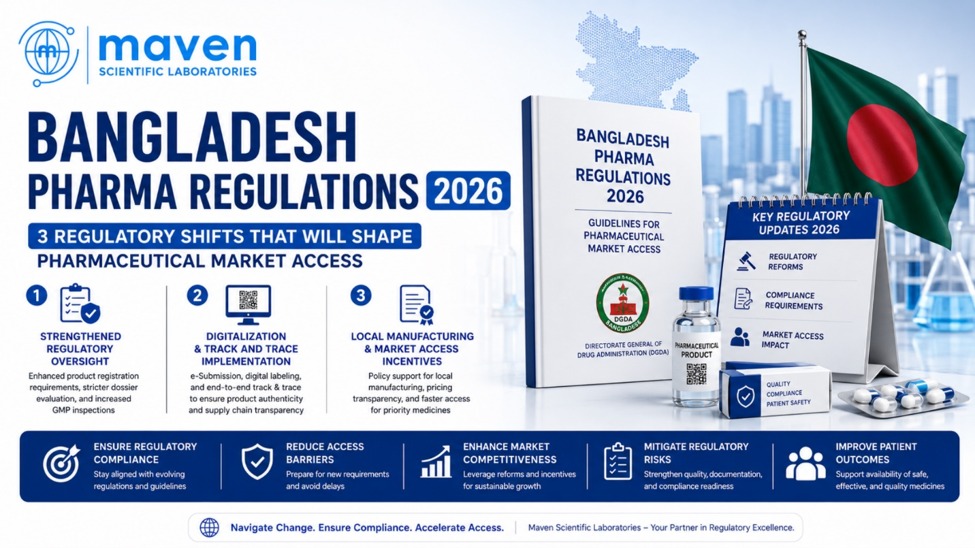
Bangladesh's pharmaceutical regulatory landscape is evolving rapidly in 2026, driven by three significant developments: increased emphasis on essential medicine portfolio alignment, expansion of the National Essential Medicines List (NEML), and the approaching expiration of the WTO TRIPS waiver. These changes influence product registration, pricing strategies, and market access planning. Pharmaceutical companies seeking to enter or expand in Bangladesh should strengthen regulatory planning, optimize product portfolios, prepare registration dossiers early, and closely monitor Directorate General of Drug Administration (DGDA) requirements to ensure timely approvals and sustainable market growth.
Bangladesh has become one of South Asia's fastest-growing pharmaceutical markets, offering significant opportunities for manufacturers of generic medicines, biosimilars, and innovative pharmaceutical products. Rising healthcare expenditure, expanding access to medical services, and a well-established domestic manufacturing sector continue to attract global pharmaceutical companies looking to strengthen their regional presence.
At the same time, Bangladesh's regulatory environment is becoming more structured. The Directorate General of Drug Administration (DGDA) is modernizing its regulatory framework to improve product quality, increase transparency, strengthen public health initiatives, and prepare the industry for future international intellectual property obligations.
For pharmaceutical companies, regulatory compliance now extends well beyond preparing a registration dossier. Successful market entry increasingly depends on integrating regulatory strategy with commercial planning, pricing, manufacturing, and lifecycle management.
Companies that prepare early will be better positioned to reduce approval delays, navigate evolving regulatory expectations, and establish a sustainable presence in Bangladesh's expanding pharmaceutical market.
Executive Overview
Three major regulatory developments are expected to shape Bangladesh's pharmaceutical sector throughout 2026:
- Greater emphasis on essential medicine portfolio alignment
- Expansion of the National Essential Medicines List (NEML)
- The approaching expiration of the WTO TRIPS pharmaceutical waiver
These changes are influencing regulatory priorities, pricing policies, product registration timelines, and long-term investment decisions. Rather than treating compliance as a standalone activity, pharmaceutical companies should adopt an integrated market access strategy that aligns regulatory affairs, commercial objectives, manufacturing capabilities, and portfolio planning.
A successful Bangladesh market access strategy should be:
- DGDA compliant
- Risk-based
- Commercially aligned
- Portfolio driven
- Lifecycle focused
- Pricing conscious
- Inspection ready
- Supported by continuous regulatory intelligence
Organizations that proactively adapt to these changes can improve approval efficiency while minimizing long-term regulatory and commercial risks.
Why Bangladesh Is Becoming a Strategic Pharmaceutical Market
Bangladesh's pharmaceutical industry has evolved into a major contributor to both domestic healthcare and international medicine supply. The country is recognized for its strong generic drug manufacturing capabilities and continues to expand exports to numerous regulated and emerging markets.
Several factors are driving this growth:
- Increasing healthcare investments
- Expanding patient access to medicines
- Rising demand for affordable therapies
- Strong domestic manufacturing capacity
- Growing biosimilar development
- Government initiatives supporting pharmaceutical production
Alongside these opportunities, regulators are strengthening oversight to ensure medicines remain safe, effective, affordable, and consistently available.
The DGDA continues to modernize regulatory processes by enhancing registration requirements, improving product quality oversight, increasing pricing transparency, and aligning selected regulatory practices with international standards.
Without proactive planning, pharmaceutical companies may encounter:
- Longer product approval timelines
- Portfolio alignment challenges
- Pricing constraints
- Increased regulatory queries
- Delayed product launches
- Greater lifecycle management complexity
- Stronger market competition
- Missed opportunities before the TRIPS transition
Companies that integrate regulatory planning into their overall business strategy will be better prepared to capitalize on Bangladesh's evolving pharmaceutical landscape.
What's Driving Regulatory Change?
Bangladesh's pharmaceutical reforms are guided by two primary objectives:
- Expanding access to affordable, high-quality medicines
- Supporting long-term growth of the domestic pharmaceutical industry
To achieve these goals, regulators are placing greater emphasis on:
| Regulatory Driver | Business Impact |
| Essential medicine policies | Product portfolio planning |
| DGDA modernization | Higher compliance expectations |
| National Essential Medicines List | Pricing and registration strategy |
| TRIPS waiver transition | Accelerated registration planning |
| Market access reforms | More structured approval processes |
As Bangladesh prepares for the post-TRIPS environment, pharmaceutical companies should expect regulatory planning to become increasingly strategic rather than purely administrative.
Regulatory Shift 1: Greater Emphasis on Essential Medicine Portfolio Alignment
One of the most significant developments in Bangladesh's pharmaceutical sector is the growing focus on aligning company product portfolios with national healthcare priorities.
While discussions often refer to approximately 25% portfolio alignment, the broader regulatory objective is to encourage manufacturers to contribute meaningfully to the availability of essential medicines that support public health needs.
This shift reflects Bangladesh's commitment to improving healthcare accessibility while ensuring a stable supply of affordable medicines across the country.
For pharmaceutical manufacturers, portfolio planning should begin long before product registration.
Key evaluation areas include:
- Existing product portfolio
- Essential medicine coverage
- Future product pipeline
- Market demand
- Regulatory priorities
- Commercial viability
- Manufacturing capability
Organizations focused primarily on specialty medicines or premium therapies should assess whether their product mix aligns with Bangladesh's evolving healthcare priorities.
Rather than viewing essential medicines solely as a compliance requirement, companies should consider them an important component of a long-term market access strategy.
Why Portfolio Alignment Matters
Aligning product portfolios with national healthcare priorities offers several strategic advantages:
- Supports smoother regulatory engagement
- Demonstrates commitment to public health objectives
- Improves long-term market positioning
- Create opportunities for portfolio diversification
- Strengthens relationships with healthcare stakeholders
- Supports sustainable market expansion
Early portfolio assessment also enables companies to prioritize high-value registrations while reducing potential regulatory challenges during product approval.
| Business Area | Strategic Benefit |
| Regulatory Affairs | Better submission planning |
| Commercial Strategy | Stronger market positioning |
| Market Access | Improved alignment with DGDA priorities |
| Portfolio Management | Balanced product mix |
| Long-Term Growth | Sustainable expansion opportunities |
Strategic Considerations for Pharmaceutical Companies
As Bangladesh's regulatory framework continues to evolve, pharmaceutical companies should adopt a proactive and integrated approach to market entry rather than addressing each regulatory change independently.
Key priorities include:
1. Align Product Portfolios
Evaluate existing and planned products against Bangladesh's healthcare priorities and essential medicine requirements to improve long-term regulatory alignment.
2. Strengthening Regulatory Planning
Early preparation remains one of the most effective ways to reduce approval delays and improve submission quality. Companies should prioritize high-value products, conduct dossier gap assessments, and prepare supporting documentation well before submission deadlines.
3. Review of Pricing Strategies
Manufacturers should assess how pricing controls and public health priorities may influence product profitability, manufacturing costs, commercial positioning, and supply chain planning.
4. Accelerate Time-to-Submission
With regulatory activity increasing ahead of the TRIPS transition, organizations should avoid last-minute dossier preparation. Earlier submissions provide greater flexibility and reduce the risk of unexpected regulatory delays.
5. Build Regulatory Intelligence
Regular monitoring of DGDA publications, pricing updates, and regulatory guidance enables organizations to anticipate policy changes, respond quickly to new requirements, and make informed business decisions.
Regulatory Shift 2: Expansion of the National Essential Medicines List (NEML)
Another important regulatory development in 2026 is the continued expansion of Bangladesh's National Essential Medicines List (NEML). The updated list now includes approximately 295 essential medicines, reflecting the government's commitment to improving access to safe, effective, and affordable healthcare.
Medicines included in the NEML are often subject to:
- Maximum Retail Price (MRP) controls
- Enhanced pricing oversight
- Increased regulatory monitoring
- Supply continuity expectations
- Public health prioritization
For pharmaceutical manufacturers, participation in the essential medicines segment offers significant market opportunities but also introduces commercial considerations. While these medicines generally have consistent demand, pricing controls require companies to optimize manufacturing efficiency, supply chain resilience, and operational costs to maintain profitability.
Manufacturers should evaluate:
- Manufacturing costs
- Pricing sustainability
- Product profitability
- Supply chain resilience
- Market demand forecasts
- Inventory planning
Balancing affordability with commercial viability will become increasingly important as Bangladesh continues strengthening its healthcare system and expanding access to essential medicines.
Impact of NEML Expansion
| Regulatory Change | Manufacturer Consideration |
| Expanded Essential Medicines List | Portfolio expansion opportunities |
| Price controls | Margin optimization |
| Increased regulatory oversight | Stronger compliance management |
| Public health priorities | Sustainable market participation |
| Higher product demand | Manufacturing and supply planning |
Regulatory Shift 3: WTO TRIPS Waiver Transition Creates a Critical Market Access Window
One of the most significant developments affecting Bangladesh's pharmaceutical industry is the approaching expiration of the World Trade Organization (WTO) TRIPS waiver, scheduled for November 2026.
As a Least Developed Country (LDC), Bangladesh has benefited from this waiver, allowing manufacturers to produce and market certain generic medicines without implementing pharmaceutical patent protection requirements under the WTO Agreement on Trade-Related Aspects of Intellectual Property Rights (TRIPS).
This flexibility has supported the rapid growth of Bangladesh's pharmaceutical industry, strengthened domestic healthcare access, and expanded exports to international markets.
With the waiver period nearing its end, pharmaceutical companies are accelerating regulatory and commercial activities to maximize available opportunities before the transition.
To remain competitive, companies should prioritize:
- Product portfolio assessments
- Registration planning
- Dossier preparation
- Regulatory submission timelines
- Manufacturing readiness
- Commercial launch planning
- Intellectual property assessments
Organizations that delay submissions may encounter additional intellectual property considerations, longer approval timelines, or increased commercialization complexity after the transition.
Why the TRIPS Transition Matters
The transition is expected to influence several aspects of pharmaceutical business planning, including:
- Generic product strategies
- Biosimilar development
- Product lifecycle management
- Market entry planning
- Regulatory resource allocation
- Long-term investment decisions
Companies that integrate regulatory planning with commercial strategy will be better positioned to respond to changing market conditions while maintaining compliance.
TRIPS Waiver Business Implications
| Regulatory Development | Potential Business Impact |
| TRIPS waiver transition | Time-sensitive registration planning |
| Increased submission activity | Greater competition for approvals |
| Generic portfolio planning | Strategic product prioritization |
| Higher regulatory workload | Earlier dossier preparation |
| Intellectual property transition | Long-term commercialization planning |
Common Challenges for Pharmaceutical Market Entry
Although Bangladesh offers significant growth opportunities, companies often encounter regulatory and operational challenges during market entry.
Common challenges include:
- Incomplete registration dossiers
- Delayed documentation
- Portfolio gaps
- Pricing constraints
- Limited local regulatory expertise
- Evolving DGDA expectations
- Resource limitations
- Cross-functional coordination challenges
- Product prioritization decisions
Addressing these issues through early planning and a structured regulatory strategy can significantly improve approval timelines and reduce compliance risks.
Common Compliance Mistakes to Avoid
Many organizations underestimate the complexity of Bangladesh's evolving regulatory environment. The most common mistakes include:
1. Delaying Registration Preparation
Waiting until commercial decisions are finalized before preparing registration dossiers often leads to compressed timelines, avoidable delays, and reduced submission quality.
2. Ignoring Portfolio Alignment
Companies focusing only on specialty or premium products without considering essential medicine priorities may face strategic challenges during market expansion.
3. Underestimating Pricing Controls
Commercial strategies should account for products subject to Maximum Retail Price (MRP) regulations to ensure long-term sustainability.
4. Limited Regulatory Intelligence
Monitoring regulatory updates only during submission preparation increases the risk of missing policy changes that could affect approvals or commercialization.
5. Weak Cross-Functional Collaboration
Successful market access requires close coordination between:
- Regulatory Affairs
- Commercial teams
- Manufacturing
- Supply Chain
- Quality Assurance
- Medical Affairs
Integrated planning supports faster execution, better compliance, and improved business outcomes.
Bangladesh Market Access Readiness Checklist
| Activity | Recommended Timing | Business Benefit |
| Review product portfolio | Before market entry | Better regulatory alignment |
| Assess essential medicine coverage | Early planning | Stronger approval strategy |
| Prepare registration dossiers | As early as possible | Faster submissions |
| Monitor DGDA updates | Monthly | Improved regulatory intelligence |
| Review pricing strategy | Before commercialization | Sustainable market access |
| Conduct internal gap assessments | Before submission | Reduced compliance risks |
Outlook
Bangladesh's pharmaceutical regulatory framework is expected to continue evolving as regulators balance public health priorities with industry growth and international regulatory alignment.
Manufacturers should anticipate greater emphasis on:
- Digital regulatory processes
- Faster and more transparent product reviews
- Enhanced pharmacovigilance requirements
- Stronger regulatory governance
- Lifecycle compliance management
- Inspection readiness
- International harmonization
- Product quality oversight
Organizations that invest in regulatory intelligence, proactive compliance programs, and early planning will be better positioned to adapt to future regulatory developments and capitalize on Bangladesh's expanding pharmaceutical market.
Conclusion
Bangladesh's pharmaceutical regulatory landscape is entering a transformative phase. The increased emphasis on essential medicine portfolio alignment, expansion of the National Essential Medicines List (NEML), and the approaching WTO TRIPS waiver deadline are reshaping how pharmaceutical companies approach product registration, pricing, and market access.
Rather than viewing compliance as a standalone regulatory requirement, organizations should integrate regulatory strategy with commercial planning, manufacturing readiness, pricing considerations, and lifecycle management.
Early dossier preparation, continuous monitoring of DGDA updates, robust regulatory intelligence, and cross-functional collaboration can help companies reduce approval delays, strengthen compliance, and improve long-term market competitiveness.
As Bangladesh continues modernizing its pharmaceutical sector, companies that adopt a forward-looking regulatory strategy will be well positioned to achieve sustainable growth in one of South Asia's most promising pharmaceutical markets.
Frequently Asked Questions
1. What are the key pharmaceutical regulatory changes in Bangladesh for 2026?
The major developments include increased emphasis on essential medicine portfolio alignment, expansion of the National Essential Medicines List (NEML), and the approaching expiration of the WTO TRIPS waiver.
2. What is the role of the Directorate General of Drug Administration (DGDA)?
The DGDA is Bangladesh's national regulatory authority responsible for pharmaceutical product registration, licensing, quality oversight, inspections, and regulatory compliance.
3. Why is the National Essential Medicines List (NEML) important?
The NEML identifies medicines that address priority healthcare needs and supports affordable access to essential treatments. Products on the list may also be subject to pricing controls and enhanced regulatory oversight.
4. Why should pharmaceutical companies prepare early for the TRIPS waiver transition?
Early planning allows companies to complete dossier preparation, optimize product portfolios, and accelerate registrations before potential intellectual property and commercialization changes take effect.
5. How can pharmaceutical companies improve market access in Bangladesh?
Organizations can strengthen market access by aligning product portfolios with national priorities, preparing high-quality registration dossiers, monitoring DGDA updates, evaluating pricing strategies, and maintaining continuous regulatory intelligence.

Post a comment