
January 23, 2026
Ensuring Global Compliance, Safety, and Sustainability in Modern Agriculture
In today’s rapidly evolving agricultural landscape, agrochemical regulations are critical to ensuring safe, effective, and sustainable farming practices. With rising global food demand and increasing environmental concerns, regulatory frameworks are becoming more stringent and scientifically driven.
Agrochemicals including pesticides, fertilizers, biostimulants, and biocides play a vital role in crop productivity. However, their use must be carefully controlled to prevent environmental damage, human health risks, and trade disruptions.
At Maven Regulatory Solutions, we support agrochemical companies in navigating complex regulatory systems, ensuring efficient product registration, compliance alignment, and global market access.
What are agrochemical regulations and why are they important?
Agrochemical regulations are laws governing the safe use, registration, and monitoring of pesticides, fertilizers, and biostimulants to protect human health, the environment, and ensure sustainable agriculture.
Global Regulatory Authorities Governing Agrochemicals
Agrochemical regulation is managed by leading global authorities responsible for evaluating safety, efficacy, and environmental impact.
Key Regulatory Bodies
- European Food Safety Authority – Conducts pesticide risk assessments and food safety evaluations in the EU
- United States Department of Agriculture – Oversees agricultural practices, pesticide use, and food systems in the U.S.
- Australian Pesticides and Veterinary Medicines Authority – Regulates pesticide registration and post-market compliance
- Central Insecticides Board & Registration Committee – Governs pesticide approval, labeling, and sale in India
These authorities ensure agrochemical products undergo rigorous evaluation for toxicity, environmental safety, and performance before approval.
Environmental and Biological Impact of Agrochemicals
While agrochemicals are essential for modern agriculture, improper use can lead to significant environmental and health risks.
Key Environmental Impacts
| Impact Area | Description | Long-Term Risk |
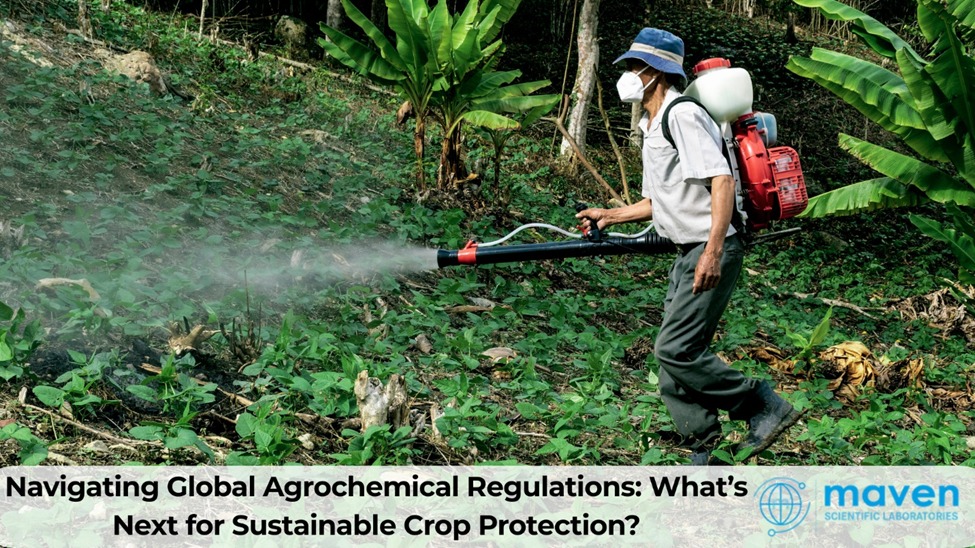
| Air Pollution | Spray drift disperses chemicals into the atmosphere | Regional contamination |
| Soil Degradation | Disrupts microbial ecosystems | Reduced fertility |
| Water Contamination | Runoff affects groundwater and rivers | Ecosystem damage |
| Bioaccumulation | Chemicals accumulate in food chains | Chronic toxicity |
Human and Ecological Risks
- Acute and chronic health effects from exposure
- Endocrine disruption and neurological impacts
- Toxicity to beneficial organisms such as pollinators
- Long-term biodiversity loss
These risks reinforce the need for strict regulatory controls and responsible usage.
Core Objectives of Agrochemical Regulations
Agrochemical regulations are designed to balance agricultural productivity with environmental and public safety.
Key Regulatory Objectives
- Ensure safe handling and application practices
- Define Maximum Residue Limits (MRLs) for food safety
- Prevent misuse, overuse, and resistance development
- Promote sustainable and eco-friendly innovations
- Facilitate international trade through regulatory harmonization
Development of Agrochemical Regulatory Frameworks
Scientific Evaluation Phase
Regulations are developed through collaboration between:
- Government agencies
- Toxicologists and environmental scientists
- Agricultural experts
- Industry stakeholders
Evaluation Criteria Include
- Toxicology and human health impact
- Ecotoxicology and environmental risk
- Residue behavior and persistence
- Bioaccumulation potential
Implementation and Enforcement
Regulatory implementation ensures compliance through:
- Inspections and audits
- Product testing and residue monitoring
- Penalties for non-compliance
- Product recalls or bans
- Continuous regulatory updates
This ensures agrochemical regulations remain adaptive and scientifically relevant.
Agrochemical Registration Pathways
Before entering any market, agrochemical products must undergo formal registration.
Common Registration Categories
| Registration Type | Purpose |
| Active Ingredient Registration | Approval of chemical substance |
| Formulation Registration | Final product approval |
| Field Trials | Efficacy and safety validation |
| Technical Equivalence | Comparison with existing products |
| Re-registration | Renewal of approval |
| Experimental Use Permits | Controlled testing |
These processes ensure that all agrochemical products meet region-specific regulatory requirements.
Global Compliance Challenges in Agrochemicals
Companies face several regulatory challenges:
- Diverse regulatory requirements across countries
- Time-consuming registration processes
- High cost of toxicology and environmental studies
- Frequent regulatory updates and bans
- Data generation and documentation complexity
A structured compliance strategy is essential for efficient global market entry.
Sustainable Innovation and Green Chemistry
The agrochemical industry is shifting toward sustainable and eco-friendly solutions.
Emerging Trends
- Biopesticides and biological alternatives
- Low-toxicity formulations
- Precision agriculture technologies
- Reduced environmental footprint products
Regulators are increasingly encouraging green chemistry and sustainable innovation.
Role of International Harmonization
Global organizations are working toward harmonizing agrochemical regulations.
Key Initiatives
- OECD pesticide programs
- FAO guidelines for pesticide management
- GHS (Globally Harmonized System) for classification and labeling
Harmonization helps:
- Reduce duplication of data
- Simplify international trade
- Improve regulatory efficiency
Digital Transformation in Agrochemical Compliance
Technology is reshaping regulatory processes:
- Digital dossier submissions
- Cloud-based compliance management systems
- AI-driven toxicology assessments
- Real-time monitoring and reporting
This shift enhances speed, transparency, and accuracy in regulatory compliance.
Maven Regulatory Solutions: Your Global Compliance Partner
Maven Regulatory Solutions provides comprehensive support for agrochemical companies worldwide.
Core Services
- Agrochemical product registration (global markets)
- Biocides compliance (EU BPR and international)
- Chemical regulations (REACH, CLP, GHS)
- Safety Data Sheet (SDS) authoring
- Labeling and hazard classification
- Regulatory strategy and lifecycle management
With a multidisciplinary team of regulatory experts, toxicologists, and environmental scientists, Maven ensures seamless compliance across regions.
Expanding your agrochemical portfolio globally?
- Accelerate product registration
- Ensure multi-country compliance
- Reduce regulatory risks
- Strengthen sustainable positioning
Partner with Maven Regulatory Solutions today
Future of Agrochemical Regulations
The future of agrochemical regulation is driven by:
- Sustainability and environmental protection
- Digital regulatory systems
- Stricter monitoring and compliance enforcement
- Increased focus on biological solutions
- Global regulatory harmonization
Organizations that align early with these trends will gain competitive advantage and long-term market success.
Conclusion
Agrochemical regulations are essential for ensuring safe, sustainable, and responsible agricultural practices.
They protect:
- Farmers and consumers
- Environmental ecosystems
- Global food supply chains
For agrochemical companies, compliance is not just a requirement it is a strategic enabler of trust, innovation, and market expansion.
With Maven Regulatory Solutions, you gain a trusted partner to navigate complex regulatory landscapes and achieve global compliance excellence.
Frequently Asked Questions
1. What are agrochemical regulations?
They are laws governing the use, registration, and monitoring of pesticides, fertilizers, and related products.
2. Why are agrochemical regulations important?
They ensure environmental safety, human health protection, and sustainable agriculture.
3. What is MRL in agrochemicals?
Maximum Residue Limit defines the safe level of pesticide residue allowed in food products.
4. Who regulates agrochemicals globally?
Authorities like EFSA, USDA, APVMA, and CIBRC regulate agrochemicals in different regions.
5. What is agrochemical product registration?
It is the approval process required before manufacturing or selling agrochemical products.
6. What are the risks of pesticide misuse?
Environmental contamination, health hazards, and loss of biodiversity.
7. What is sustainable agrochemical development?
It focuses on eco-friendly, low-toxicity, and biologically derived solutions.
8. How can companies ensure compliance?
By following regulatory guidelines, conducting proper testing, and working with regulatory experts.

Post a comment