
June 06, 2026
How Increased Regulatory Monitoring of Semaglutide, Tirzepatide, Dulaglutide, and Liraglutide Is Reshaping the Future of GLP-1 Therapies in India
India's rapidly expanding market for GLP-1 receptor agonists is entering a new phase of regulatory scrutiny.
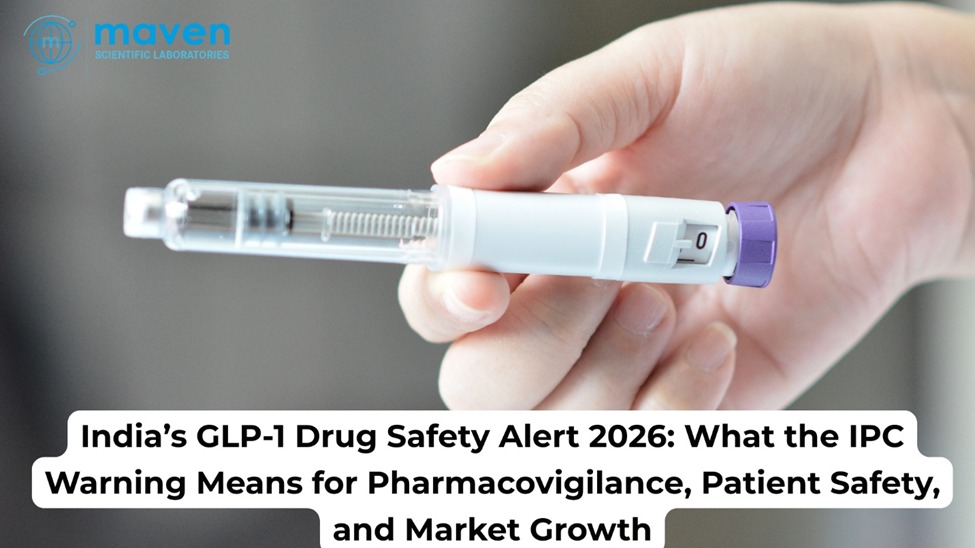
As demand for innovative diabetes and weight-management therapies continues to surge, the Indian Pharmacopoeia Commission (IPC) has issued a public safety notice encouraging healthcare professionals, patients, and consumers to closely monitor and report adverse drug reactions associated with GLP-1 receptor agonists, including:
- Semaglutide
- Tirzepatide
- Dulaglutide
- Liraglutide
The announcement reflects growing regulatory attention toward post-marketing drug safety as these therapies become increasingly accessible across India.
With rising obesity prevalence, increasing diabetes incidence, expanded prescribing practices, and growing affordability, GLP-1 therapies are transforming treatment landscapes.
However, regulators are signaling that rapid adoption must be accompanied by robust pharmacovigilance and responsible use.
For pharmaceutical companies, healthcare providers, and regulatory professionals, the message is clear:
Innovation Must Be Balanced with Continuous Safety Monitoring
Executive Overview
GLP-1 receptor agonists have emerged as one of the fastest-growing therapeutic categories globally.
Initially developed for type 2 diabetes management, these medicines are increasingly being utilized for:
- Weight management
- Obesity treatment
- Metabolic disease management
- Cardiovascular risk reduction
- Long-term chronic disease control
In India, growing awareness and broader accessibility have accelerated adoption across multiple patient populations.
At the same time, regulators are strengthening oversight to ensure that emerging safety signals are identified, evaluated, and managed effectively.
The IPC safety alert highlights increasing emphasis on:
- Adverse event reporting
- Post-marketing surveillance
- Risk-benefit evaluation
- Real-world safety monitoring
- Patient education
- Responsible prescribing practices
This reflects a broader evolution toward lifecycle-based pharmacovigilance.
Why the IPC Safety Alert Matters
As utilization expands, larger and more diverse patient populations are exposed to these therapies.
While clinical trials establish safety and efficacy under controlled conditions, post-marketing use may reveal:
- Rare adverse events
- Long-term safety trends
- Population-specific risks
- Drug interaction concerns
- Misuse-related complications
- Previously undocumented reactions
This makes pharmacovigilance a critical component of ongoing regulatory oversight.
The IPC notice encourages stakeholders to actively participate in reporting adverse drug reactions to strengthen national drug safety monitoring systems.
Understanding GLP-1 Receptor Agonists
GLP-1 receptor agonists mimic naturally occurring hormones involved in glucose regulation and appetite control.
These therapies may support:
- Improved glycemic control
- Weight reduction
- Reduced appetite
- Delayed gastric emptying
- Improved metabolic outcomes
Because of these benefits, demand continues increasing among both healthcare providers and patients.
However, growing popularity has also led to concerns regarding:
- Off-label use
- Unsupervised consumption
- Non-medical weight-loss applications
- Inappropriate prescribing practices
- Medication shortages
Regulators are increasingly focused on ensuring appropriate patient selection and clinical oversight.
Why India's GLP-1 Market Is Expanding Rapidly
Several factors are contributing to market growth.
Market Growth Drivers
| Growth Driver | Industry Impact |
| Rising obesity prevalence | Increased treatment demand |
| Growing diabetes burden | Expanded patient population |
| Greater physician awareness | Higher prescribing rates |
| Improved affordability | Broader patient access |
| New product launches | Increased market competition |
| Patient demand for weight management | Accelerated adoption |
Industry projections indicate continued strong growth throughout the coming decade.
As accessibility increases, regulators are expected to maintain heightened surveillance.
The Role of Pharmacovigilance in the GLP-1 Era
Pharmacovigilance is becoming increasingly important as innovative therapies reach larger populations.
Modern drug safety systems focus on:
- Signal detection
- Risk assessment
- Adverse event reporting
- Benefit-risk evaluation
- Risk minimization activities
- Lifecycle safety management
Why Post-Marketing Surveillance Matters
| Pharmacovigilance Objective | Regulatory Value |
| Detect rare adverse events | Improve patient safety |
| Identify emerging risk patterns | Strengthening risk management |
| Support evidence-based decisions | Enhance regulatory oversight |
| Evaluate long-term safety | Improve treatment outcomes |
| Monitor real-world utilization | Support responsible access |
The IPC safety communication reinforces the importance of active surveillance throughout a product's lifecycle.
Emerging Regulatory Concerns
The rapid popularity of GLP-1 therapies has created several areas of focus for health authorities.
Key Areas Under Review
- Adverse reaction monitoring
- Appropriate prescribing practices
- Patient education initiatives
- Off-label utilization patterns
- Long-term safety outcomes
- Real-world evidence generation
While these therapies continue to provide important clinical benefits, regulators aim to ensure their use remains evidence-based and medically supervised.
Balancing Innovation, Access, and Safety
The success of GLP-1 therapies highlights the pharmaceutical industry's ability to develop innovative solutions for major public health challenges.
However, rapid commercialization must be balanced with patient safety responsibilities.
Strategic Considerations for Industry
| Priority Area | Business Implication |
| Patient safety | Sustained trust and adoption |
| Pharmacovigilance investment | Improved regulatory confidence |
| Risk communication | Enhanced patient awareness |
| Responsible promotion | Reduced misuse concerns |
| Real-world evidence generation | Stronger safety understanding |
| Regulatory collaboration | Long-term market sustainability |
Organizations that proactively invest in safety systems may be better positioned for sustainable growth.
The Growing Importance of Real-World Evidence
As patient populations expand, regulators increasingly rely on real-world evidence (RWE) to complement clinical trial findings.
RWE supports:
- Long-term safety assessments
- Population-specific analysis
- Risk identification
- Treatment optimization
- Benefit-risk evaluation
- Regulatory decision-making
For GLP-1 therapies, real-world evidence will likely play an increasingly important role in future regulatory discussions.
Future Trends Shaping GLP-1 Regulation in India
Emerging Regulatory Trends
| Trend | Expected Impact |
| Enhanced pharmacovigilance requirements | Stronger safety oversight |
| Increased ADR reporting expectations | Improved signal detection |
| Greater patient education initiatives | Safer medication use |
| Real-world evidence integration | More informed regulatory decisions |
| Lifecycle safety monitoring | Continuous compliance expectations |
| Expanded regulatory collaboration | Stronger healthcare outcomes |
The directions are clear:
The future of GLP-1 regulation will focus on balancing innovation with comprehensive safety monitoring.
Why Strong Pharmacovigilance Is Becoming a Competitive Advantage
As regulatory expectations evolve, pharmaceutical companies must demonstrate more than product efficacy.
Organizations increasingly compete with:
- Drug safety performance
- Risk management capabilities
- Pharmacovigilance infrastructure
- Regulatory transparency
- Patient engagement strategies
- Lifecycle compliance programs
Companies that prioritize safety alongside innovation can strengthen:
- Regulatory relationships
- Market credibility
- Patient confidence
- Long-term commercial sustainability
How Maven Regulatory Solutions Supports Pharmacovigilance and Regulatory Compliance
Our Expertise Includes
- Pharmacovigilance strategy development
- Adverse event reporting systems
- Signal detection support
- Risk management planning
- Regulatory intelligence monitoring
- Post-marketing surveillance programs
- Lifecycle compliance management
- Global safety reporting support
Why Companies Choose Maven
- Global regulatory expertise
- Science-driven compliance solutions
- End-to-end pharmacovigilance support
- Integrated risk management frameworks
- Future-focused regulatory strategies
- Scalable compliance infrastructure
Conclusion
India's GLP-1 safety alert represents a proactive and timely regulatory response to one of the fastest-growing therapeutic categories in healthcare.
As access expands and patient demand increases, pharmacovigilance becomes increasingly critical to ensuring that innovation continues to deliver positive health outcomes safely and responsibly.
The IPC's call for enhanced adverse event reporting highlights a broader industry reality:
Successful commercialization requires more than market growth.
It requires continuous monitoring, transparent safety communication, and strong collaboration between regulators, healthcare providers, and pharmaceutical manufacturers.
The future of GLP-1 therapies in India will not be defined solely by adoption rates.
It will be defined by how effective innovation, affordability, and patient safety are balanced throughout the product lifecycle.
Strengthening Pharmacovigilance for Emerging Therapies?
At Maven Regulatory Solutions, we help pharmaceutical organizations strengthen safety monitoring systems, enhance regulatory compliance, and build scalable pharmacovigilance programs that support sustainable market growth.
Our Services Include:
- Pharmacovigilance program support
- Adverse event reporting management
- Risk management planning
- Signal detection and evaluation
- Regulatory intelligence monitoring
- Post-marketing surveillance strategy
- Lifecycle safety compliance
- Global regulatory support
Connect with our regulatory experts today to strengthen your pharmacovigilance framework and prepare for evolving regulatory expectations.
FAQ
1. What are GLP-1 receptor agonists?
GLP-1 receptor agonists are medicines used primarily for type 2 diabetes and weight management that help regulate blood glucose and appetite.
2. Why did the IPC issue a safety alert?
The IPC encouraged healthcare professionals and patients to report adverse drug reactions associated with GLP-1 therapies to strengthen post-marketing safety monitoring.
3. Which medicines are included in the alert?
The notice references GLP-1 receptor agonists including semaglutide, tirzepatide, dulaglutide, and liraglutide.
4. Does the alert indicate these medicines are unsafe?
No. The alert reinforces the importance of pharmacovigilance and ongoing safety monitoring as use expands among larger patient populations.
5. Why is pharmacovigilance important for GLP-1 therapies?
Pharmacovigilance helps identify rare adverse events, monitor long-term safety outcomes, and support evidence-based regulatory decision-making.

Post a comment