
May 28, 2026
How FSSAI’s Digital ePAAS Framework Is Reshaping Food Regulatory Compliance, Nutraceutical Approvals, and Risk Assessment Operations in India
India’s food regulatory landscape is rapidly evolving toward a more centralized, digital, and intelligence-driven compliance ecosystem.
In a major regulatory update, the Food Safety and Standards Authority of India (FSSAI) announced that effective:
01 June 2026
all applications requiring:
- Prior approval
- Risk assessment
- Specialized food authorization
- Scientific evaluation
must now be submitted exclusively through the:
ePAAS Single-Window Portal
The update represents a major operational shift toward:
- Digital regulatory governance
- Centralized approval workflows
- Structured submission management
- Faster scientific review processes
- Enhanced regulatory transparency
- Lifecycle-based compliance oversight
For food manufacturers, nutraceutical companies, importers, and regulatory teams, digital submission readiness is becoming a critical compliance capability.
Executive Overview
FSSAI’s latest directive signals India’s broader transition toward:
- Digital food governance
- Integrated approval infrastructures
- Structured scientific evaluation
- Centralized risk assessment systems
- Operational transparency
- Data-driven regulatory oversight
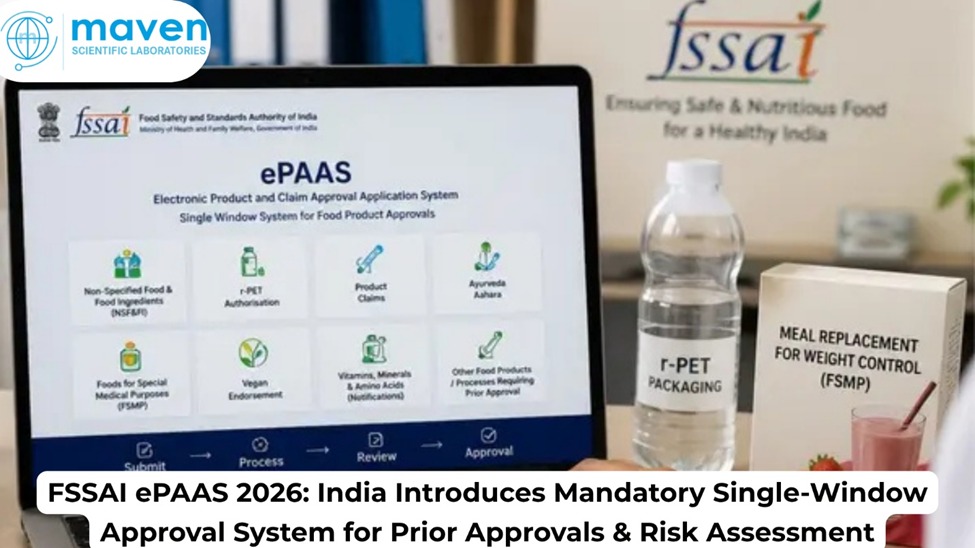
The ePAAS framework will now govern approvals involved:
- Non-Specified Foods
- Non-Specified Ingredients
- Food claims
- Ayurveda Aahara
- Foods for Special Medical Purposes (FSMP)
- Vegan Endorsements
- Recycled PET (r-PET) authorization
- Nutrient derivatives & salts notifications
The future of food regulatory operations in India is increasingly centered around:
Digital Regulatory Intelligence & Centralized Compliance Systems
Organizations must now establish infrastructures capable of supporting:
- Real-time submission management
- Digital approval workflows
- Structured dossier preparation
- Centralized compliance tracking
- Regulatory lifecycle visibility
- Scientific risk assessment readiness
This evolution is redefining food and nutraceutical regulatory operations across India.
Why the FSSAI ePAAS Update Matters
Historically, many companies managed regulatory approvals through:
- Manual submissions
- Email-based communication
- Fragmented approval tracking
- Decentralized regulatory coordination
That model is rapidly becoming outdated.
From:
June 1, 2026
manual and email submissions for covered applications will no longer be accepted.
This reflects a major strategic shift toward:
- Single-window digital governance
- Operational efficiency
- Standardized regulatory processing
- Faster approval visibility
- Improved compliance traceability
Categories Covered Under the ePAAS System
The new ePAAS framework applies to multiple specialized regulatory categories.
Key Regulatory Areas Included
| Regulatory Category | Approval Requirement |
| Non-Specified Foods | Prior approval & risk assessment |
| Food claims | Scientific review |
| Ayurveda Aahara | Regulatory authorization |
| FSMP products | Specialized evaluation |
| Vegan endorsements | Compliance verification |
| Recycled PET (r-PET) | Safety authorization |
| Nutrient derivatives & salts | Regulatory notification |
Applications must follow:
FSS (Approval of Non-Specified Food and Food Ingredients) Regulations, 2017
using prescribed formats and documentation structures.
The Strategic Shift in Food Regulatory Oversight
FSSAI’s move reflects a broader regulatory transformation occurring globally.
Authorities increasingly expect:
- Structured digital submissions
- Centralized approval systems
- Standardized scientific review
- Real-time compliance visibility
- Traceable regulatory workflows
- Lifecycle-based oversight
The focus is no longer only on product approval.
It is increasingly on:
Regulatory Process Intelligence & Digital Governance
Why Traditional Submission Models Are No Longer Enough
Many food and nutraceutical companies still rely on:
- Spreadsheet tracking
- Manual dossier coordination
- Email-driven workflows
- Disconnected regulatory systems
- Reactive compliance management
These models struggle to support modern digital regulatory expectations.
Key Operational Challenges
| Operational Gap | Regulatory Impact |
| Manual submission dependency | Increased rejection risk |
| Fragmented approval tracking | Delayed timelines |
| Weak dossier standardization | Additional query cycles |
| Limited submission visibility | Compliance gaps |
| Poor lifecycle monitoring | Operational inefficiencies |
Regulators increasingly expect organizations to demonstrate proactive digital compliance maturity.
The Rise of Digital Food Regulatory Operations
India’s food compliance ecosystem is rapidly transitioning toward:
- Single-window approval systems
- Digital scientific assessment
- Automated workflow management
- Centralized dossier control
- Structured lifecycle oversight
Successful organizations increasingly rely on:
- Regulatory information management systems (RIMS)
- Digital compliance dashboards
- Automated submission workflows
- Integrated regulatory intelligence platforms
- AI-assisted dossier management systems
The future of food regulatory compliance is becoming:
Data-Driven & Operationally Integrated
Why ePAAS Will Transform Nutraceutical & Food Compliance
The ePAAS framework is expected to improve:
- Regulatory consistency
- Submission transparency
- Application tracking visibility
- Scientific review efficiency
- Cross-functional coordination
- Regulatory accountability
Organizations with mature digital compliance infrastructures will likely experience:
- Faster submission readiness
- Reduced Administrative Burden
- Better lifecycle visibility
- Improved approval management
- Enhanced regulatory responsiveness
Emerging Trends Defining India’s Food Regulatory Future
| Emerging Trend | Regulatory Impact |
| Single-window regulatory systems | Centralized approval management |
| Digital scientific review | Faster risk assessment processes |
| Lifecycle-based compliance | Continuous oversight expectations |
| Structured dossier intelligence | Improved review consistency |
| Automated regulatory workflows | Enhanced operational efficiency |
| Centralized digital governance | Stronger regulatory visibility |
The directions are clear:
FSSAI increasingly expects digitally integrated, lifecycle-focused, and intelligence-driven regulatory operations.
Why Digital Regulatory Readiness Is Becoming a Competitive Advantage
The next generation of food and nutraceutical companies will not compete solely on product innovation.
They will compete on:
- Regulatory agility
- Digital operational maturity
- Submission intelligence
- Scientific documentation readiness
- Lifecycle compliance visibility
- Approval scalability
Organizations with strong digital compliance systems will:
- Achieve faster approvals
- Reduce operational delays
- Improve regulatory responsiveness
- Strengthen compliance consistency
- Accelerate market access
How Maven Regulatory Solutions Supports FSSAI ePAAS Compliance
Our Expertise Includes
- FSSAI regulatory strategy support
- ePAAS submission management
- Non-Specified Food approvals
- FSMP compliance support
- Ayurveda Aahara regulatory guidance
- Vegan endorsement compliance
- Risk assessment dossier preparation
- Regulatory intelligence implementation
- Digital compliance transformation support
Why Companies Choose Maven
- India-focused food regulatory expertise
- Science-driven compliance strategies
- Digital regulatory operations support
- Scalable compliance infrastructures
- End-to-end lifecycle management
- Integrated regulatory intelligence systems
Conclusion
FSSAI’s mandatory ePAAS implementation signals far more than a procedural update.
It reflects the future of Indian food regulatory oversight:
- Digital-first governance
- Centralized approval management
- Structured scientific review
- Lifecycle-based compliance systems
- Real-time regulatory visibility
- Operational accountability
For food and nutraceutical companies, regulatory compliance can no longer remain a fragmented administrative process.
It must become a strategic operational capability powered by digital intelligence systems.
The organizations best prepared for India’s evolving regulatory environment will not simply have compliant submissions.
They will have the strongest regulatory operations ecosystems.
Preparing for FSSAI’s ePAAS Digital Compliance Transition?
At Maven Regulatory Solutions, we help food and nutraceutical companies modernize regulatory operations, optimize ePAAS submission readiness, and strengthen lifecycle compliance systems for evolving FSSAI requirements.
Our Services Include:
- ePAAS submission strategy
- FSSAI risk assessment support
- Non-Specified Food approvals
- FSMP compliance management
- Ayurveda Aahara regulatory support
- Vegan Endorsement Applications
- Digital compliance transformation
- Regulatory intelligence implementation
Connect with our regulatory experts today to future-proof your FSSAI compliance strategy.
FAQ
1. What is the FSSAI ePAAS system?
ePAAS is FSSAI’s single-window online portal for applications requiring prior approval, scientific evaluation, or risk assessment.
2. When will ePAAS become mandatory?
From June 1, 2026, all covered applications must be submitted exclusively through the ePAAS portal.
3. Which applications are covered under the ePAAS framework?
The system covers Non-Specified Foods, claims, FSMP, Ayurveda Aahara, vegan endorsements, r-PET authorization, and nutrient derivative notifications.
4. Will manual or email submissions still be accepted?
No. Manual and email submissions will no longer be accepted after the implementation date.
5. Why is FSSAI introducing a centralized approval system?
The initiative aims to improve transparency, streamline regulatory review, standardize scientific assessments, and strengthen digital governance.

Post a comment