
May 02, 2026
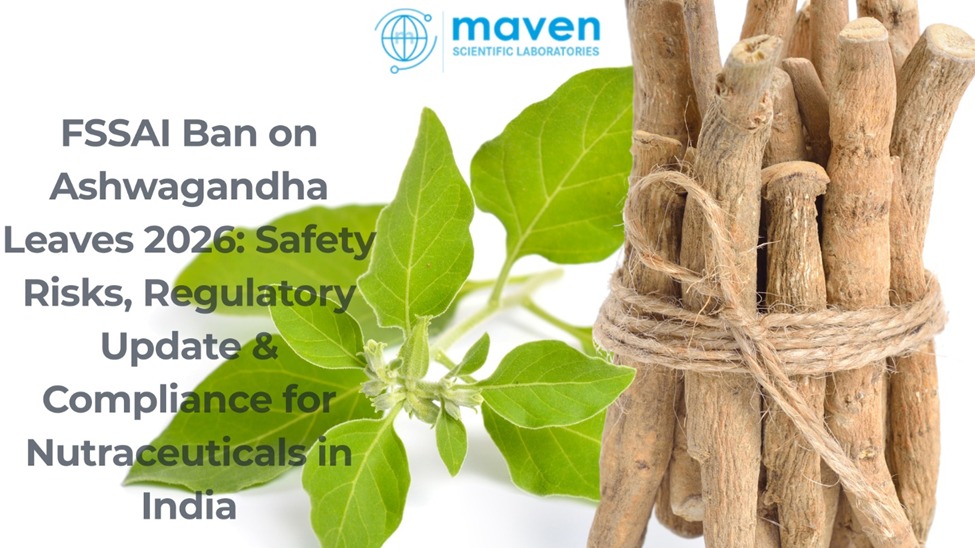
The Food Safety and Standards Authority of India has clarified that Ashwagandha (Withania somnifera) leaves and leaf extracts are not permitted in food and nutraceutical products. Only roots and root-based extracts are authorized under the Food Safety and Standards Regulations, 2016 (Schedule IV) due to safety concerns linked to leaf compounds such as Withaferin-A.
Introduction: A Critical Regulatory Shift in India’s Nutraceutical Landscape
In 2026, the Food Safety and Standards Authority of India issued an important clarification impacting nutraceutical manufacturers, herbal supplement brands, and healthcare professionals across India.
The update reinforces that while Ashwagandha remains a widely used adaptogenic herb, not all parts of the plant are considered safe for consumption in regulated products. Specifically, the use of leaves and their extracts is now restricted, with compliance strictly limited to root-based ingredients.
This move reflects a broader regulatory trend toward evidence-based botanical safety and risk management in functional foods and supplements.
Regulatory Framework: What the Law Says
The restriction is grounded in:
- Food Safety and Standards Regulations, 2016
- Schedule IV (Approved Botanicals for Nutraceutical Use)
Under these provisions:
- Only approved plant parts may be used in food supplements
- Ashwagandha roots are listed and permitted
- Leaves are not included in the approved category, making their use non-compliant
This means that any product containing Ashwagandha leaf extract is considered a regulatory violation under the Food Safety and Standards Act, 2006.
Why Are Ashwagandha Leaves Restricted? (Scientific & Safety Perspective)
1. High Concentration of Withanolides
Ashwagandha leaves contain significantly higher levels of bioactive compounds, particularly:
- Withaferin-A
- Other reactive withanolides
While these compounds have pharmacological activity, higher concentrations increase toxicity risks.
2. Documented Health Risks
| Risk Category | Potential Effect | Clinical Concern |
| Hepatotoxicity | Liver injury | Elevated liver enzymes, toxicity risk |
| Gastrointestinal Effects | Nausea, irritation | Poor tolerability in supplements |
| Neurotoxicity (Emerging Data) | Nervous system impact | Requires further evaluation |
These risks are not typically associated with root extracts, which have a longer history of safe traditional use.
3. Ministry-Level Safety Concerns
The Ministry of AYUSH has also highlighted concerns regarding:
- Unregulated use of leaf extracts
- Lack of sufficient clinical safety data
- Variability in dosage and concentration
This aligns with FSSAI’s precautionary approach to consumer safety.
Impact on Nutraceutical and Supplement Industry
Immediate Implications for Manufacturers
- Reformulation of products containing leaf extracts
- Verification of raw material source
- Updating labels and claims
Compliance Requirements for Food Business Operators (FBOs)
| Requirement | Action Needed |
| Ingredient Validation | Use only approved plant parts (roots) |
| Product Reformulation | Remove non-compliant leaf extracts |
| Documentation | Maintain safety and regulatory records |
| Labeling | Ensure accurate ingredient disclosure |
Regulatory Enforcement & Market Surveillance
FSSAI has directed:
- State Food Safety Commissioners
- Regional enforcement authorities
to:
- Conduct market surveillance
- Identify non-compliant products
- Initiate legal action where necessary
Non-compliance may result in:
- Product recalls
- Financial penalties
- Suspension of licenses
Best Practices for Compliance in 2026
1. Conduct Ingredient Audits
Ensure all botanical ingredients align with:
- Schedule IV approvals
- FSSAI nutraceutical guidelines
2. Strengthen Supplier Verification
- Source only certified raw materials
- Validate botanical part used (root vs leaf)
3. Align with Scientific Evidence
- Use ingredients with established safety profiles
- Avoid high-risk extracts lacking regulatory approval
4. Train Regulatory & Quality Teams
- Stay updated on FSSAI advisories
- Monitor changes in botanical regulations
Emerging Trends in Herbal & Nutraceutical Regulation (India 2026)
- Increased scrutiny of botanical safety profiles
- Stronger alignment with scientific toxicology data
- Focus on consumer protection and evidence-based use
- Greater enforcement against misbranded or unsafe supplements
Conclusion
The FSSAI clarification on Ashwagandha leaves is a significant step toward strengthening safety in India’s nutraceutical sector.
While Ashwagandha roots remain permitted and widely used,
Leaves and their extracts are now clearly restricted due to toxicological concerns.
For manufacturers and healthcare professionals, this underscores the importance of:
- Regulatory awareness
- Scientific validation
- Strict compliance with approved ingredient lists
Adapting early ensures not only regulatory compliance but also consumer trust and long-term market sustainability.
FAQ
1. Did FSSAI ban Ashwagandha completely?
No. Only leaves and leaf extracts are restricted. Roots and root extracts remain permitted.
2. Why are Ashwagandha leaves not allowed in supplements?
Because they contain higher levels of compounds like Withaferin-A, which are linked to toxicity risks.
3. Are Ashwagandha root supplements still legal in India?
Yes, provided they comply with FSSAI regulations and prescribed limits.
4. What are the risks of Ashwagandha leaf extracts?
- Liver toxicity
- Gastrointestinal issues
- Potential neurotoxic effects
5. What regulations apply to Ashwagandha products in India?
They must comply with:
- Food Safety and Standards Regulations, 2016
- Schedule IV (approved botanicals)
6. What happens if companies use Ashwagandha leaves?
They may face:
- Legal action under the Food Safety and Standards Act, 2006
- Product recalls and penalties
7. How can manufacturers ensure compliance?
- Use only approved plant parts (roots)
- Validate suppliers
- Maintain regulatory documentation

Post a comment