
April 09, 2026
Introduction: Rising Importance of FDA Food Allergen Labeling Compliance
Food allergen safety remains one of the most high-risk regulatory domains in the U.S. food industry. With increasing cases of food-induced anaphylaxis, allergen cross-contact incidents, and product recalls, the U.S. Food and Drug Administration (FDA) continue to strengthen its regulatory oversight.
The 2026 regulatory landscape introduces significant advancements in:
- FDA food allergen labeling requirements
- Allergen threshold risk assessment frameworks
- Preventive controls under FSMA (Food Safety Modernization Act)
For global manufacturers, exporters, and regulatory teams, understanding these updates is critical for market access, compliance readiness, and consumer safety assurance.
Key FDA Food Allergen Updates (2025–2026)
1. FDA Virtual Public Meeting on Food Allergen Thresholds (Feb 2026)
The FDA conducted a strategic regulatory consultation focusing on:
- Scientific development of minimum eliciting dose (MED) thresholds
- Risk-based application of quantitative allergen limits
- Standardization of Precautionary Allergen Labeling (PAL)
- Data-driven approaches to low-dose allergen exposure risk
Regulatory Outlook 2026:
FDA may introduce threshold-based allergen labeling frameworks, impacting:
- “May contain” claims
- Advisory labeling language
- Risk-based compliance models
2. Final Guidance for Industry: Food Allergen Labeling (Edition 5, 2025)
This guidance is a cornerstone regulatory document aligning with the Federal Food, Drug, and Cosmetic Act (FD&C Act) and FSMA requirements.
Expanded Technical Scope
| Regulatory Area | Updated Requirement |
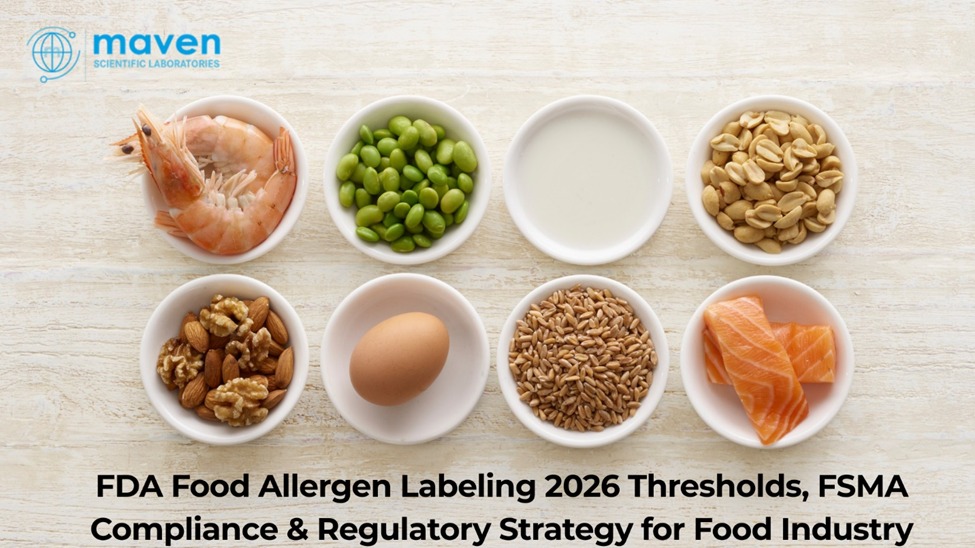
| Major Food Allergens | 9 allergens: milk, eggs, fish, crustacean shellfish, tree nuts, peanuts, wheat, soybeans, sesame |
| Sesame Compliance | Mandatory labeling under FASTER Act implementation |
| Tree Nuts | Specific declaration (e.g., cashew, almond) required |
| Highly Refined Oils | Exempt if allergenic protein removal is validated |
| Incidental Additives | Must be labeled if protein presence is detectable |
| Dietary Supplements | Same allergen labeling obligations as foods |
| Multiunit Packaging | Each unit must carry compliant allergen labeling |
3. FDA Framework for Non-Major Food Allergen Evaluation
The FDA now applies a risk-based scientific evaluation model to assess emerging allergens.
Scientific Evaluation Criteria
| Parameter | Regulatory Importance |
| Epidemiological Data | Prevalence and population exposure |
| Clinical Severity | Risk of severe allergic reactions |
| Dose-Response Relationship | Threshold triggering levels |
| Allergenic Protein Structure | Cross-reactivity potential |
This framework supports future inclusion of additional allergens and aligns with global regulatory harmonization efforts.
Clinical Understanding of Food Allergies & Regulatory Relevance
Food allergies are immune-mediated hypersensitivity reactions to specific food proteins.
Severity Classification
| Level | Clinical Symptoms |
| Mild | Urticaria, itching, swelling |
| Moderate | Gastrointestinal distress, respiratory discomfort |
| Severe (Anaphylaxis) | Airway obstruction, hypotension, shock |
Even trace-level exposure can trigger life-threatening reactions making accurate labeling and contamination control mandatory under FDA law.
FDA Food Allergen Labeling Compliance Requirements
1. Mandatory Labeling Rules
- Use of plain English allergen declarations
- “Contains” statements for major allergens
- Compliance with 21 CFR Part 101 labeling standards
2. FSMA Preventive Controls for Allergens
Under FSMA, allergen control is a hazard requiring preventive controls:
- Hazard Analysis & Risk-Based Preventive Controls (HARPC)
- Allergen-specific process controls
- Supply chain verification programs
3. Allergen Cross-Contact Prevention Strategy
| Control Area | Implementation Strategy |
| Equipment | Dedicated or validated cleaning systems |
| Production | Allergen-free scheduling protocols |
| Sanitation | Allergen residue testing & validation |
| Workforce | GMP & allergen awareness training |
4. FDA Enforcement & Regulatory Actions
Non-compliance may result in:
- Warning letters
- Import alerts
- Product recalls
- Facility shutdowns
- Market seizures
Emerging Trends in Food Allergen Regulation
- Quantitative Allergen Risk Assessment Models
- AI-powered Allergen Detection Systems
- Digital Food Labeling & Smart Compliance Tools
- Blockchain-based Ingredient Traceability
- Global Alignment with Codex Alimentarius Standards
- Standardization of Precautionary Allergen Labeling (PAL)
Strategic Compliance Roadmap for Food Businesses
To ensure FDA food allergen compliance in 2026, companies should:
- Conduct comprehensive allergen risk assessments
- Update labels per FDA Edition 5 Guidance
- Implement validated cleaning & cross-contact controls
- Integrate threshold-based risk evaluation models
- Align with international food safety regulations
Maven Regulatory Solutions: Your Compliance Partner
Maven Regulatory Solutions delivers:
- FDA Food Allergen Labeling Strategy & Compliance
- FSMA Preventive Controls Implementation
- Regulatory Gap Analysis & Risk Mitigation
- Global Food Regulatory Submissions
- Inspection Readiness & Audit Support
Frequently Asked Questions (FAQs)
Q1. What is FDA’s major food allergens?
Milk, eggs, fish, crustacean shellfish, tree nuts, peanuts, wheat, soybeans, and sesame.
Q2. What is new in FDA allergen labeling 2026?
Focus on threshold-based regulation, updated labeling guidance (Edition 5), and non-major allergen evaluation frameworks.
Q3. Are “may contain” statements regulated?
Currently voluntary, FDA is evaluating standardization via threshold-based approaches.
Q4. What is allergen cross-contact?
Unintentional contamination of food with allergenic proteins during manufacturing.
Conclusion: Future of FDA Food Allergen Labeling
The shift toward science-based, threshold-driven allergen regulation marks a major transformation in food safety compliance. Companies must adopt proactive regulatory strategies, digital tools, and risk-based frameworks to stay competitive and compliant in 2026 and beyond.

Post a comment