
December 28, 2024
The global biologics market continues to expand rapidly, driven by advancements in biotechnology and increased demand for cost-effective therapies. As the number of biosimilars and bio-comparable biological products entering global markets increases, the importance of accurate and compliant product labelling becomes even more critical.
Unbranded biological products often introduced as biosimilars or follow-on biologics must adhere to the same rigorous safety, quality, and regulatory requirements as branded biologics. Proper labelling ensures that healthcare professionals and patients receive clear, transparent, and scientifically validated information regarding the product’s identity, composition, safety profile, and clinical use.
Through specialized regulatory expertise and scientific knowledge, Maven Regulatory Solutions supports pharmaceutical and biotechnology companies in developing globally compliant biologics labelling strategies aligned with regulatory requirements from authorities such as the U.S. Food and Drug Administration and the European Medicines Agency.
Why Labelling of Unbranded Biological Products Is Critical
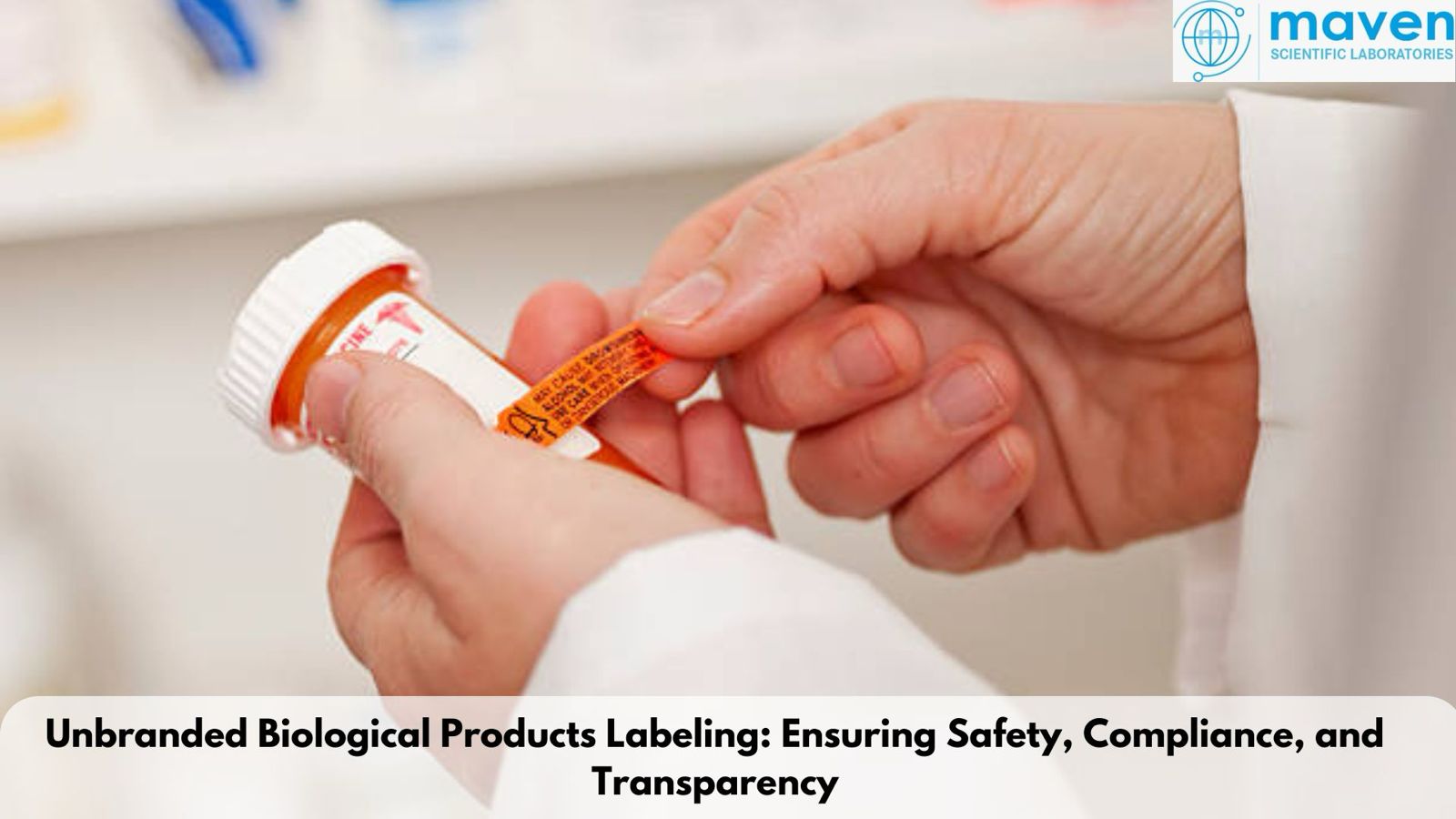
Product labelling serves as the primary communication tool between manufacturers, healthcare professionals, and patients. For unbranded biologics, accurate labelling is particularly important because these products may be used interchangeably with reference biologics in clinical practice.
Key Functions of Biologics Labelling
| Labelling Function | Importance |
| Product Identification | Distinguishes biosimilars and bio-comparable products from reference biologics |
| Safety Communication | Provides warnings, precautions, and contraindications |
| Clinical Guidance | Supports safe prescribing and administration |
| Regulatory Compliance | Ensures adherence to global regulatory labelling requirements |
Clear and compliant labelling reduces medication errors, product substitution risks, and misinterpretation of therapeutic information.
Regulatory Requirements for Biological Product Labelling
Biologics labelling must comply with stringent regulatory frameworks established by global regulatory authorities.
Key regulatory agencies include:
- U.S. Food and Drug Administration
- European Medicines Agency
- World Health Organization
- International Council for Harmonization of Technical Requirements for Pharmaceuticals for Human Use
These organizations define standards that ensure product safety, clinical transparency, and pharmacovigilance readiness.
Core Labelling Components for Biologics
| Labelling Section | Description |
| Product Name & Description | Identification of biosimilar or biological product |
| Active Substance Information | Molecular structure and composition |
| Indications & Usage | Approved therapeutic indications |
| Dosage & Administration | Administration instructions and dosing regimen |
| Safety Information | Contraindications, warnings, and adverse reactions |
| Pharmacovigilance Data | Post-marketing safety monitoring information |
These elements help ensure safe and informed use of biological therapies across healthcare systems.
Transparency and Clinical Information in Biosimilar Labelling
Transparency in biologics labelling allows healthcare providers to understand the origin, clinical data, and therapeutic equivalence of biosimilar products.
Important information included in biosimilar labelling may include:
- reference product details
- clinical trial outcomes
- comparability studies
- pharmacodynamic and pharmacokinetic data
- immunogenicity assessment results
Providing such information supports evidence-based prescribing and enhances healthcare provider confidence in biosimilar therapies.
Toxicological Considerations in Biologics Labelling
Due to their complex biological structures and mechanisms of action, biologics may carry unique safety risks that require comprehensive toxicological evaluation.
Toxicological data supports the development of clear safety information within product labelling.
Key Toxicological Assessments
| Assessment Area | Objective |
| Immunogenicity Risk | Identify immune responses triggered by biologics |
| Long-Term Toxicity | Evaluate potential chronic safety concerns |
| Biological Interaction Analysis | Assess interactions with biological pathways |
| Safety Margins | Determine acceptable exposure levels |
Toxicology experts working with Maven Regulatory Solutions evaluate these parameters to ensure that product labelling accurately communicates potential risks and safety precautions.
Role of Regulatory Expertise in Biologics Labelling
Developing compliant biologics labelling requires detailed knowledge of global regulatory frameworks and submission requirements.
Regulatory experts ensure that labels align with regulatory guidance documents, clinical data, and pharmacovigilance reporting obligations.
Regulatory Services Supporting Labelling Compliance
| Regulatory Activity | Description |
| Labelling Strategy Development | Alignment with global regulatory requirements |
| Label Content Development | Preparation of safety and clinical sections |
| Regulatory Submissions | Preparation and submission of labelling dossiers |
| Health Authority Communication | Interaction with regulatory agencies during review |
Through its multidisciplinary regulatory consulting services, Maven Regulatory Solutions helps manufacturers develop accurate, compliant, and globally harmonized biologics labelling.
Role of Regulatory Authorities in Biologics Labelling Oversight
Regulatory authorities ensure that biological products meet strict safety, efficacy, and quality standards before approval and throughout their lifecycle.
Key Responsibilities of Regulatory Authorities
| Authority Function | Purpose |
| Label Review | Ensure accuracy and completeness of product information |
| Risk Communication | Confirm safety warnings and adverse event reporting |
| Post-Market Monitoring | Evaluate real-world safety data |
| Pharmacovigilance Enforcement | Ensure continuous safety reporting |
For example, the U.S. Food and Drug Administration require biologics labels to include detailed safety information, clinical study data, and risk mitigation instructions, while the European Medicines Agency emphasizes clear product traceability and biosimilar identification.
Emerging Trends in Biologics Labelling (2025–2026)
The regulatory landscape for biologics labelling continues to evolve with new technological and regulatory developments.
Key emerging trends include:
- digital product labelling initiatives
- electronic patient information leaflets
- enhanced pharmacovigilance transparency
- traceability requirements for biosimilars
- global regulatory harmonization initiatives
These advancements aim to improve patient safety, healthcare provider awareness, and regulatory efficiency.
Maven Regulatory Solutions: Supporting Global Biologics Compliance
Ensuring regulatory-compliant labelling for unbranded biological products requires a multidisciplinary approach combining scientific, toxicological, and regulatory expertise.
Maven Regulatory Solutions offers comprehensive services to help biotechnology and pharmaceutical companies successfully navigate the regulatory landscape.
Maven’s Key Biologics Regulatory Services
| Service | Value |
| Biologics Regulatory Strategy | Global approval pathway planning |
| Label Development | Creation of compliant labelling documentation |
| Pharmacovigilance Compliance | Safety monitoring and risk communication |
| Regulatory Submissions | Preparation of biologics regulatory dossiers |
These services enable companies to accelerate regulatory approvals while maintaining full compliance with global biologics regulations.
Conclusion
Unbranded biological products including biosimilars and follow-on biologics play an increasingly important role in improving patient access to life-saving therapies.
However, the accuracy, transparency, and regulatory compliance of product labelling remain essential for ensuring patient safety and maintaining healthcare provider confidence.
Through advanced scientific expertise and regulatory consulting capabilities, Maven Regulatory Solutions helps biotechnology and pharmaceutical manufacturers develop compliant biologics labelling strategies aligned with global regulatory standards.
By ensuring accurate safety communication and regulatory adherence, these efforts contribute to improved patient outcomes, regulatory compliance, and trust in biologics therapies worldwide.
Frequently Asked Questions (FAQ)
1. What are unbranded biological products?
Unbranded biological products typically refer to biosimilars or follow-on biologics that are developed to be highly similar to an approved reference biologic.
2. Why is labelling important for biosimilars?
Proper labelling ensures clear identification, safety communication, and accurate clinical information for healthcare professionals and patients.
3. Which authorities regulate biologics labelling?
Major regulators include the U.S. Food and Drug Administration, European Medicines Agency, and international bodies such as the World Health Organization.
4. What safety information must be included in biologics labels?
Labels must include indications, dosing instructions, warnings, contraindications, adverse reactions, and pharmacovigilance information.
5. How does regulatory consulting help with biologics labelling?
Regulatory consulting ensures that product labels comply with global regulatory requirements and support successful regulatory submissions.

Post a comment