
November 15, 2025
Introduction: A Paradigm Shift in Clinical Trial Monitoring
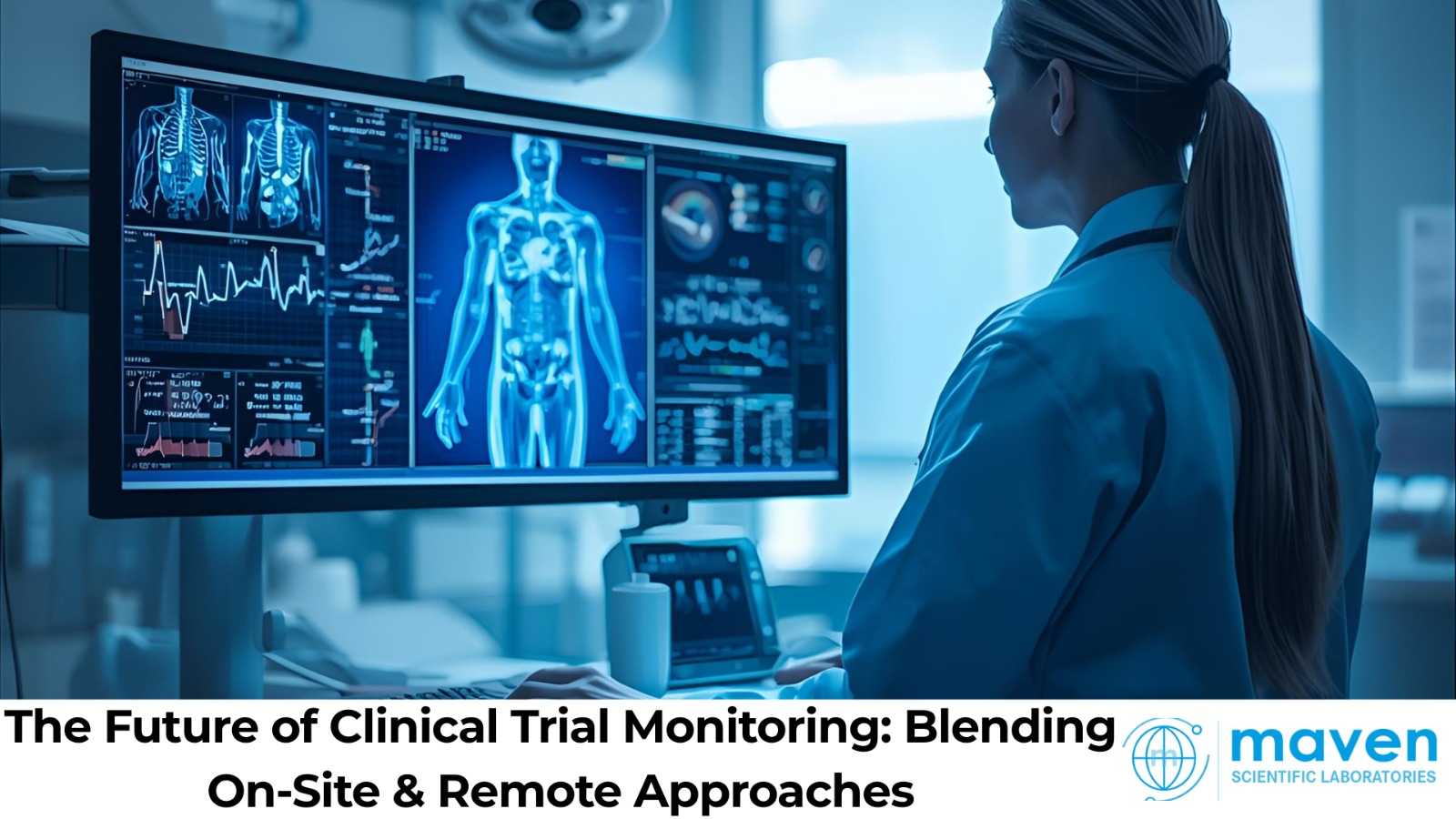
Clinical trial monitoring is undergoing a fundamental transformation. What was once a site-centric, travel-heavy function is now evolving into a data-driven, technology-enabled ecosystem.
The shift accelerated during the global disruption of COVID-19 pandemic, forcing sponsors and CROs to adopt remote monitoring strategies almost overnight.
Today, hybrid monitoring is no longer a contingency plan it is a strategic, scalable, and regulator-endorsed model shaping the future of clinical operations.
What is hybrid clinical trial monitoring?
Hybrid clinical trial monitoring combines on-site visits with remote and centralized monitoring to improve efficiency, data quality, patient access, and regulatory compliance.
Evolution of Monitoring: From Traditional to Hybrid
Historically, monitoring relied heavily on on-site visits by Clinical Research Associates (CRAs).
These visits focused on:
- Source Data Verification (SDV)
- Protocol compliance checks
- Investigator site audits
While effective, this model had limitations:
- High operational costs
- Delayed issue detection
- Limited scalability
The transition to hybrid monitoring introduced a balance between physical and digital oversight.
Evolution of Clinical Trial Monitoring
| Model | Characteristics | Limitations | Advantages |
| Traditional | 100% on-site | Costly, slow | High control |
| Remote | Fully virtual | Limited access | Cost-efficient |
| Hybrid | Mixed approach | Requires integration | Balanced efficiency |
By 2025, hybrid monitoring has become the preferred operational model, combining flexibility with precision.
Core Components of Hybrid Monitoring
Hybrid monitoring integrates multiple oversight layers into a unified system.
Key Components
| Component | Function | Impact |
| On-Site Monitoring | Physical verification | Ensures compliance |
| Remote Monitoring | Virtual oversight | Reduces cost |
| Centralized Monitoring | Data analytics | Detects risks early |
| Risk-Based Monitoring | Focus on critical data | Improves efficiency |
This multi-layered approach ensures comprehensive oversight without redundancy.
Key Benefits of Hybrid Monitoring
1. Cost & Operational Efficiency
Hybrid monitoring significantly reduces operational costs by minimizing travel and enabling CRAs to manage multiple sites remotely.
| Cost Factor | Traditional | Hybrid |
| Travel | High | Low |
| Site Visits | Frequent | Targeted |
| Resource Utilization | Limited | Optimized |
Result: Higher productivity with lower operational burden.
2. Improved Data Quality & Speed
Real-time data access enables faster identification of anomalies and protocol deviations.
- Continuous data monitoring
- Centralized dashboards
- Early risk detection
This aligns with modern risk-based monitoring principles, focusing on critical variables instead of exhaustive SDV.
3. Enhanced Patient Access & Diversity
Hybrid models support decentralized trial elements, improving accessibility.
- Remote visits reduce travel burden
- Inclusion of rural and underserved populations
- Improved patient retention
This leads to more representative clinical data and better outcomes.
Risk-Based Monitoring: The Strategic Backbone
Risk-Based Monitoring (RBM) is central to hybrid models.
Instead of reviewing all data equally, RBM prioritizes:
- Critical endpoints
- Safety data
- High-risk sites
RBM vs Traditional Monitoring
| Aspect | Traditional | Risk-Based |
| Data Review | 100% SDV | Targeted |
| Efficiency | Low | High |
| Risk Detection | Delayed | Proactive |
| Resource Allocation | Uniform | Strategic |
RBM ensures focused oversight with maximum impact.
Technology Enablers of Hybrid Monitoring
Technology is the backbone of modern clinical monitoring.
Key Digital Tools
| Technology | Function |
| EDC (Electronic Data Capture) | Real-time data entry |
| eSource | Digital source records |
| Wearables | Continuous patient data |
| Remote Monitoring Platforms | Virtual oversight |
| AI/ML Tools | Predictive analytics |
Integration of these tools enables seamless data flow and real-time decision-making.
Regulatory & GCP Alignment
Hybrid monitoring must comply with global regulatory frameworks, including:
- ICH E6(R3)
- U.S. Food and Drug Administration guidelines
- European Medicines Agency expectations
Key Regulatory Focus Areas
| Area | Requirement |
| Data Integrity | ALCOA+ principles |
| Patient Privacy | GDPR, HIPAA compliance |
| Traceability | Audit trails |
| Remote Access | Secure systems |
Regulators increasingly support flexible, risk-based monitoring approaches.
Implementation Challenges
Despite its advantages, hybrid monitoring presents challenges:
- Secure remote access to source data
- Data privacy and cybersecurity risks
- Integration of multiple technology platforms
- Training gaps for CRAs
- Cross-border regulatory differences
Addressing these challenges requires structured governance and SOPs.
Future Trends Beyond 2025
The next phase of clinical monitoring will be driven by innovation.
Emerging Trends
- AI-driven predictive monitoring
- Digital twins for clinical trials
- Real-time adaptive monitoring plans
- Blockchain for data integrity
- Fully decentralized trials
These innovations will further blur the line between on-site and remote monitoring.
Strategic Implementation Framework
1. Develop a Hybrid Monitoring Plan
Define the balance between on-site and remote activities.
2. Invest in Technology
Adopt integrated platforms for data collection and monitoring.
3. Train Clinical Teams
Equip CRAs with digital and analytical skills.
4. Ensure Regulatory Compliance
Align with global guidelines and local regulations.
Maven Regulatory Solutions: Your Clinical Monitoring Partner
Maven Regulatory Solutions supports sponsors and CROs in implementing advanced monitoring strategies.
Our Expertise Includes
- Hybrid monitoring framework design
- Risk-based monitoring strategy
- Regulatory alignment (ICH, FDA, EMA)
- Technology integration support
- SOP development and training
Transform your clinical trial monitoring strategy in 2025
- Implement hybrid monitoring frameworks
- Improve data quality and compliance
- Reduce operational costs
- Accelerate trial timelines
Partner with Maven Regulatory Solutions today
Conclusion
The future of clinical trial monitoring lies in integration, not replacement.
Hybrid monitoring delivers:
- Higher efficiency
- Better data quality
- Improved patient access
- Stronger regulatory compliance
Organizations that adopt hybrid models today will lead the next generation of clinical research innovations.
With Maven Regulatory Solutions, you gain the expertise needed to design, implement, and optimize hybrid monitoring strategies ensuring success in an increasingly decentralized clinical landscape.
Frequently Asked Questions
1. What is hybrid monitoring?
A combination of on-site and remote monitoring approaches.
2. Why is it important?
It improves efficiency, cost, and data quality.
3. What is risk-based monitoring?
A strategy focusing on critical data and risks.
4. Is hybrid monitoring regulatory compliant?
Yes, when aligned with ICH and FDA guidelines.
5. What technologies support hybrid monitoring?
EDC, AI tools, remote platforms, and wearables.
6. What are the main challenges?
Data security, integration, and training.
7. Will remote monitoring replace on-site visits?
No, hybrid models will dominate.
8. What is the future of monitoring?
AI-driven, adaptive, and decentralized systems.

Post a comment