
October 30, 2024
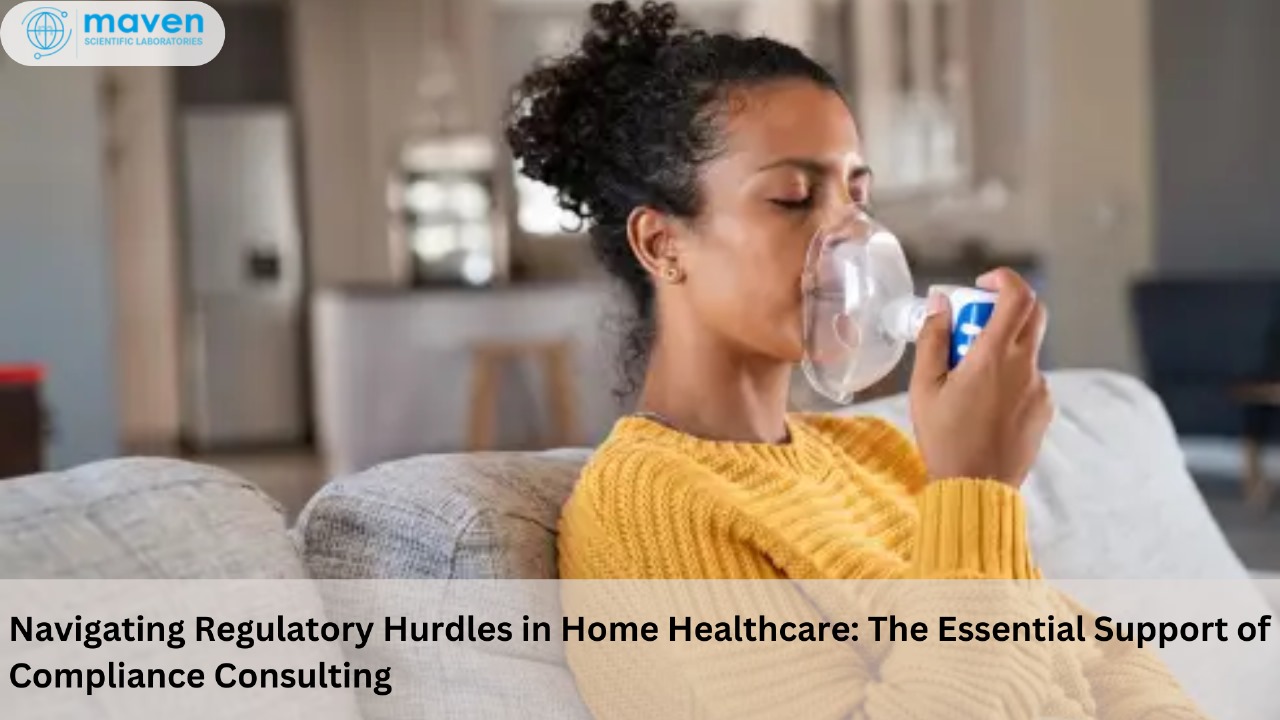
Home healthcare is rapidly becoming a cornerstone of modern patient-centered care. From chronic disease management to remote patient monitoring (RPM), medical services traditionally delivered in hospitals are now being administered in home environments. While this shift enhances accessibility, cost efficiency, and patient comfort, it also introduces complex regulatory challenges particularly for manufacturers of medical devices intended for home use.
Unlike clinical settings, home environments lack trained healthcare professionals, controlled infrastructure, and standardized supervision. As a result, regulatory authorities such as the U.S. Food and Drug Administration (FDA) impose stringent safety, usability, labeling, and post-market requirements to protect patients.
Maven Regulatory Solutions provides comprehensive regulatory strategy, quality compliance consulting, and submission support to help manufacturers successfully navigate these evolving regulatory hurdles and bring compliant, safe, and effective home healthcare devices to market.
Understanding Home Healthcare & Its Regulatory Implications
Home healthcare includes medical services delivered in residential settings, including:
- Remote patient monitoring (RPM)
- Chronic disease management
- Respiratory therapy
- Post-operative recovery support
- Telehealth-integrated device monitoring
- Digital health-enabled home diagnostics
Common Home Healthcare Devices
| Device Type | Clinical Use | Regulatory Considerations |
| Blood Pressure Monitors | Cardiovascular monitoring | Accuracy validation & labeling |
| Glucose Monitoring Systems | Diabetes management | 510(k) clearance & cybersecurity |
| Pulse Oximeters | Oxygen saturation tracking | Performance testing & human factors |
| Nebulizers | Respiratory drug delivery | Electrical safety & biocompatibility |
| Wearable Health Trackers | Continuous monitoring | Software validation & data privacy |
These devices must demonstrate safety, effectiveness, usability, and reliability in uncontrolled home environments.
Why Regulatory Compliance Is Critical for Home Healthcare Devices
As the home medical device market expands globally, regulatory compliance becomes a strategic imperative.
Key risk factors in home settings include:
- Improper device use by untrained users
- Environmental variability (temperature, humidity, power instability)
- Limited caregiver supervision
- Connectivity and cybersecurity vulnerabilities
Regulatory compliance ensures:
- Patient safety protection
- Legal risk mitigation
- Faster market access
- Avoidance of costly recalls or enforcement actions
- Sustained brand credibility
Core Regulatory Requirements for Home Healthcare Devices
1. FDA Device Classification & Regulatory Pathways
Under FDA regulations, medical devices are classified by risk level:
| Classification | Risk Level | Example | Regulatory Pathway |
| Class I | Low Risk | Manual BP cuffs | General Controls |
| Class II | Moderate Risk | Glucose monitors | 510(k) Premarket Notification |
| Class III | High Risk | Implantable defibrillators | Premarket Approval (PMA) |
Manufacturers must determine the appropriate pathway early in development to avoid submission delays.
Home-use devices often require additional documentation demonstrating:
- Human factors engineering validation
- Usability testing under real-world conditions
- Risk mitigation strategies
2. Quality Management System (QMS) Compliance
A Compliant Quality Management System aligned with:
- 21 CFR Part 820 (FDA QSR)
- ISO 13485:2016
- Risk management standards (ISO 14971) are essential.
Key QMS elements include:
- Design controls
- Process validation
- Supplier qualification
- CAPA (Corrective and Preventive Actions)
- Complaint handling
- Post-market surveillance
The FDA’s Quality Management System Regulation (QMSR) modernization initiative (2024–2026 transition toward ISO 13485 harmonization) makes proactive compliance planning even more critical.
3. Human Factors & Usability Engineering
Home healthcare devices must account for:
- Elderly users
- Limited medical literacy
- Emergency-use scenarios
- Visual and cognitive limitations
Human factors validation studies are often required to demonstrate that devices can be safely and effectively used without professional supervision.
4. Labeling & Instructions for Use (IFU)
Clear, comprehensible labeling is mandatory and must include:
- Step-by-step usage instructions
- Warnings and contraindications
- Maintenance guidance
- Troubleshooting procedures
- Environmental operating conditions
Inadequate labeling is a common cause of FDA warning letters and product recalls.
5. Post-Market Surveillance & Vigilance
Manufacturers must implement:
- Medical Device Reporting (MDR) systems
- Adverse event tracking
- Field corrective action procedures
- Recall management systems
- Periodic safety updates
Continuous monitoring ensures regulatory compliance and patient protection.
Emerging Regulatory Trends in Home Healthcare (2024–2026)
Manufacturers must stay aligned with evolving compliance expectations, including:
- Cybersecurity requirements for connected home devices
- FDA guidance on Software as a Medical Device (SaMD)
- Artificial intelligence integration in home diagnostics
- Real-world evidence (RWE) submissions
- Interoperability standards for digital health ecosystems
- Remote monitoring data privacy compliance
How Maven Regulatory Solutions Supports Home Healthcare Compliance
Maven Regulatory Solutions provides end-to-end compliance consulting for medical device manufacturers entering or expanding within the home healthcare market.
1. Regulatory Strategy & FDA Pathway Planning
- Device classification assessment
- 510(k), De Novo, or PMA pathway determination
- Regulatory roadmap development
- Pre-submission meeting preparation
2. Comprehensive Submission Preparation
Maven supports:
- 510(k) compilation
- Technical file preparation
- Clinical evaluation documentation
- Risk management reports
- Biocompatibility assessment support
- Electrical safety and EMC documentation review
3. Quality Management System (QMS) Development
- QMS gap analysis
- ISO 13485 implementation support
- SOP development
- Audit preparedness training
- FDA inspection readiness planning
4. Human Factors & Risk Management Consulting
- Use-related risk analysis
- Human factors study planning
- Risk mitigation strategy development
- Post-market risk monitoring integration
5. Ongoing Regulatory Intelligence & Training
- Monitoring FDA updates
- Cybersecurity guidance interpretation
- Staff compliance training
- Regulatory impact analysis
Maven ensures manufacturers build sustainable compliance frameworks that align with evolving regulatory expectations.
Strategic Benefits of Compliance Consulting in Home Healthcare
Partnering with regulatory experts provides measurable business advantages:
- Reduced time-to-market
- Minimized regulatory rejections
- Improved submission quality
- Lower recall risk
- Enhanced investor confidence
- Stronger global market positioning
Compliance consulting is no longer reactive it is a proactive growth strategy.
Frequently Asked Questions (FAQ)
1. Are home healthcare devices regulated differently from hospital devices?
Yes. Additional usability, labeling, and environmental validation requirements apply due to non-clinical usage environments.
2. Do all home healthcare devices require FDA clearance?
Not all, but most Class II devices require 510(k) clearance before commercialization.
3. Why is human factors validation important?
It ensures that untrained users can safely operate devices without clinical supervision.
4. What are the biggest regulatory risks in home healthcare?
Cybersecurity vulnerabilities, labeling deficiencies, inadequate risk management, and post-market reporting failures.
5. How can manufacturers reduce regulatory delays?
By implementing early regulatory strategy planning, QMS compliance, and expert submission support.

Post a comment