
November 25, 2025
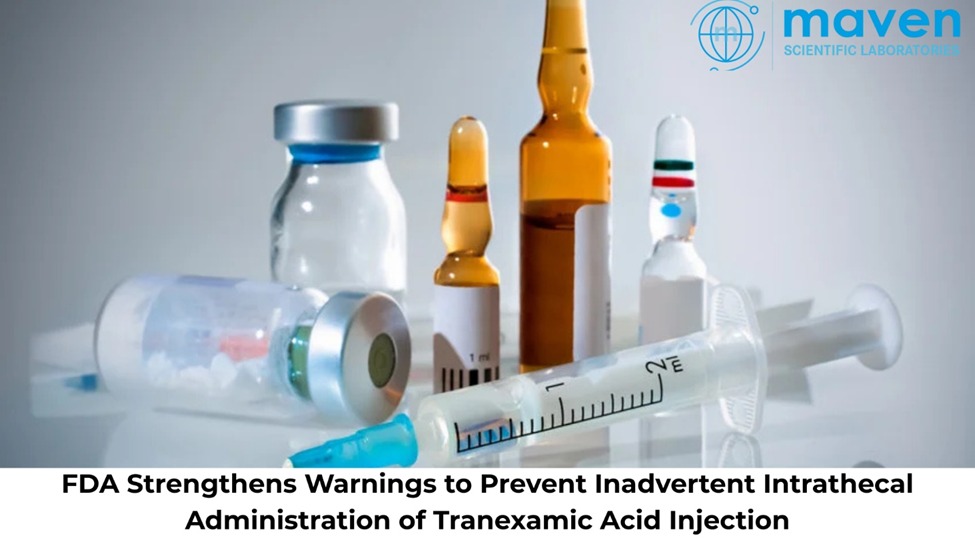
The U.S. Food and Drug Administration has issued an urgent safety communication highlighting the life-threatening consequences of medication errors involving tranexamic acid injection.
These errors involve inadvertent neuraxial administration specifically:
- Intrathecal (spinal) injection
- Epidural administration
instead of the intended intravenous (IV) route.
Why This Matters
Such errors have resulted in:
- Severe neurological toxicity
- Seizures and paralysis
- Prolonged hospitalization
- Permanent disability
- Fatal outcomes
This update marks a significant regulatory step toward strengthening medication safety systems and labeling clarity.
Why did the FDA issue a warning on tranexamic acid injection in 2025?
The U.S. Food and Drug Administration issued a 2025 safety communication to prevent accidental intrathecal or epidural administration of Tranexamic acid injection, which has led to severe neurological harm and fatalities. The FDA now requires boxed warnings, updated labeling, and enhanced safety protocols to reduce medication errors.
Understanding Tranexamic Acid and Its Approved Use
Tranexamic acid injection is an antifibrinolytic agent used to:
- Control excessive bleeding
- Manage hemorrhage in surgical and trauma settings
- Treat patients with hemophilia during procedures such as dental surgery
Approved Route of Administration
- Intravenous (IV) use only
Critical Risk
Tranexamic acid is neurotoxic when administered intrathecally, making route errors particularly dangerous.
Root Cause: Inadvertent Neuraxial Administration Errors
Medication safety reports analyzed by the U.S. Food and Drug Administration reveal repeated cases of:
- Confusion between tranexamic acid and local anesthetics
- Accidental inclusion in spinal/epidural procedure kits
- Administration via incorrect route
Why Errors Occur
- Similar vial size and labeling
- Storage proximity to anesthetics
- High-pressure clinical environments (e.g., operating rooms)
- Manual preparation without verification systems
Key FDA-Required Labeling Changes
The FDA has mandated critical updates across all Tranexamic acid injection products.
Regulatory Changes Overview
| Regulatory Update | Purpose |
| Boxed Warning (Black Box Warning) | Highlight risk of fatal intrathecal administration |
| Contraindication Statement | Explicit prohibition of spinal/epidural use |
| Revised Dosage & Administration | Reinforce IV-only use and preparation instructions |
| Enhanced Container Labeling | Improve visibility of route and product identity |
Expected Outcome
- Improved clarity at point-of-use
- Reduced risk of medication selection errors
- Increased awareness among healthcare professionals
Contributing Factors to Medication Errors
Human Factors
- Failure to verify labels before administration
- Inadequate training or awareness
- Cognitive overload in high-risk settings
System-Level Factors
- Storage of tranexamic acid near anesthetics
- Lack of barcode scanning systems
- Poor differentiation in packaging design
- Absence of standardized medication handling protocols
FDA-Recommended Safe Handling Practices
1. Storage Controls
- Do not store tranexamic acid near spinal/epidural anesthetics
- Use separate, clearly labeled storage compartments
- Ensure full label visibility (avoid reliance on vial caps)
- Implement barcode verification systems during stocking
2. Preparation & Administration Practices
- Prefer pre-mixed IV infusion bags when available
- Always verify drug name and route before withdrawal
- Label syringes immediately after preparation
- Conduct independent double-checks before administration
- Review contents of spinal/epidural trays before procedures
3. Facility-Level Safety Enhancements
- Add tranexamic acid to high-alert medication lists
- Apply auxiliary warning labels:
- “IV Use Only – Not for Spinal/Epidural Use”
- Implement multi-step verification workflows
- Use segregated medication carts in operating rooms
- Conduct regular medication safety audits
Human Factors Engineering (HFE): A Critical Safety Layer
The FDA emphasizes the importance of human factors engineering (HFE) in reducing medication errors.
Key Applications
- Differentiated packaging design
- Improved label readability and contrast
- Standardized medication workflows
- Simulation-based usability testing
Objective
Design systems that reduce reliance on human memory and minimize error risk.
Regulatory Implications for Pharmaceutical Manufacturers
Manufacturers of Tranexamic acid injection must:
Ensure Labeling Compliance
- Update labels per FDA requirements
- Implement clear route-of-administration warnings
Strengthen Risk Management
- Integrate risk mitigation into design controls
- Conduct failure mode and effects analysis (FMEA)
Support Post-Market Surveillance
- Monitor adverse event reports
- Update risk-benefit profiles
Aligning With FDA Regulations
- Labeling requirements under 21 CFR
- Postmarked safety reporting obligations
Impact On Healthcare Providers & Facilities
Healthcare organizations must take immediate action to:
Strengthening Medication Safety Systems
- Update protocols and SOPs
- Train staff on new labeling and risks
Implement Technology Solutions
- Barcode medication administration (BCMA)
- Electronic medication records integration
Improve Clinical Governance
- Establish medication safety committees
- Conduct root cause analysis for incidents
Global Medication Safety Perspective
Medication errors involving route confusion are a global patient safety concern.
Organizations such as the World Health Organization emphasize:
- Standardization of medication labeling
- Risk-based safety protocols
- System level prevention strategies
Data-Driven Medication Safety: The Future
Modern healthcare systems are adopting:
Advanced Safety Technologies
- AI-based medication verification
- Smart infusion pumps
- Automated dispensing cabinets
- Real-time error detection systems
Benefits
- Reduced human error
- Improved patient outcomes
- Enhanced regulatory compliance
Strategic Risk Mitigation Framework
1. Risk Identification
- Analyze medication error trends
- Identify high-risk drugs and processes
2. System Redesign
- Implement segregation and labeling controls
- Optimize workflow design
3. Training & Awareness
- Conduct regular staff training
- Reinforce verification practices
4. Continuous Monitoring
- Track safety metrics
- Perform periodic audits
Maven Regulatory Solutions: Your Partner in Medication Safety Compliance
Maven Regulatory Solutions supports organizations in navigating complex regulatory requirements and ensuring medication safety.
Our Expertise
Labeling Compliance
- FDA labeling updates
- Risk communication strategies
Risk Management
- FMEA and hazard analysis
- Human factors integration
Post-Market Surveillance
- Adverse event monitoring
- Signal detection and reporting
Regulatory Strategy
- FDA compliance alignment
- Inspection readiness
Ensuring medication safety and FDA compliance in 2025?
- Implement robust labeling compliance strategies
- Reduce risk of medication errors and adverse events
- Strengthen hospital safety protocols
- Achieve audit-ready regulatory compliance
- Protect patient safety and institutional reputation
Partner with Maven Regulatory Solutions today
Conclusion: Patient Safety Must Drive Compliance
The U.S. Food and Drug Administration warning on Tranexamic acid injection underscores a critical reality:
Medication errors can be fatal, but they are preventable.
Success in 2025 requires:
- Clear and compliant labeling
- Robust medication handling systems
- Human-centered design
- Continuous monitoring and improvement
Organizations that prioritize patient safety alongside regulatory compliance will lead in delivering safer healthcare outcomes.
Frequently Asked Questions
1. What is the FDA warning about?
It warns against accidental intrathecal administration of tranexamic acid.
2. What is the approved route for tranexamic acid?
Intravenous (IV) use only.
3. Why is intrathecal administration dangerous?
It can cause severe neurological damage and death.
4. What is a boxed warning?
The FDA’s strongest warning for serious risks.
5. What causes these medication errors?
Packaging similarity, storage issues, and lack of verification.
6. How can hospitals prevent such errors?
Through labeling, segregation, barcode systems, and staff training.
7. What must manufacturers do?
Update labeling and strengthen risk management systems.
8. Why is this update important?
It directly impacts patient safety and regulatory compliance.

Post a comment