
November 19, 2025
Accelerating Drug Development Through CMC Readiness
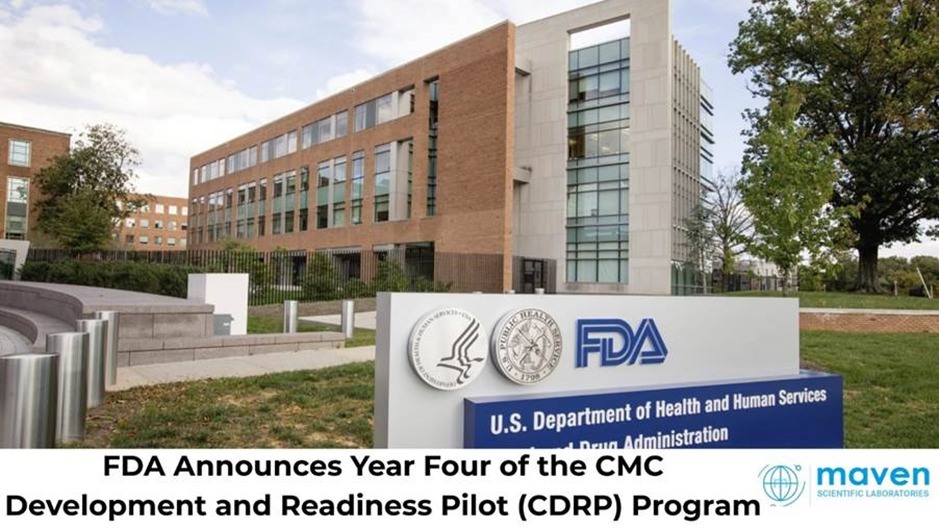
The U.S. Food and Drug Administration continue to expand its commitment to accelerating patient access to innovative therapies by extending the CMC Development and Readiness Pilot (CDRP) Program into its fourth year.
What is the FDA CDRP Program?
The U.S. Food and Drug Administration CMC Development and Readiness Pilot (CDRP) Program help drug developers align Chemistry, Manufacturing, and Controls (CMC) activities with accelerated clinical timelines through early FDA engagement and structured regulatory support
Effective October 1, 2025, the program opens for new participation requests, offering sponsors a structured pathway to strengthen Chemistry, Manufacturing, and Controls (CMC) readiness in parallel with accelerated clinical development.
This initiative reflects a broader regulatory shift toward:
- Early scientific and regulatory engagement
- Risk-based and lifecycle-driven development
- Integration of manufacturing and clinical strategies
- Increased transparency and collaboration
Understanding the CDRP Program: Purpose and Strategic Value
The CDRP Program was launched to address a persistent challenge in drug development misalignment between clinical progress and manufacturing readiness.
Regulatory Oversight
- Center for Drug Evaluation and Research (CDER)
- Center for Biologics Evaluation and Research (CBER)
These centers provide scientific and regulatory oversight for small molecules, biologics, and advanced therapies.
Core Objectives of the CDRP Program
- Align CMC development with accelerated clinical timelines
- Enable structured and early FDA-sponsor communication
- Improve readiness for NDA and BLA submissions
- Minimize late-stage regulatory deficiencies
- Support faster delivery of therapies to patients
Why This Program Signals Regulatory Evolution
From an expert regulatory perspective, the expansion of CDRP demonstrates a clear shift in how regulators approach innovation:
Sponsors frequently encounter delays due to incomplete CMC data during late-stage development. Programs like CDRP address these bottlenecks proactively.
Expertise
CMC readiness requires integration of:
- Process development
- Analytical validation
- Manufacturing scalability
- Stability programs
The program is driven by the U.S. Food and Drug Administration, reinforcing its credibility and industry significance.
Structured FDA engagement reduces uncertainty, enhances transparency, and strengthens submission quality.
Why CMC Readiness Matters More Than Ever
In accelerated pathways, clinical development often progresses faster than manufacturing capabilities.
Critical Risk Areas
- Process validation delays
- Analytical method gaps
- Scale-up challenges
- Comparability issues
- Limited stability data
These challenges can result in:
- Approval delays
- Regulatory deficiencies
- Increased development costs
The CDRP Program ensures:
CMC becomes an enabler not a bottleneck in drug development
What’s New in Year Four of the CDRP Program
Key Updates
| Date | Update |
| August 28, 2025 | FDA confirms Year Four participation begins October 1, 2025 |
| August 12, 2025 | Public workshop announcement on program learnings |
Regulatory Transparency & Industry Engagement
The FDA’s public workshop initiative reflects:
- Commitment to knowledge sharing
- Continuous improvement of regulatory frameworks
- Alignment with industry expectations
How the CDRP Program Works
Sponsors selected for the program receive enhanced regulatory interaction.
Key Benefits
- Two dedicated Type B meetings with FDA CMC experts
- Follow-up scientific discussions
- Strategic CMC guidance
- Alignment with clinical milestones
Program Workflow
| Stage | Activity |
| Application | IND amendment submission |
| Selection | FDA eligibility assessment |
| Engagement | Structured meetings |
| Development | CMC optimization |
| Submission | NDA/BLA readiness |
Eligibility Criteria and Application Process
Application Requirements
Sponsors must:
- Submit an IND amendment
- Include a formal participation request statement
- Demonstrate alignment with accelerated development
Program Capacity
- Up to 9 proposals annually
- Majority allocated to biologics (CBER)
- Program active through FY 2027 under PDUFA VII
Key Benefits for Drug Developers
1. Enhanced Regulatory Clarity
- Clear expectations for CMC data
- Early identification of risks
- Reduced regulatory ambiguity
2. Accelerated Development Timelines
- Parallel clinical and manufacturing progression
- Reduced late-stage delays
3. Improved Submission Quality
- Stronger NDA/BLA dossiers
- Reduced deficiency risk
High-Impact Use Cases
The program is particularly relevant for:
- Cell therapies
- Gene therapies
- Biologics and biosimilars
- Advanced therapy medicinal products
These products require:
- Complex manufacturing systems
- Advanced analytical characterization
- Robust regulatory strategies
Deep Dive: CMC Challenges in Accelerated Development
| Challenge | Impact |
| Incomplete validation | Approval delays |
| Manufacturing scale issues | Supply constraints |
| Analytical gaps | Regulatory concerns |
| Stability limitations | Shelf-life risks |
| Documentation inconsistency | Submission rejection |
Strategic Best Practices for CDRP Success
Early Integration of CMC Strategy
- Align manufacturing with clinical phases
- Implement risk-based development
Maximize FDA Engagement
- Prepare thoroughly for Type B meetings
- Use regulatory feedback strategically
Strengthening Technical Documentation
- Ensure completeness and consistency
- Aligning with global standards
IND & CMC Alignment Strategy
A successful approach requires synchronization between:
- IND submissions
- Clinical trial design
- Manufacturing development
Key Considerations
- Phase-appropriate CMC data
- Scalable manufacturing processes
- Regulatory documentation readiness
Outlook: The Evolution of CMC Regulatory Strategy
The continuation of the CDRP Program highlights broader trends:
- Increased regulator-sponsor collaboration
- Shift toward proactive compliance
- Integration of digital tools in CMC
- Emphasis on lifecycle management
Organizations that adapt will benefit from:
Faster approvals, reduced risk, and competitive advantage
Maven Regulatory Solutions: Driving CMC Excellence
With deep regulatory expertise, Maven Regulatory Solutions supports pharmaceutical and biotech companies in achieving end-to-end CMC readiness.
Our Capabilities
- CMC regulatory strategy development
- IND, NDA, and BLA submission planning
- CMC data gap analysis
- FDA meeting preparation and support
- Lifecycle regulatory management
Accelerating your drug development pipeline?
- Optimize CMC readiness for FDA approval
- Align clinical and manufacturing strategies
- Reduce regulatory delays and risks
- Strengthening submission success
Partner with Maven Regulatory Solutions today
Conclusion
The expansion of the U.S. Food and Drug Administration CDRP Program into Year Four reinforces the critical role of CMC readiness in modern drug development.
By enabling:
- Early collaboration
- Structured engagement
- Strategic planning
The program empowers sponsors to:
- Accelerate development timelines
- Improve submission quality
- Reduce regulatory uncertainty
- Deliver therapies to patients faster
In today’s competitive and innovation-driven landscape:
A proactive, science-based CMC strategy is essential for regulatory success
Frequently Asked Questions
1. What is the FDA CDRP Program?
A pilot program supporting alignment of CMC development with accelerated clinical timelines.
2. Who can apply?
Sponsors with IND applications under CDER or CBER.
3. How many participants are selected annually?
Up to nine proposals per year.
4. What are Type B meetings?
Structured FDA meetings focused on CMC strategy and readiness.
5. Does CDRP guarantee approval?
No, but it significantly improves readiness and reduces delays.
6. Which products benefit most?
Biologics, gene therapies, and advanced therapeutics.
7. How long will the program run?
Through FY 2027 under PDUFA VII.
8. Why is CMC critical?
It ensures product quality, safety, and regulatory compliance.

Post a comment