
October 25, 2025
Introduction: The Digital Transformation of Pharmaceutical Labeling
The pharmaceutical industry is undergoing a major digital shift, and one of the most transformative changes is the transition from traditional paper-based labeling to electronic labeling (eLabeling). This evolution aligns with broader digital health initiatives and regulatory expectations for faster, more transparent communication of product information.
Global regulators such as the European Medicines Agency, U.S. Food and Drug Administration, and Health Canada are actively encouraging the adoption of digital labeling frameworks to enhance patient safety and improve regulatory efficiency.
eLabeling is no longer an innovation, it is becoming the global standard for pharmaceutical labeling.
What is eLabeling?
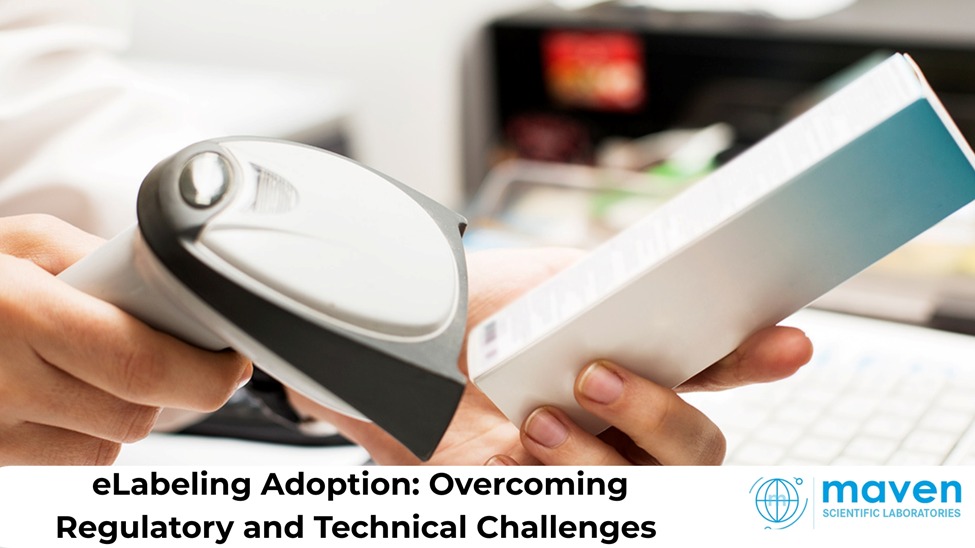
eLabeling refers to delivering regulated product information through electronic formats instead of or alongside paper leaflets.
Common eLabeling Formats
| Format | Description | Use Case |
| QR Codes | Scannable product access | Patient leaflets |
| Web Portals | Centralized label access | Regulatory updates |
| Mobile Applications | Interactive labeling | Patient engagement |
| Structured Data (SPL) | Machine-readable labeling | Regulatory submissions |
Key Benefits Driving eLabeling Adoption
Advantages Over Traditional Labeling
| Benefit | Impact |
| Real-Time Updates | Immediate safety communication |
| Multilingual Access | Global patient reach |
| Error Reduction | Automated workflows |
| Regulatory Alignment | Faster approvals |
| Sustainability | Reduced paper usage |
eLabeling enhances efficiency, compliance, and patient-centric communication.
Global Regulatory Landscape for eLabeling
Regulatory acceptance varies across regions, creating both opportunities and complexity.
Regional Approaches
| Region | Regulatory Position | Implementation Model |
| EU | Strong adoption push | Hybrid → Digital |
| USA | Structured labeling (SPL) | Advanced digital |
| Canada | Encouraging transition | Hybrid models |
| Emerging Markets | Limited adoption | Paper dominant |
Key Regulatory Expectations
- Traceability and auditability
- Data accuracy and validation
- Patient accessibility
- Alignment with structured formats like HL7 SPL
Compliance requires harmonizing global and local regulatory expectations.
Regulatory Challenges in eLabeling Adoption
1. Diverse Global Guidelines
Different markets impose varying requirements:
- Some require paper + digital (hybrid)
- Others allow fully digital models
- Country-specific formatting and language rules
Companies must manage multi-market regulatory complexity.
2. Validation & Compliance Requirements
Regulators expect:
- Fully validated systems
- Audit trails for every change
- Documentation for inspections
Validation Requirements Overview
| Requirement | Purpose |
| System Validation | Ensure reliability |
| Audit Trails | Track changes |
| Version Control | Maintain consistency |
| Data Integrity | Prevent errors |
3. Data Standardization Challenges
Aligning global labeling content is complex.
CCDS vs LPD Alignment
| Document | Scope | Challenge |
| CCDS (Core Data Sheet) | Global reference | Standardization |
| LPD (Local Product Document) | Country-specific | Localization |
Misalignment can lead to regulatory delays and inconsistencies.
4. Patient-Centricity & Accessibility
Regulators require:
- Easy-to-read formats
- Multilingual content
- Accessibility for elderly and disabled users
eLabeling must balance technology with usability.
Technical Challenges in eLabeling Implementation
1. System Integration Complexity
eLabeling must integrate with:
- Regulatory Information Management (RIM) systems
- Document Management Systems (DMS)
- Enterprise Resource Planning (ERP)
Integration Challenges
| System | Role | Risk if Not Integrated |
| RIM | Regulatory tracking | Compliance gaps |
| DMS | Document storage | Version conflicts |
| ERP | Business operations | Data inconsistency |
2. Data Accuracy & Version Control
Every labeling update must reflect across all systems.
- Clinical updates
- Safety changes
- Regulatory variations
Automated lifecycle management is critical for data consistency.
3. Cybersecurity Risks
Digital labeling systems handle sensitive data.
Security Measures
| Measure | Purpose |
| Encryption | Data protection |
| Access Control | Prevent unauthorized use |
| Monitoring | Detect breaches |
| Backup Systems | Ensure continuity |
4. Scalability & Global Deployment
Pharma companies require:
- Cloud-based platforms
- Multi-country support
- Local customization
Scalability ensures long-term sustainability of eLabeling systems.
Role of Automated Labeling Solutions
Technology plays a critical role in overcoming eLabeling challenges.
Key Capabilities
| Capability | Benefit |
| Workflow Automation | Faster approvals |
| Regulatory Intelligence | Real-time updates |
| Content Reuse | Consistency |
| Global Harmonization | Reduced duplication |
Automation Impact Across Lifecycle
| Stage | Traditional | Automated |
| Content Creation | Manual | Template-driven |
| Review | Slow | Accelerated |
| Approval | Sequential | Parallel workflows |
| Updates | Delayed | Real-time |
Step-by-Step eLabeling Adoption Strategy
Implementation Roadmap
| Step | Action | Outcome |
| Step 1 | Assess current labeling processes | Gap identification |
| Step 2 | Define digital strategy | Roadmap clarity |
| Step 3 | Select technology platform | System readiness |
| Step 4 | Validate systems | Regulatory compliance |
| Step 5 | Integrate systems | Data consistency |
| Step 6 | Train teams | Operational efficiency |
| Step 7 | Deploy globally | Scalable solution |
Common Pitfalls in eLabeling Adoption
- Underestimating regulatory complexity
- Poor system integration
- Lack of data standardization
- Inadequate validation processes
- Ignoring user accessibility
Avoiding these pitfalls ensures smooth digital transformation.
Business & Industry Impact
For Pharmaceutical Companies
- Faster time-to-market
- Improved compliance
- Reduced operational costs
For Regulators
- Better oversight
- Faster safety updates
For Patients
- Real-time information access
- Improved safety awareness
Strategic Advantages of Early Adoption
Companies adopting eLabeling early can:
- Gain competitive advantage
- Improve regulatory relationships
- Enhance patient engagement
- Streamline global operations
eLabeling is a strategic investment, not just a compliance requirement.
The Future of eLabeling
Emerging trends include:
- AI-driven labeling automation
- Real-time pharmacovigilance integration
- Personalized patient information delivery
- Blockchain for data integrity
The future of labeling is fully digital, intelligent, and patient-centric.
Maven Regulatory Solutions
At Maven Regulatory Solutions, we provide:
- End-to-end labeling strategy
- eLabeling system implementation
- Regulatory submission support
- Global labeling harmonization
- Compliance validation and audits
Accelerate Your eLabeling Journey
Facing challenges with:
- Global labeling compliance?
- System integration issues?
- Regulatory approval delays?
Partner with Maven to:
- Ensure seamless eLabeling adoption
- Reduce compliance risks
- Accelerate digital transformation
FAQs – eLabeling in Pharma
1. What is eLabeling?
Digital delivery of pharmaceutical product information.
2. Is eLabeling mandatory globally?
Not yet but strongly encouraged by regulators.
3. What is HL7 SPL?
A structured format for submitting labeling data electronically.
4. What is the biggest challenge?
Regulatory and system integration complexity.
5. Why adopt eLabeling now?
To stay competitive and compliant in a digital-first environment.
Conclusion
eLabeling represents a fundamental shift in pharmaceutical labeling, driven by digital transformation, regulatory evolution, and patient-centric innovation.
To succeed, companies must:
- Navigate complex global regulations
- Invest in scalable technology
- Ensure data accuracy and compliance
- Focus on patient accessibility
Organizations that embrace eLabeling today will lead tomorrow’s digitally driven pharmaceutical landscape.
Maven Regulatory Solutions is your trusted partner helping you overcome regulatory and technical challenges, implement scalable eLabeling solutions, and achieve global compliance with confidence.

Post a comment