
March 28, 2025
The demand for aesthetic procedures in the United States has surged significantly, with cosmetic injectables such as dermal fillers and neurotoxins becoming mainstream in dermatology and aesthetic medicine. Ensuring the safety, efficacy, and regulatory compliance of these products is a critical priority.
The U.S. Food and Drug Administration play a central role in regulating cosmetic fillers under the Federal Food, Drug, and Cosmetic Act, supported by recent legislative updates like the Modernization of Cosmetics Regulation Act.
This comprehensive guide by Maven Regulatory Solutions outlines classification, approval pathways, post-market requirements, and compliance strategies for cosmetic fillers in the U.S.
Understanding Cosmetic Fillers
Cosmetic fillers include injectable products used for:
- Wrinkle reduction
- Facial volume restoration
- Contouring and augmentation
Common Categories
- Dermal Fillers (e.g., hyaluronic acid-based fillers)
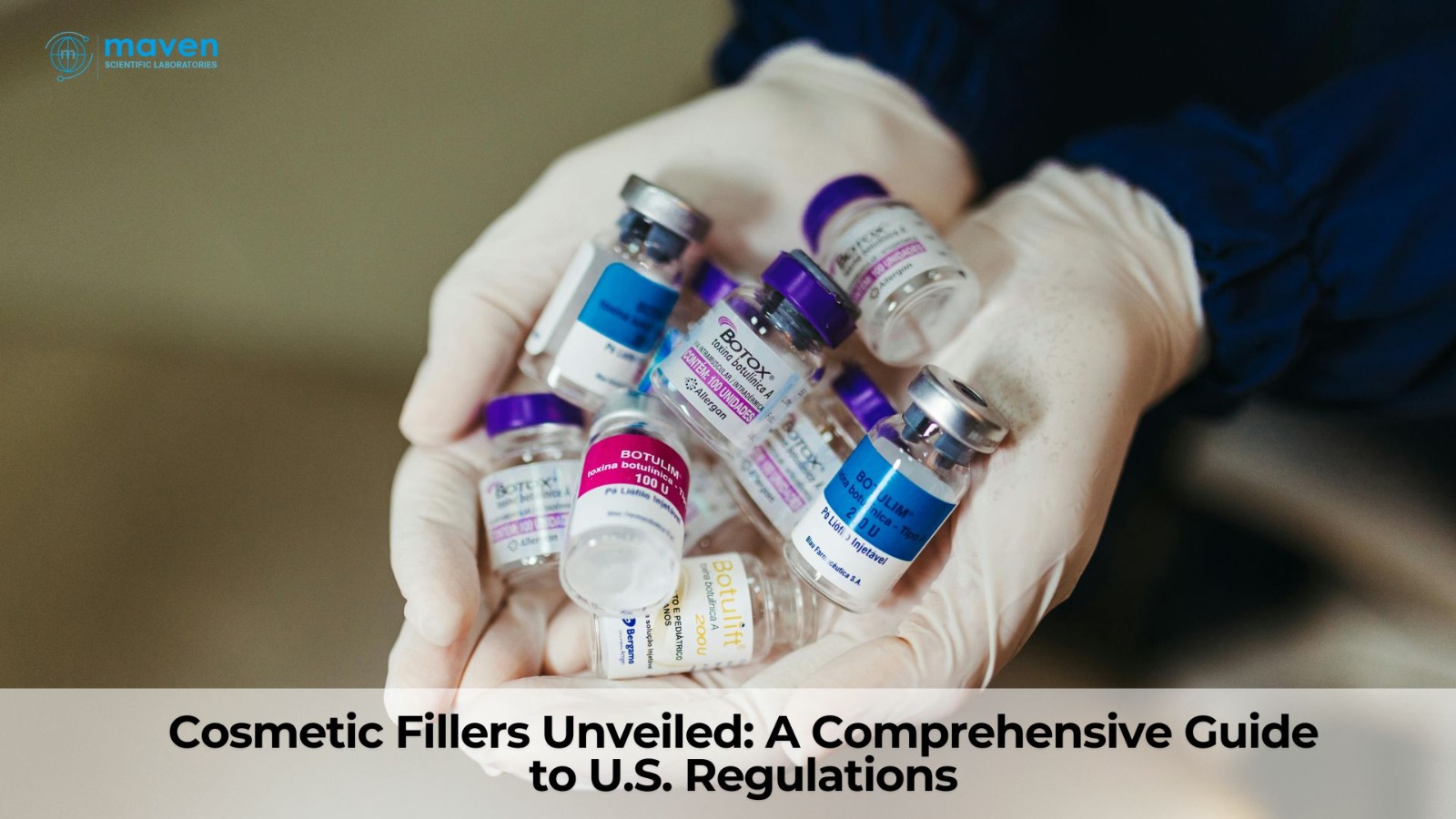
- Neurotoxins such as Botox
Regulatory Classification of Cosmetic Fillers
The FDA classifies cosmetic injectables based on mechanism of action and risk profile.
1. Neurotoxins (Drugs)
- Products like Botox are regulated as drugs
- Reason: They alter physiological function (neuromuscular activity)
2. Dermal Fillers (Medical Devices)
Dermal fillers are regulated as medical devices under a risk-based classification system.
FDA Device Classification
| Class | Risk Level | Regulatory Requirement |
| Class I | Low Risk | General controls |
| Class II | Moderate Risk | 510(k) clearance |
| Class III | High Risk | Premarket Approval (PMA) |
FDA Approval Pathways for Cosmetic Fillers
1. Premarket Approval (PMA)
Required for Class III (high-risk) dermal fillers.
Key Requirements
- Extensive clinical trials
- Safety and efficacy data
- Manufacturing validation
- Biocompatibility testing
2. 510(k) Premarket Notification
Applicable to Class II devices.
Key Requirements
- Demonstration of substantial equivalence
- Comparison with predicate devices
- Performance testing data
Post-Market Surveillance and Compliance
After approval, manufacturers must comply with ongoing FDA requirements.
Key Surveillance Mechanisms
- MedWatch Program – Adverse event reporting system
- Mandatory Manufacturer Reporting
- FDA Inspections for GMP compliance
Good Manufacturing Practices (GMP) Requirements
Manufacturers must comply with FDA quality standards, including:
- Sterility assurance
- Contamination control
- Process validation
- Batch consistency
GMP compliance ensures product quality, safety, and reproducibility.
Safety Concerns and Regulatory Warnings
The U.S. Food and Drug Administration has identified several safety risks associated with cosmetic fillers:
1. Unapproved or Counterfeit Products
- High risk of contamination or incorrect formulation
2. Improper Injection Techniques
- Needle-free devices are not FDA-approved for dermal fillers
3. Unqualified Practitioners
- Procedures must be performed by licensed healthcare professionals
MoCRA 2022: Key Regulatory Updates
The Modernization of Cosmetics Regulation Act significantly expands FDA oversight of cosmetics.
Key Provisions
| Requirement | Impact |
| Facility Registration | Mandatory FDA registration |
| Product Listing | All cosmetic products must be listed |
| Adverse Event Reporting | Enhanced safety monitoring |
| GMP Regulations | Mandatory compliance standards |
Labeling and Compliance Requirements
Cosmetic filler products must include:
- Ingredient disclosure
- Usage instructions
- Warnings and contraindications
- Manufacturer details
Ensure transparency and informed decision-making.
Challenges in Cosmetic Filler Regulation
1. Regulatory Complexity
- Dual classification (drug vs device)
2. Increasing Safety Scrutiny
- Raising adverse event reporting
3. Counterfeit Market Growth
- Online sales of unapproved fillers
4. Evolving Compliance Standards
- Implementation of MoCRA requirements
Latest Trends in Aesthetic Device Regulation
1. Stricter Post-Market Surveillance
- Increased FDA monitoring and enforcement
2. Digital Traceability Systems
- Improved product tracking and reporting
3. Global Regulatory Harmonization
- Alignment with EU MDR and international standards
4. Increased Focus on Patient Safety
- Enhanced training requirements
Strategic Compliance Recommendations
| Area | Strategy |
| Classification | Determine drug vs device pathway early |
| Clinical Data | Invest in robust clinical studies |
| GMP Compliance | Implement quality management systems |
| Surveillance | Establish adverse event monitoring |
| Regulatory Strategy | Aligning with FDA and global frameworks |
Business Impact and Market Opportunities
Companies that ensure compliance can:
- Accelerate FDA approvals
- Build consumer trust
- Expand into global markets
- Strengthening brand credibility
Conclusion
The regulation of cosmetic fillers in the U.S. under the Federal Food, Drug, and Cosmetic Act and enhanced by the Modernization of Cosmetics Regulation Act ensures high standards of safety, quality, and efficacy.
As the aesthetic industry continues to grow, manufacturers and practitioners must adopt proactive compliance strategies, robust quality systems, and continuous monitoring frameworks.
By aligning with FDA regulations and emerging trends, companies can successfully navigate the complex regulatory landscape while delivering safe and effective cosmetic solutions.
Frequently Asked Questions
1. Are dermal fillers regulated by the FDA?
Yes, as medical devices under a risk-based classification system.
2. Is Botox a medical device?
No, it is regulated as a drug.
3. What is PMA approval?
A rigorous FDA approval process for high-risk medical devices.
4. What is MoCRA 2022?
A law expanding FDA oversight of cosmetic products.
5. Can cosmetic fillers be sold online?
Only FDA-approved products should be used; unapproved sales pose safety risks.

Post a comment