
November 06, 2025
Understanding High-Risk Medical Devices in Global Regulatory Systems
Medical devices are categorized based on risk, and Class III medical devices represent the highest risk category. These devices are critical to patient survival and safety, making their regulatory approval process significantly more stringent than lower-risk devices.
Global regulators such as the U.S. Food and Drug Administration and frameworks like the EU MDR (Regulation (EU) 2017/745) impose strict requirements to ensure that these devices meet the highest standards of safety, clinical performance, and quality manufacturing.
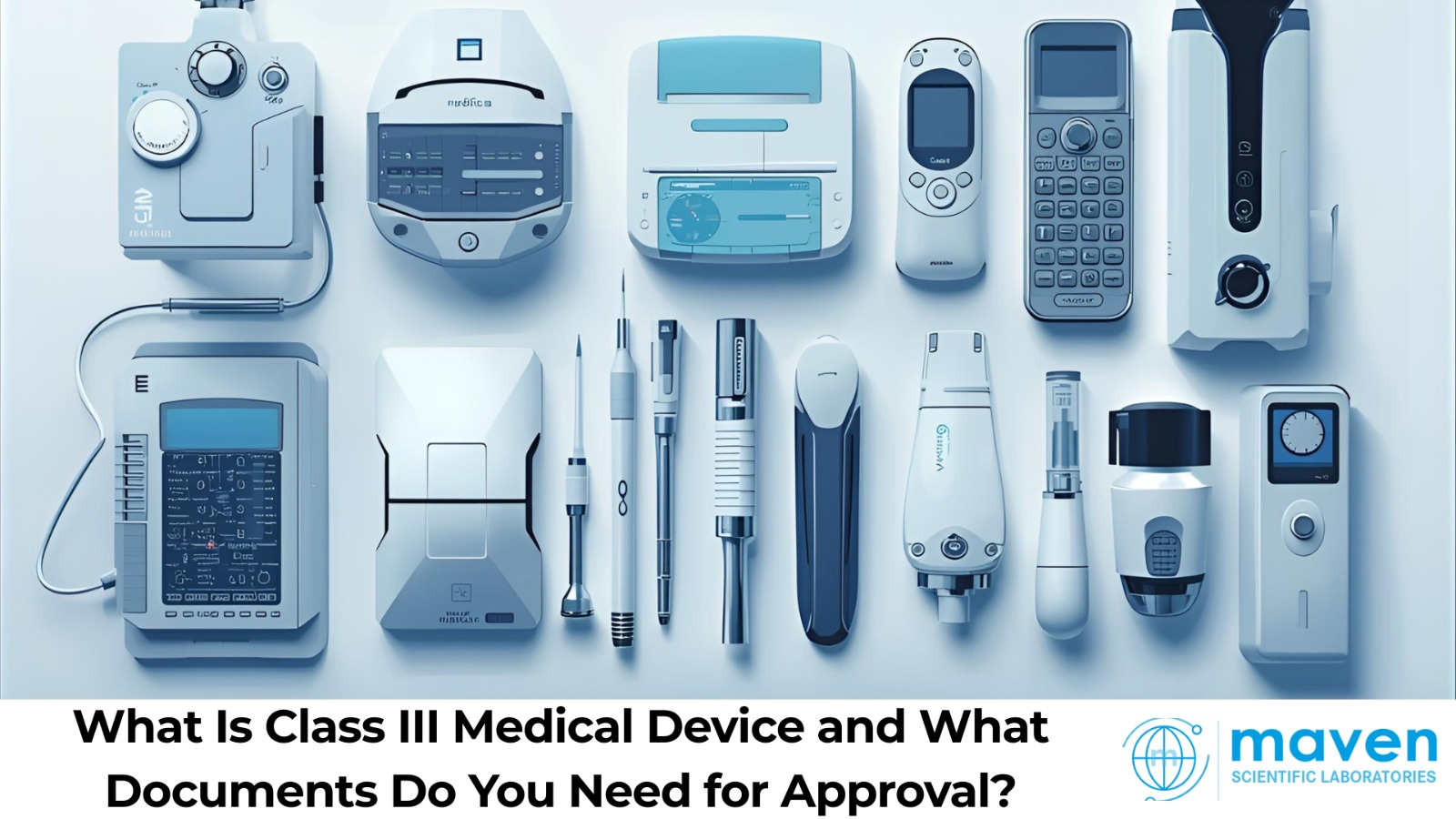
What is a Class III medical device and what documents are required for approval?
Class III medical devices are high-risk devices that sustain life or are implanted in the body. Approval requires extensive documentation, including clinical data, risk analysis, manufacturing details, and regulatory submissions such as FDA PMA or EU MDR technical files.
What Is Class III Medical Device?
A Class III medical device is defined by its potential to pose serious risk to patients if it fails. These devices are typically:
- Life-sustaining or life-supporting
- Implanted into the human body
- Used in critical or long-term therapeutic applications
- Associated with significant risk of injury or death
Key Characteristics
- High level of regulatory scrutiny
- Mandatory clinical evidence requirements
- Extensive pre-market and post-market obligations
- Strict manufacturing and quality controls
Examples of Class III Medical Devices
Common examples include:
- Implantable pacemakers and defibrillators
- Artificial heart valves
- Deep brain stimulators
- Orthopedic and spinal implants
- Intraocular lenses
- Artificial pancreas systems
- Neurovascular stents
These devices require robust clinical validation and regulatory approval before commercialization.
How Class III Devices Are Classified Globally
United States (FDA Classification System)
Under 21 CFR Part 820, Class III devices typically require Premarket Approval (PMA), the most stringent regulatory pathway.
- Applications to high-risk devices
- Requires scientific evidence of safety and effectiveness
- Includes detailed clinical and manufacturing review
In limited cases, devices may qualify for 510(k) if they are substantially equivalent to an existing device, but this is rare for Class III products.
European Union (EU MDR Classification)
Under EU MDR (Regulation (EU) 2017/745), classification is based on Annex VIII rules.
- Rule 8 covers implantable and long-term invasive devices
- Mandatory Notified Body assessment
- CE marking required for market access
The EU MDR has significantly increased requirements for:
- Clinical evidence
- Post-market surveillance
- Device traceability
FDA PMA Pathway: Documentation Requirements
For approval in the United States, Class III devices must undergo the Premarket Approval (PMA) process.
Core Documentation Requirements
| Document Type | Description |
| Device Description | Design, components, intended use |
| Non-Clinical Data | Bench testing, biocompatibility, electrical safety |
| Clinical Evidence | Clinical trials, IDE studies, RWE |
| Risk Analysis | Benefit-risk assessment, hazard identification |
| Manufacturing Information | Process validation, quality controls |
| Labeling | IFU, packaging, promotional materials |
| SSED | Summary of Safety and Effectiveness Data |
Emerging Trends (2024–2026)
- Increased use of Real-World Evidence (RWE)
- Integration of Digital Health Technologies (DHTs)
- Focus on patient-centric data
EU MDR Documentation Requirements for Class III Devices
For EU market access, manufacturers must submit a Technical Documentation File to a Notified Body.
Key Components
| Documentation | Purpose |
| Device Description | General information and intended use |
| Design & Manufacturing | Production processes and controls |
| Risk Management File | ISO 14971 compliance |
| Clinical Evaluation Report (CER) | Clinical performance validation |
| Biological Safety Data | Biocompatibility evidence |
| Labeling & IFU | User instructions and compliance |
| PMS Plan | Post-market monitoring |
| PMCF Plan | Ongoing clinical evaluation |
| SSCP | Public summary in EUDAMED |
Critical Compliance Elements Under EU MDR
- Unique Device Identification (UDI) for traceability
- Increased clinical evidence requirements
- Continuous post-market surveillance
- Mandatory Notified Body certification
These requirements make EU MDR one of the most stringent regulatory frameworks globally.
Key Differences: FDA PMA vs EU MDR
| Aspect | FDA (PMA) | EU MDR |
| Approval Type | Centralized (FDA) | Notified Body |
| Clinical Evidence | Mandatory | More extensive |
| Post-Market | Required | Strongly emphasized |
| Transparency | SSED | SSCP (public) |
| Timeline | Longer | Variable but complex |
Clinical Evidence: The Backbone of Approval
For Class III devices, clinical data is critical.
Sources of Clinical Evidence
- Clinical trials (IDE studies)
- Real-world data (RWE)
- Post-market clinical follow-up (PMCF)
- Literature reviews
Regulators increasingly demand robust, high-quality, and statistically significant data to support approval.
Common Challenges in Class III Device Approval
Manufacturers often face:
- Complex and evolving regulatory requirements
- High cost of clinical trials
- Lengthy approval timelines
- Data gaps in clinical evidence
- Documentation inconsistencies
Addressing these challenges requires strategic regulatory planning and expert guidance.
Strategies for Successful Approval
Organizations can improve approval success by:
- Early regulatory pathway assessment
- Strong clinical strategy development
- Risk-based documentation approach
- Integration of quality management systems
- Proactive engagement with regulators
Role of Post-Market Surveillance (PMS)
Approval is not the end ongoing compliance is critical.
PMS Activities Include:
- Adverse event monitoring
- Periodic safety updates
- Post-market clinical follow-up
- Complaint handling and CAPA integration
This ensures continuous safety and performance evaluation.
How Maven Regulatory Solutions Supports Class III Device Approval
Maven Regulatory Solutions provides end-to-end support for high-risk medical devices:
- Regulatory strategy (FDA, EU MDR, global markets)
- PMA and technical file preparation
- Clinical evaluation and CER development
- Risk management (ISO 14971)
- Post-market surveillance planning
- Audit readiness and compliance support
Planning to launch a Class III medical device?
- Accelerate FDA PMA approval
- Ensure EU MDR compliance
- Strengthen clinical evidence strategy
- Minimize regulatory risk
Connect with Maven Regulatory Solutions today
Future Trends in Class III Device Regulation
- Greater use of AI in clinical evaluation
- Increased reliance on real-world data
- Stricter post-market surveillance requirements
- Global harmonization of medical device regulations
Conclusion
Class III medical devices play a critical role in modern healthcare, offering lifesaving and life-enhancing benefits. However, they also face the highest level of regulatory scrutiny.
Success in obtaining approval requires:
- Comprehensive documentation
- Strong clinical evidence
- Robust quality systems
- Continuous compliance strategy
With the right regulatory expertise, manufacturers can navigate complex pathways and bring innovative, high-risk devices to market successfully.
Maven Regulatory Solutions ensures your journey from development to approval is efficient, compliant, and globally aligned.
Frequently Asked Questions
1. What is a Class III medical device?
A Class III device is a high-risk medical device that sustains life, is implanted, or poses significant risk if it fails.
2. Do Class III devices require FDA approval?
Yes, most require Premarket Approval (PMA) from the FDA.
3. What is PMA in medical devices?
PMA is the FDA’s most stringent approval process requiring clinical evidence and detailed documentation.
4. What documents are required for EU MDR Class III devices?
Technical documentation, CER, PMS plan, PMCF plan, risk management file, and SSCP.
5. What is the role of clinical evidence?
Clinical evidence demonstrates safety and effectiveness and is mandatory for approval.
6. Are Class III devices subject to post-market surveillance?
Yes, continuous monitoring and reporting are required.
7. Can Class III devices use the 510(k) pathway?
Only in rare cases where substantial equivalence can be demonstrated.
8. How long does approval take?
Approval timelines vary but are typically longer due to complexity and data requirements.

Post a comment