
February 18, 2025
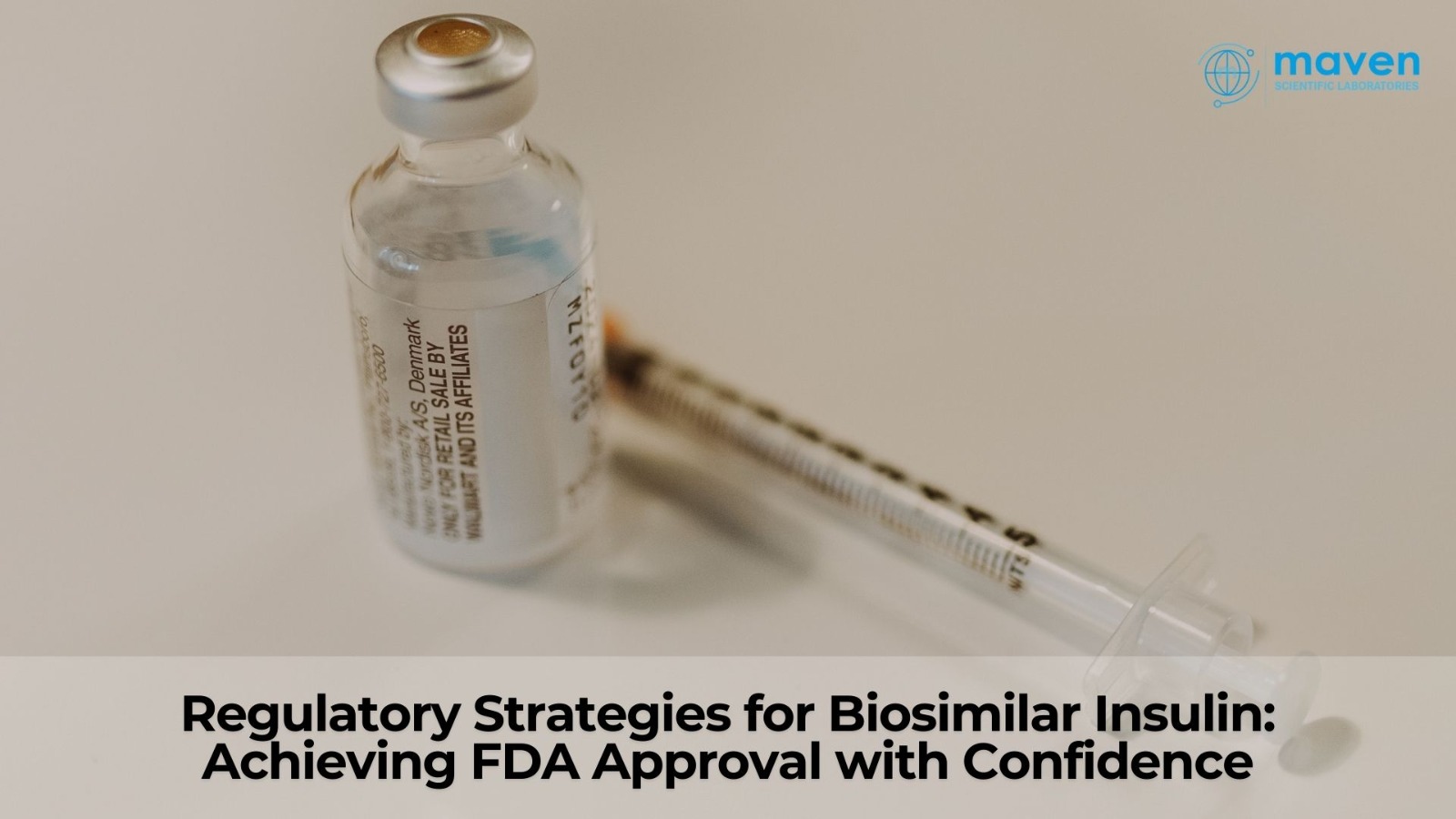
The development of biosimilar insulin products represents a major advancement in improving global access to affordable diabetes therapies. As healthcare systems prioritize cost-efficiency and accessibility, biosimilar insulins, particularly rapid-acting analogues, play a critical role in addressing unmet patient needs.
However, achieving approval in the United States requires navigating a highly complex regulatory pathway governed by the U.S. Food and Drug Administration (FDA). Manufacturers must demonstrate high similarity to a reference biology, ensuring no clinically meaningful differences in safety, purity, and potency.
Success requires a strategic integration of regulatory expertise, advanced analytics, clinical validation, and robust manufacturing controls.
FDA 351(k) Pathway: Foundation of Biosimilar Approval
The 351(k) pathway provides an abbreviated route for biosimilar approval, allowing developers to rely on existing data from reference biologics while generating targeted comparative evidence.
Core Scientific & Regulatory Requirements
| Requirement | Technical Focus | Outcome |
| Analytical Similarity | Structural & physicochemical characterization | Confirms comparability |
| Functional Assays | Mechanism of action validation | Demonstrates biological activity |
| Nonclinical Studies | Toxicology & PK/PD | Supports safety profile |
| Clinical Studies | Comparative efficacy & safety | Confirms no clinical difference |
| Immunogenicity | Anti-drug antibody response | Ensures patient safety |
| Totality of Evidence | Integrated data assessment | Basis for FDA approval |
The totality-of-evidence approach reduces clinical burden while maintaining rigorous standards.
Regulatory Strategy & Biologics License Application (BLA)
A well-defined regulatory strategy is critical for success.
Key Strategic Components
- Early engagement with the FDA (Pre-IND & Type IV meetings)
- Alignment on study design and comparability requirements
- Lifecycle management planning (post-approval changes, comparability protocols)
The Biologics License Application (BLA) must include:
- Analytical similarity data
- Nonclinical and clinical evidence
- Manufacturing (CMC) documentation
- Labeling and risk management strategies
A proactive strategy reduces risk of Complete Response Letters (CRLs).
CMC Compliance and Manufacturing Excellence
Chemistry, Manufacturing, and Controls (CMC) is central to biosimilar insulin approval due to the complexity of biologics.
Key CMC Requirements
| CMC Component | Requirement | Regulatory Significance |
| Process Development | Reproducible manufacturing | Ensures consistency |
| Analytical Methods | Validated characterization methods | Supports similarity |
| Stability Studies | Real-time & accelerated data | Defines shelf life |
| Impurity Profiling | Identification & control | Ensures safety |
| Process Validation | Demonstrated reliability | Mandatory |
| Control Strategy | Defined specifications | Maintains quality |
Compliance with cGMP standards is essential for approval and lifecycle management.
Clinical Evaluation and Toxicological Assessment
Clinical studies focus on confirming bio similarity in PK/PD, efficacy, and safety.
Clinical Evaluation Focus Areas
- Pharmacokinetics (PK) equivalence
- Pharmacodynamics (PD) comparability
- Clinical efficacy in target populations
Toxicological Considerations
- Immunogenicity assessment (critical for biologics)
- Risk identification and mitigation
- Comparative safety evaluation
Clinical Evaluation Reports (CERs) provide a structured justification for bio similarity.
Pharmacovigilance and Post-Market Compliance
Post-approval safety monitoring is mandatory.
Key Pharmacovigilance Components
- Risk Management Plans (RMPs)
- Periodic Safety Update Reports (PSURs)
- Real-world evidence (RWE) monitoring
Ensures long-term safety and regulatory trust
Labeling, Patent Strategy, and Market Access
Labeling Compliance
- Must align with reference product labeling
- Differences must be scientifically justified
Market Access Strategy
- Pricing and reimbursement planning
- Payer engagement
- Competitive positioning
Patent Considerations
- Exclusivity periods
- Litigation risks
- Freedom-to-operate strategies
Integrated planning is essential for commercial success
Key Challenges in Biosimilar Insulin Development
Companies face multiple challenges:
- Demonstrating high-level analytical similarity
- Managing complex biological manufacturing
- Addressing immunogenicity risks
- Evolving regulatory expectations
- Data inconsistencies impacting timelines
Strong regulatory planning mitigates development risks.
Latest Trends & 2025–2026 Regulatory Insights
The biosimilar landscape is evolving rapidly:
- Adoption of high-resolution analytical technologies
- Increased use of AI and machine learning in trial design
- Reduced clinical data requirements for well-characterized biologics
- Growing Global Regulatory Harmonization
- Expansion of biosimilar insulin market competition
Innovation is driving faster approvals and improved access
Key Benefits of a Strong Biosimilar Regulatory Strategy
| Benefit | Impact |
| Faster FDA Approval | Reduced review cycles |
| Regulatory Compliance | Avoid delays and CRLs |
| Cost Optimization | Efficient development pathways |
| Market Access | Competitive advantage |
How Maven Regulatory Solutions Supports Biosimilar Approval
Maven Regulatory Solutions provides end-to-end biosimilar regulatory support:
- Regulatory strategy and FDA engagement
- BLA preparation and submission
- CMC compliance and manufacturing support
- Toxicological risk assessments
- Clinical evaluation and CER development
- Pharmacovigilance and lifecycle management
- Labeling and market access strategy
Delivering efficient approvals and global market success
Conclusion
Achieving FDA approval for biosimilar insulin requires a comprehensive, science-driven, and strategically aligned approach. From analytical comparability and clinical validation to CMC compliance and pharmacovigilance, each component plays a critical role in regulatory success.
As the biosimilar market continues to expand, companies must adopt innovative, compliant, and efficient strategies to remain competitive.
With Maven Regulatory Solutions, organizations gain the expertise needed to navigate regulatory complexities, accelerate approvals, and deliver safe, effective, and affordable insulin therapies worldwide.
Frequently Asked Questions
1. What is the FDA 351(k) pathway?
It is an abbreviated pathway for biosimilar approval based on similarity to a reference biologic.
2. What data is required for biosimilar insulin approval?
Analytical, nonclinical, and clinical data demonstrates safety, efficacy, and comparability.
3. Why is CMC important for biosimilars?
It ensures consistent manufacturing, product quality, and regulatory compliance.
4. What is immunogenicity in biosimilars?
It refers to the immune response triggered by the biologic product.
5. How can approval timelines be accelerated?
Through early FDA engagement, robust data generation, and strong regulatory strategy.The development of biosimilar insulin products represents a major advancement in improving global access to affordable diabetes therapies. As healthcare systems prioritize cost-efficiency and accessibility, biosimilar insulins, particularly rapid-acting analogues, play a critical role in addressing unmet patient needs.
However, achieving approval in the United States requires navigating a highly complex regulatory pathway governed by the U.S. Food and Drug Administration (FDA). Manufacturers must demonstrate high similarity to a reference biology, ensuring no clinically meaningful differences in safety, purity, and potency.
Success requires a strategic integration of regulatory expertise, advanced analytics, clinical validation, and robust manufacturing controls.
FDA 351(k) Pathway: Foundation of Biosimilar Approval
The 351(k) pathway provides an abbreviated route for biosimilar approval, allowing developers to rely on existing data from reference biologics while generating targeted comparative evidence.
Core Scientific & Regulatory Requirements
| Requirement | Technical Focus | Outcome |
| Analytical Similarity | Structural & physicochemical characterization | Confirms comparability |
| Functional Assays | Mechanism of action validation | Demonstrates biological activity |
| Nonclinical Studies | Toxicology & PK/PD | Supports safety profile |
| Clinical Studies | Comparative efficacy & safety | Confirms no clinical difference |
| Immunogenicity | Anti-drug antibody response | Ensures patient safety |
| Totality of Evidence | Integrated data assessment | Basis for FDA approval |
The totality-of-evidence approach reduces clinical burden while maintaining rigorous standards.
Regulatory Strategy & Biologics License Application (BLA)
A well-defined regulatory strategy is critical for success.
Key Strategic Components
- Early engagement with the FDA (Pre-IND & Type IV meetings)
- Alignment on study design and comparability requirements
- Lifecycle management planning (post-approval changes, comparability protocols)
The Biologics License Application (BLA) must include:
- Analytical similarity data
- Nonclinical and clinical evidence
- Manufacturing (CMC) documentation
- Labeling and risk management strategies
A proactive strategy reduces risk of Complete Response Letters (CRLs).
CMC Compliance and Manufacturing Excellence
Chemistry, Manufacturing, and Controls (CMC) is central to biosimilar insulin approval due to the complexity of biologics.
Key CMC Requirements
| CMC Component | Requirement | Regulatory Significance |
| Process Development | Reproducible manufacturing | Ensures consistency |
| Analytical Methods | Validated characterization methods | Supports similarity |
| Stability Studies | Real-time & accelerated data | Defines shelf life |
| Impurity Profiling | Identification & control | Ensures safety |
| Process Validation | Demonstrated reliability | Mandatory |
| Control Strategy | Defined specifications | Maintains quality |
Compliance with cGMP standards is essential for approval and lifecycle management.
Clinical Evaluation and Toxicological Assessment
Clinical studies focus on confirming bio similarity in PK/PD, efficacy, and safety.
Clinical Evaluation Focus Areas
- Pharmacokinetics (PK) equivalence
- Pharmacodynamics (PD) comparability
- Clinical efficacy in target populations
Toxicological Considerations
- Immunogenicity assessment (critical for biologics)
- Risk identification and mitigation
- Comparative safety evaluation
Clinical Evaluation Reports (CERs) provide a structured justification for bio similarity.
Pharmacovigilance and Post-Market Compliance
Post-approval safety monitoring is mandatory.
Key Pharmacovigilance Components
- Risk Management Plans (RMPs)
- Periodic Safety Update Reports (PSURs)
- Real-world evidence (RWE) monitoring
Ensures long-term safety and regulatory trust
Labeling, Patent Strategy, and Market Access
Labeling Compliance
- Must align with reference product labeling
- Differences must be scientifically justified
Market Access Strategy
- Pricing and reimbursement planning
- Payer engagement
- Competitive positioning
Patent Considerations
- Exclusivity periods
- Litigation risks
- Freedom-to-operate strategies
Integrated planning is essential for commercial success
Key Challenges in Biosimilar Insulin Development
Companies face multiple challenges:
- Demonstrating high-level analytical similarity
- Managing complex biological manufacturing
- Addressing immunogenicity risks
- Evolving regulatory expectations
- Data inconsistencies impacting timelines
Strong regulatory planning mitigates development risks.
Latest Trends & 2025–2026 Regulatory Insights
The biosimilar landscape is evolving rapidly:
- Adoption of high-resolution analytical technologies
- Increased use of AI and machine learning in trial design
- Reduced clinical data requirements for well-characterized biologics
- Growing Global Regulatory Harmonization
- Expansion of biosimilar insulin market competition
Innovation is driving faster approvals and improved access
Key Benefits of a Strong Biosimilar Regulatory Strategy
| Benefit | Impact |
| Faster FDA Approval | Reduced review cycles |
| Regulatory Compliance | Avoid delays and CRLs |
| Cost Optimization | Efficient development pathways |
| Market Access | Competitive advantage |
How Maven Regulatory Solutions Supports Biosimilar Approval
Maven Regulatory Solutions provides end-to-end biosimilar regulatory support:
- Regulatory strategy and FDA engagement
- BLA preparation and submission
- CMC compliance and manufacturing support
- Toxicological risk assessments
- Clinical evaluation and CER development
- Pharmacovigilance and lifecycle management
- Labeling and market access strategy
Delivering efficient approvals and global market success
Conclusion
Achieving FDA approval for biosimilar insulin requires a comprehensive, science-driven, and strategically aligned approach. From analytical comparability and clinical validation to CMC compliance and pharmacovigilance, each component plays a critical role in regulatory success.
As the biosimilar market continues to expand, companies must adopt innovative, compliant, and efficient strategies to remain competitive.
With Maven Regulatory Solutions, organizations gain the expertise needed to navigate regulatory complexities, accelerate approvals, and deliver safe, effective, and affordable insulin therapies worldwide.
Frequently Asked Questions
1. What is the FDA 351(k) pathway?
It is an abbreviated pathway for biosimilar approval based on similarity to a reference biologic.
2. What data is required for biosimilar insulin approval?
Analytical, nonclinical, and clinical data demonstrates safety, efficacy, and comparability.
3. Why is CMC important for biosimilars?
It ensures consistent manufacturing, product quality, and regulatory compliance.
4. What is immunogenicity in biosimilars?
It refers to the immune response triggered by the biologic product.
5. How can approval timelines be accelerated?
Through early FDA engagement, robust data generation, and strong regulatory strategy.

Post a comment