
October 25, 2024
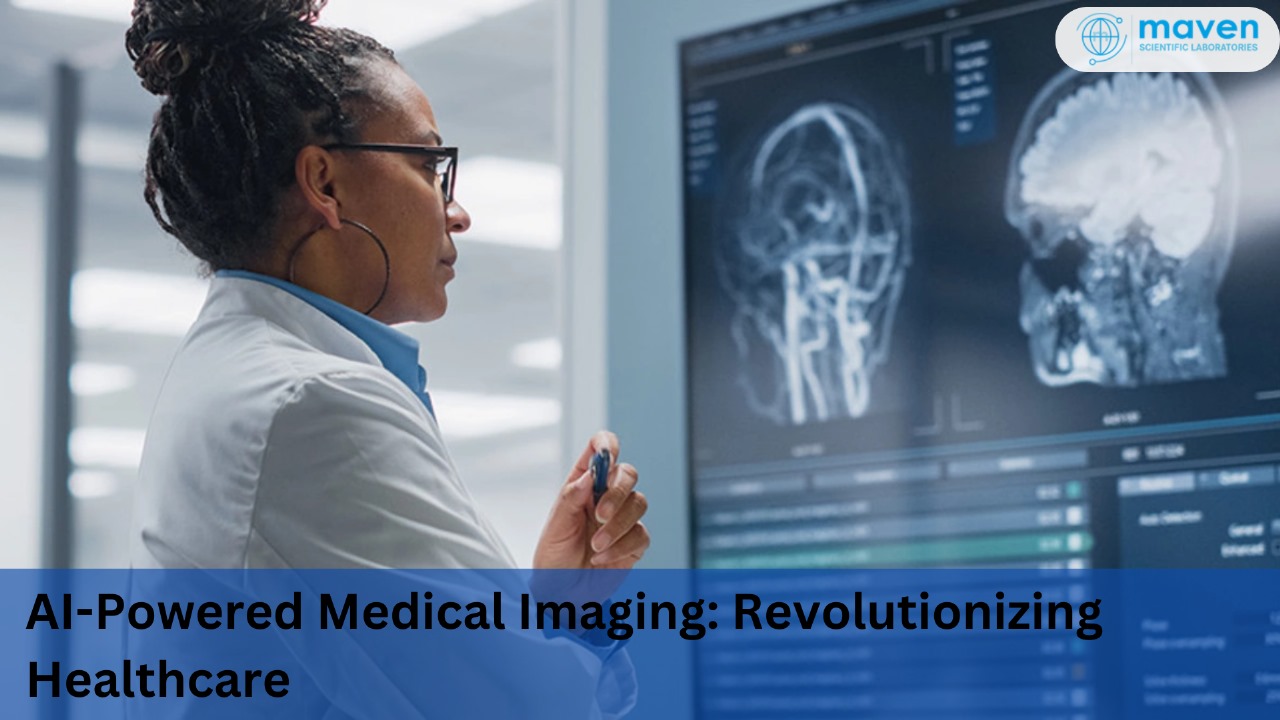
Artificial Intelligence (AI) is redefining the future of global healthcare, with AI-powered medical imaging emerging as one of the most transformative innovations in modern diagnostics. Advanced deep learning algorithms, convolutional neural networks (CNNs), and predictive analytics models are enabling healthcare providers to analyze radiology images with unprecedented speed and precision.
At Maven Regulatory Solutions, we closely monitor advancements in AI-driven diagnostics, SaMD (Software as a Medical Device), regulatory compliance for AI-based medical technologies, and global medical device approval pathways. AI-powered image recognition software is rapidly reshaping clinical workflows, regulatory frameworks, and patient outcomes across the healthcare ecosystem.
The Evolution of AI in Medical Imaging
Traditional diagnostic imaging such as X-rays, MRI scans, CT scans, PET imaging, mammography, and ultrasound imaging has historically relied on manual interpretation by radiologists. While highly specialized, this process can be:
- Time-intensive
- Subject to inter-observer variability
- Limited by human fatigue
- Operationally expensive
AI introduces a paradigm shift through:
- Deep learning in radiology
- Computer-aided detection (CAD) systems
- Machine learning-based image segmentation
- Automated anomaly detection models
- Radiomics and predictive modeling
These technologies enable real-time screening and high-throughput image analysis, enhancing diagnostic efficiency without compromising clinical rigor.
Core AI Technologies Transforming Diagnostic Imaging
| Technology | Technical Function | Clinical Application |
| Convolutional Neural Networks (CNNs) | Feature extraction & pattern recognition | Tumor detection, lesion classification |
| Natural Language Processing (NLP) | Structured radiology report generation | Clinical decision support |
| Radiomics | Quantitative feature extraction from imaging data | Oncology prognosis modeling |
| Federated Learning | Distributed model training with privacy protection | Multi-hospital AI collaboration |
| Explainable AI (XAI) | Transparent model interpretation | Regulatory compliance & physician trust |
These technologies are particularly impactful in:
- Oncology imaging AI
- Cardiovascular disease detection
- Neuroimaging diagnostics
- Pulmonary disease screening
- Breast cancer early detection
- Stroke detection algorithms
Key Benefits of AI-Driven Medical Imaging
1. Accelerated Diagnostic Turnaround
AI systems can process high-resolution medical images within milliseconds, dramatically reducing reporting times. In emergency care scenarios such as stroke or pulmonary embolism, this speed directly impacts survival outcomes.
2. Enhanced Diagnostic Accuracy
AI models trained on millions of annotated datasets can identify subtle imaging biomarkers that may be overlooked during manual review. Studies show AI-assisted radiology improves sensitivity and specificity in detecting:
- Early-stage malignancies
- Microcalcifications
- Cardiomyopathies
- Intracranial hemorrhages
3. Cost Optimization in Healthcare Systems
AI-powered workflow automation reduces operational bottlenecks and supports scalable diagnostic models. This results in:
- Reduced imaging backlog
- Lower repeat scan rates
- Improved resource allocation
- Optimized radiology department efficiency
4. Non-Invasive Predictive Diagnostics
Advanced AI radiomics and predictive modeling tools can detect disease progression patterns non-invasively, reducing the need for exploratory procedures and enhancing patient safety.
5. Continuous Learning & Model Optimization
Through adaptive machine learning pipelines, AI models continuously refine performance using new datasets. Emerging methodologies like self-supervised learning and foundation medical imaging models (2025 trend) further enhance generalization capabilities across diverse populations.
AI Medical Imaging Across Clinical Specialties
| Specialty | AI Application | Diagnostic Impact |
| Oncology | Tumor segmentation & metastasis detection | Early cancer diagnosis |
| Cardiology | Echocardiogram AI analysis | Heart failure prediction |
| Neurology | Stroke triage algorithms | Faster emergency intervention |
| Pulmonology | AI chest CT screening | Early lung disease detection |
| Orthopedics | Fracture detection models | Automated trauma assessment |
Regulatory Considerations for AI-Based Medical Imaging
As AI-powered imaging tools increasingly qualify as Software as a Medical Device (SaMD), regulatory compliance is critical. Global regulatory frameworks emphasize:
- FDA AI/ML-Based SaMD Action Plan
- EU MDR requirements for AI-enabled medical devices
- Clinical evaluation and performance validation
- Post-market surveillance & real-world performance monitoring
- Algorithm transparency and explainability
Emerging regulatory focus areas (2024–2026 updates) include:
- Adaptive AI lifecycle management
- Real-world evidence (RWE) integration
- Cybersecurity compliance for AI systems
- Bias mitigation and dataset diversity validation
- Good Machine Learning Practice (GMLP)
For medical device manufacturers, early regulatory strategy integration ensures smoother global market access and reduces compliance risks.
Data Privacy & Ethical AI in Medical Imaging
With AI systems trained in vast imaging datasets, compliance with global data protection regulations such as:
- HIPAA
- GDPR
- Health data localization laws
is essential. Federated learning and anonymized dataset frameworks are becoming industry standards to address privacy challenges.
Ethical AI principles emphasize:
- Bias detection in diagnostic algorithms
- Transparent clinical decision support
- Human-in-the-loop validation models
The Future of AI-Powered Radiology
Key 2025–2026 trends shaping AI medical imaging include:
- Multimodal AI combining imaging + genomics
- AI-powered digital twin modeling
- Real-time AI-assisted robotic surgery imaging
- Cloud-based PACS integration with AI overlays
- Generative AI for radiology report automation
The global AI medical imaging market is projected to grow significantly, driven by rising chronic disease prevalence, increasing imaging volumes, and demand for precision medicine.
Why AI-Powered Medical Imaging Matters for Healthcare Innovation
AI is not replacing radiologists it is augmenting clinical expertise. The synergy between human intelligence and artificial intelligence is enabling:
- Earlier disease detection
- Precision diagnostics
- Reduced healthcare disparities
- Improved patient outcomes
- Scalable healthcare delivery models
Healthcare institutions integrating AI responsibly and strategically will lead the next generation of digital health transformation.
Frequently Asked Questions (FAQ)
1. What is AI-powered medical imaging?
AI-powered medical imaging refers to the use of machine learning and deep learning algorithms to analyze radiology images for faster, more accurate diagnosis.
2. Is AI medical imaging regulated?
Yes. AI-based imaging tools classified as SaMD must comply with global regulatory frameworks, including FDA and EU MDR requirements.
3. How does AI improve radiology accuracy?
AI models detect subtle imaging patterns using large training datasets, improving sensitivity and reducing diagnostic variability.
4. What are the biggest challenges in AI imaging?
Key challenges include regulatory compliance, data privacy, algorithm bias mitigation, and clinical validation.
5. What is the future of AI in diagnostic imaging?
The future includes multimodal AI, federated learning, explainable AI systems, and adaptive regulatory frameworks.

Post a comment