
January 04, 2025
The veterinary healthcare industry is undergoing a major technological transformation. Advances in Artificial Intelligence (AI) and Machine Learning (ML) are enabling veterinarians, researchers, and animal healthcare providers to analyze complex biological data, detect diseases earlier, and improve treatment outcomes.
From AI-driven imaging diagnostics and predictive health analytics to smart wearable monitoring devices and AI-assisted drug discovery, these technologies are redefining how animal diseases are diagnosed, monitored, and treated.
The integration of AI and ML into veterinary medicine enables:
- Faster and more accurate diagnostics
- Early disease detection and predictive health management
- Personalized treatment strategies for animals
- Improved clinical decision-making
- Enhanced veterinary pharmaceutical research and development
As veterinary healthcare systems become increasingly digital, AI-powered tools are helping veterinarians manage vast amounts of medical data, including radiology images, pathology slides, laboratory results, genomic datasets, and behavioral health indicators.
Maven Regulatory Solutions supports organizations operating in animal health, veterinary pharmaceuticals, and digital health technologies by providing expertise in regulatory strategy, compliance consulting, AI-driven healthcare innovation, and global regulatory intelligence.
This article explores how AI and Machine Learning are transforming veterinary diagnostics and treatment, while also highlighting emerging technologies, benefits, challenges, and regulatory considerations.
Understanding Artificial Intelligence and Machine Learning in Veterinary Medicine
Artificial Intelligence refers to computer systems capable of performing tasks that typically require human intelligence, including pattern recognition, predictive modeling, and decision-making.
Machine Learning, a subset of AI, involves algorithms that learn from data and improve performance over time without explicit programming.
In veterinary healthcare, AI systems analyze complex datasets such as:
- Radiographic images
- Histopathology slides
- Blood chemistry reports
- Genetic sequencing data
- Behavioral and environmental data
- Electronic health records (EHR)
By identifying patterns within these datasets, AI technologies can assist veterinarians in diagnosing diseases, predicting health risks, and recommending treatment pathways.
Key Applications of AI and ML in Veterinary Diagnostics
Artificial intelligence is now integrated into several advanced veterinary diagnostic technologies.
1. AI-Powered Imaging Diagnostics
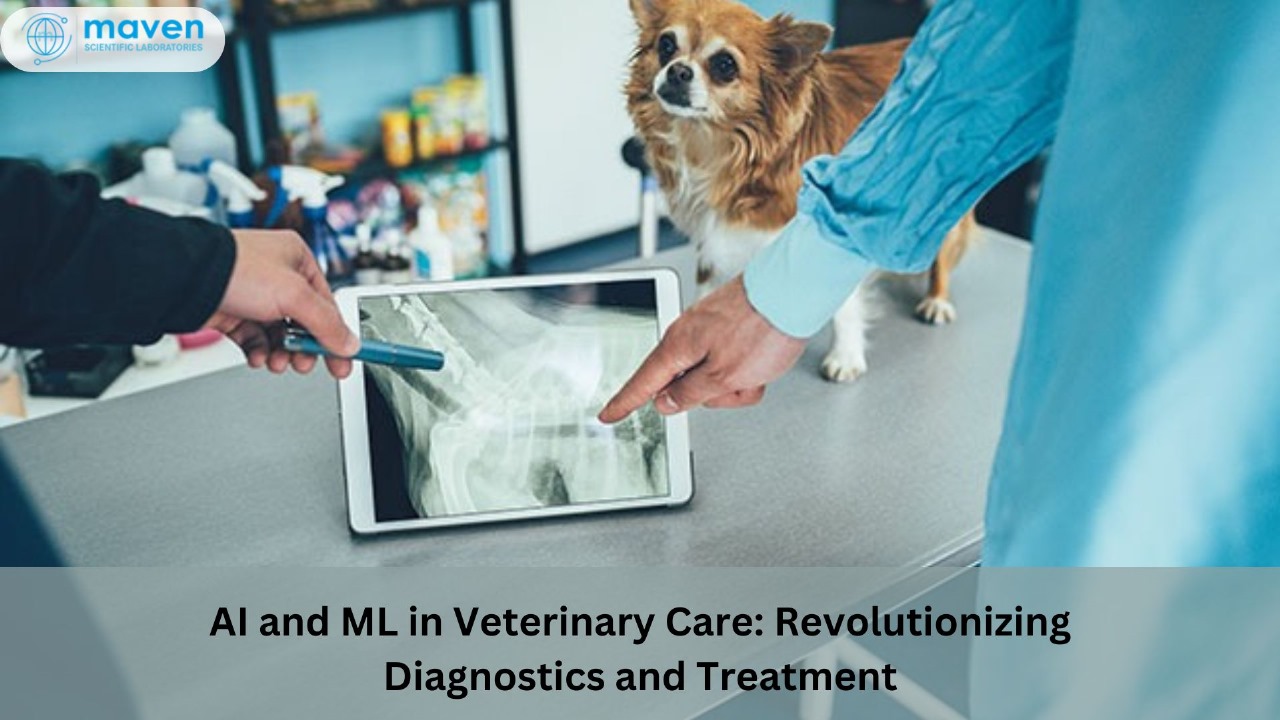
Diagnostic imaging plays a central role in veterinary medicine. AI-driven systems enhance the analysis of imaging data generated through technologies such as:
- X-ray radiography
- Computed Tomography (CT) scans
- Magnetic Resonance Imaging (MRI)
- Ultrasound imaging
AI-based imaging platforms can automatically detect abnormalities and support clinical interpretation.
Advanced Imaging Capabilities
| AI Imaging Capability | Veterinary Diagnostic Benefit |
| Automated lesion detection | Identifies fractures, tumors, and organ abnormalities |
| 3D anatomical reconstruction | Provides detailed visualization of internal structures |
| Disease progression modeling | Tracks disease evolution over time |
| AI-assisted radiology triage | Prioritizes urgent clinical cases |
These tools significantly improve diagnostic accuracy while reducing the workload for veterinary radiologists.
2. AI-Enabled Veterinary Pathology
Digital pathology platforms powered by AI algorithms allow veterinary pathologists to analyze tissue samples with enhanced precision.
AI pathology systems can:
- Identify abnormal cellular structures
- Detect early tumor formation
- Classify histopathological patterns
- Predict disease progression
Automated histopathology grading systems help accelerate diagnostic workflows while maintaining accuracy.
3. Predictive Animal Health Analytics
AI-based predictive analytics platforms evaluate large datasets to forecast potential health risks in animals.
These systems analyze data including:
- Genetic predisposition markers
- Nutritional and diet information
- Environmental exposure factors
- Activity and behavioral patterns
Predictive health analytics can identify conditions such as:
- Diabetes in companion animals
- Hip dysplasia in dogs
- Cardiovascular diseases in horses
- Infectious disease risks in livestock populations
4. AI-Driven Laboratory Diagnostics
Veterinary laboratories generate vast amounts of clinical data. AI algorithms help interpret these datasets more efficiently.
AI Applications in Veterinary Laboratory Testing
| AI Capability | Diagnostic Impact |
| Blood chemistry pattern recognition | Detects metabolic disorders |
| Biomarker identification | Enables early disease detection |
| Microbiology pattern analysis | Improves pathogen identification |
| Data correlation with patient history | Enhance diagnostic context |
These capabilities support veterinarians in making more accurate and data-driven treatment decisions.
5. AI Integration with Wearable Veterinary Technology
Wearable health monitoring devices for animals are becoming increasingly common.
Smart veterinary wearables collect real-time data such as:
- Heart rate
- Activity levels
- Sleep patterns
- Body temperature
- Stress indicators
AI platforms analyze this data to detect subtle health changes.
Examples of AI-Driven Monitoring
| Wearable Technology | AI Application |
| Smart pet collars | Activity and mobility analysis |
| Livestock monitoring tags | Disease surveillance in herds |
| Biometric monitoring devices | Early stress or illness detection |
These technologies enable continuous health monitoring and early intervention.
6. AI in Veterinary Drug Discovery and Clinical Trials
Artificial intelligence is accelerating innovation in veterinary pharmaceutical research.
AI-driven computational models assist scientists in:
- Predicting drug-target interactions
- Modeling pharmacokinetics in different species
- Simulating clinical trial outcomes
- Optimizing dosage formulations
AI tools also improve clinical trial efficiency by identifying appropriate animal populations and predicting therapeutic responses.
Key Benefits of AI and ML in Veterinary Healthcare
The adoption of AI technologies offers significant advantages across veterinary healthcare systems.
Major Benefits
1. Improved Diagnostic Accuracy
AI systems analyze massive datasets and identify patterns that may be missed by traditional diagnostic methods.
2. Faster Clinical Decision Making
Automated data processing reduces diagnostic turnaround times.
3. Personalized Veterinary Medicine
AI enables individualized treatment plans tailored to an animal’s genetic profile and health history.
4. Early Disease Detection
Predictive analytics allow veterinarians to detect diseases before symptoms appear.
5. Expanded Access to Veterinary Expertise
AI diagnostic tools enable remote clinics to access advanced diagnostic capabilities.
Challenges in Implementing AI in Veterinary Medicine
Despite its potential, several challenges remain in implementing AI technologies in veterinary healthcare.
Key Challenges
1. Data Availability and Standardization
Veterinary medical datasets are often fragmented and lack standardized formats.
2. Cost of Advanced Technologies
AI platforms and diagnostic tools may require significant investment.
3. Ethical and Privacy Concerns
Ensuring responsible use of animal health data is essential.
4. Regulatory Oversight
Digital health technologies must comply with evolving regulatory requirements in veterinary medicine.
Strategies to Overcome Implementation Challenges
Several strategies can help accelerate the adoption of AI in veterinary healthcare.
1. Establishing Standardized Data Frameworks
Collaborative veterinary data networks improve AI model training and accuracy.
2. Cloud-Based AI Platforms
Cloud infrastructure reduces costs and improves accessibility for smaller clinics.
3. Transparent AI Systems
Ensuring explainable AI models builds trust among veterinarians and regulators.
4. Regulatory Collaboration
Early engagement with regulatory authorities supports safe and compliant deployment of AI technologies.
Emerging Trends in AI-Driven Veterinary Healthcare
Several emerging technologies are shaping the future of veterinary medicine.
Key Innovation Trends
- AI-assisted genomic veterinary diagnostics
- Precision livestock farming technologies
- Digital twin models for animal health simulation
- AI-powered veterinary telemedicine platforms
- Automated disease surveillance systems
These innovations will further integrate data science, biotechnology, and veterinary medicine.
How Maven Regulatory Solutions Supports AI Innovation in Veterinary Healthcare
Organizations developing AI-driven veterinary technologies must navigate complex regulatory frameworks.
Maven Regulatory Solutions supports veterinary healthcare innovators through specialized services including:
1. Regulatory Strategy for Digital Animal Health Technologies
Designing regulatory pathways for AI-based veterinary devices and diagnostic platforms.
2. Compliance Consulting for AI Healthcare Platforms
Ensuring adherence to global regulatory standards.
3. Data Governance and Regulatory Documentation
Supporting compliant data management and regulatory submissions.
4. Veterinary Pharmaceutical Regulatory Support
Providing expertise in animal health product approvals.
5. Global Market Entry Strategy
Guiding companies through regulatory approvals across multiple regions.
Through integrated regulatory consulting and scientific expertise, Maven helps organizations bring innovative veterinary technologies and AI-driven solutions to global markets efficiently and compliantly.
Frequently Asked Questions (FAQ)
1. What is Artificial Intelligence in veterinary medicine?
Artificial Intelligence refers to computational systems that analyze veterinary health data to assist in diagnostics, treatment planning, and disease prediction.
2. How does machine learning improve veterinary diagnostics?
Machine learning algorithms detect patterns within clinical datasets, enabling faster and more accurate disease detection.
3. Can AI replace veterinarians?
No. AI acts as a clinical decision support tool that enhances veterinary expertise rather than replacing professionals.
4. Are AI veterinary diagnostic tools regulated?
Yes. AI-based veterinary technologies must comply with regional regulatory frameworks governing medical devices and animal health technologies.
5. What role does AI play in veterinary drug development?
AI accelerates drug discovery by predicting drug interactions, optimizing formulations, and improving clinical trial design.
Conclusion
Artificial Intelligence and Machine Learning are rapidly transforming veterinary medicine by enabling advanced diagnostics, predictive health management, and innovative treatment approaches.
From AI-driven radiology platforms and predictive disease analytics to wearable animal health monitoring systems and computational drug discovery, these technologies are redefining how veterinarians diagnose and treat animal diseases.
Although challenges such as data standardization, cost barriers, and regulatory oversight remain, ongoing technological advancements and collaborative initiatives are accelerating the adoption of AI in veterinary healthcare.
By combining cutting-edge technology with regulatory expertise, organizations can unlock the full potential of AI-driven veterinary innovation.
Maven Regulatory Solutions supports companies at the forefront of this transformation by providing specialized regulatory consulting and compliance solutions for veterinary pharmaceuticals, digital health technologies, and advanced animal healthcare innovations.

Post a comment