
February 24, 2025
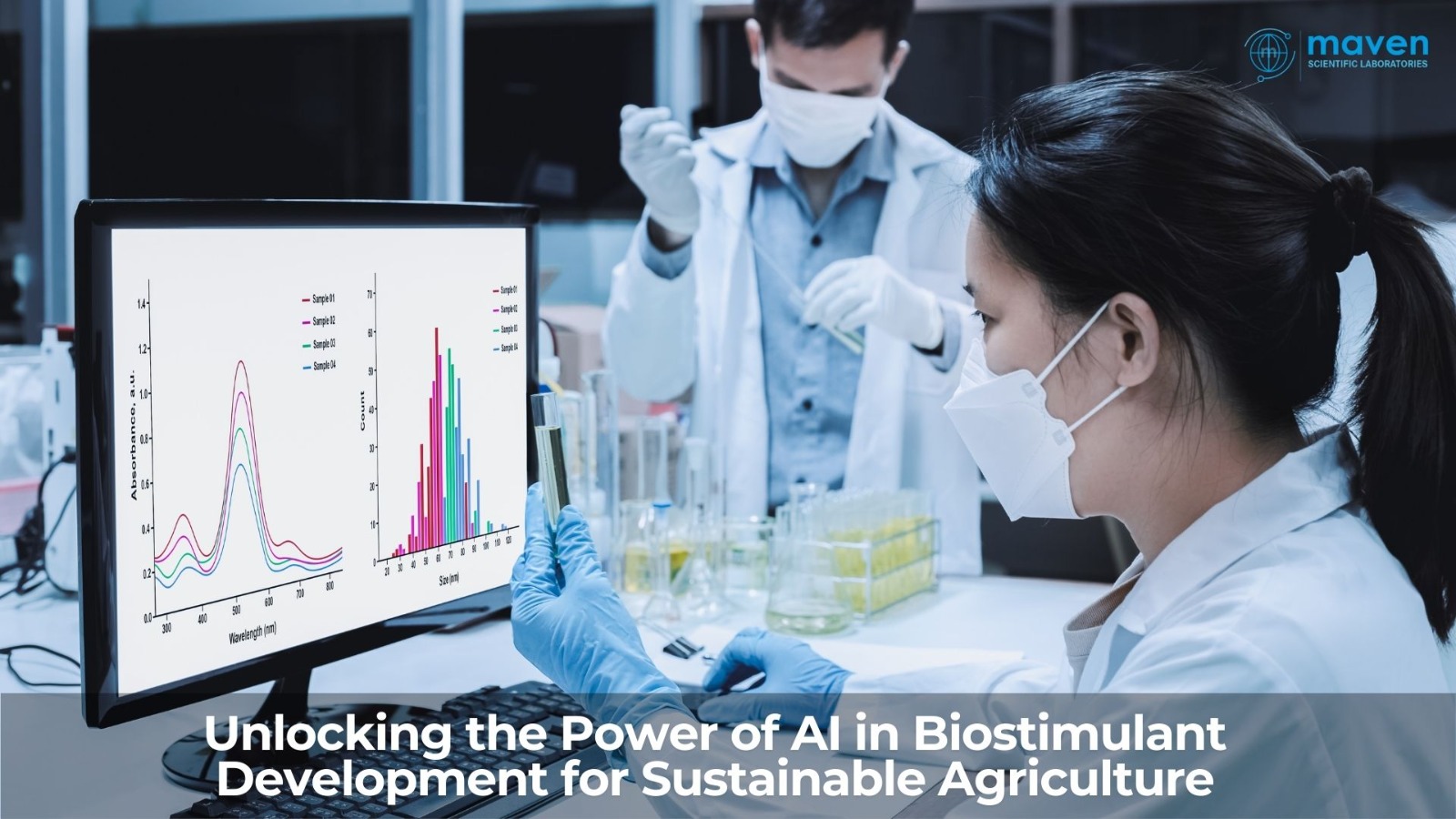
Artificial Intelligence (AI) is revolutionizing bio stimulant development by analyzing complex biological data to optimize formulations, improve crop performance, and enhance regulatory compliance. AI-driven insights enable faster product development, predictive modeling, and sustainable agricultural practices, reducing reliance on synthetic inputs while increasing yield efficiency.
Bio stimulants are emerging as a cornerstone of sustainable agriculture, offering innovative solutions to enhance plant growth, improve nutrient efficiency, and increase tolerance to environmental stress. However, variability in soil composition, climate conditions, and crop responses often affects their performance.
The integration of Artificial Intelligence (AI) in agriculture is transforming how biostimulants are developed, tested, and optimized. By leveraging machine learning, predictive analytics, and multi-omics data, AI enables precise and efficient development of next-generation agricultural inputs.
This 2026 guide by Maven Regulatory Solutions explores how AI is reshaping biostimulant innovation, regulatory compliance, and sustainable farming practices.
Understanding Biostimulants in Modern Agriculture
Biostimulants are substances or microorganisms applied to:
- Plants
- Seeds
- Soil or root environments
Key Benefits of Biostimulants
- Enhanced nutrient uptake efficiency
- Improved abiotic stress tolerance (drought, salinity, heat)
- Increased crop yield and quality
- Strengthened soil microbiome and fertility
They play a critical role in reducing dependence on chemical fertilizers and pesticides, supporting eco-friendly and regenerative agriculture.
The Role of AI In Biostimulant Development
1. Multi-Omics Data Integration and Analysis
AI processes large-scale datasets from:
- Genomics
- Proteomics
- Metabolomics
- Phenomics
This enables identification of molecular pathways and plant–microbe interactions that influence biostimulant performance.
2. Predictive Modeling and Machine Learning
AI algorithms can:
- Predict plant responses under varying environmental conditions
- Identify optimal formulations for specific crops and regions
- Reduce dependency on long-term field trials
This accelerates R&D cycles and product commercialization timelines.
3. Biomarker Discovery and Precision Agriculture
AI helps identify key biomarkers that indicate:
- Nutrient uptake efficiency
- Stress tolerance mechanisms
- Crop-specific responsiveness
This supports precision agriculture and targets biostimulant application.
AI In Regulatory Documentation and Compliance
AI is not only transforming research but also regulatory strategy and submission processes.
Key Applications Include:
1. Automated Scientific Documentation
- AI-powered Natural Language Processing (NLP) generates:
- Technical dossiers
- Study reports
- Regulatory summaries
2. Advanced Safety and Risk Assessments
- In silico models predict:
- Toxicological profiles
- Environmental impact
- Ecotoxicity risks
3. Regulatory Submission Optimization
- AI structures data according to global regulatory frameworks
- Improves accuracy and reduces submission errors
- Supports faster approvals across regions
4. Labeling And Compliance Monitoring
- Real-time tracking of regulatory updates
- Automated labeling adjustments based on compliance requirements
Enhancing Sustainability Through AI-Driven Biostimulants
AI supports sustainable and regenerative agriculture by:
- Optimizing input efficiency
- Reducing environmental footprint
- Enhancing soil biodiversity
- Minimizing chemical usage
Impact On Sustainability Goals
| Area | AI Contribution |
| Soil Health | Improved microbial balance |
| Water Efficiency | Optimized irrigation strategies |
| Crop Yield | Data-driven productivity enhancement |
| Environmental Impact | Reduced chemical runoff |
AI-Driven Biostimulant Development Workflow
| Stage | AI Application |
| Research | Multi-omics data analysis |
| Formulation | Predictive modeling |
| Testing | Simulation-based validation |
| Regulatory | Automated documentation |
| Commercialization | Market-specific optimization |
Latest Trends in AI And Biostimulants
- Integration of AI with IoT and smart farming systems
- Use of digital twins for crop simulation
- Expansion of AI-driven climate adaptation models
- Increased regulatory focus on sustainability metrics
- Adoption of AI in global agrochemical regulatory submissions
Challenges And Considerations
| Challenge | Impact | Solution |
| Data variability | Inconsistent predictions | High-quality datasets |
| Regulatory uncertainty | Delayed approvals | Expert guidance |
| Integration complexity | Implementation delays | Scalable AI platforms |
Why Choose Maven Regulatory Solutions?
Maven Regulatory Solutions offers specialized expertise in:
- AI-integrated regulatory strategy for agriculture
- Biostimulant dossier preparation and compliance
- Safety and toxicology assessments
- Global regulatory submissions and market access
- Sustainable agriculture consulting
We bridge the gap between innovation and regulatory compliance, enabling faster and more efficient product approvals.
Outlook: AI And the Next Generation of Agriculture
The convergence of AI, biotechnology, and regulatory science is shaping the future of agriculture.
Key future developments include:
- Hyper-personalized crop solutions
- Region-specific biostimulant optimization
- Fully automated regulatory submissions
- AI-driven sustainability benchmarking
This transformation will enable a resilient, efficient, and environmentally sustainable global food system.
Conclusion
Artificial Intelligence is revolutionizing biostimulant development by accelerating innovation, enhancing regulatory compliance, and promoting sustainable agricultural practices. By leveraging AI-driven insights, companies can develop more effective products, reduce environmental impact, and achieve faster market access.
With the support of Maven Regulatory Solutions, organizations can harness the full potential of AI to navigate complex regulatory landscapes and drive the future of sustainable agriculture.
FAQs
1. What are biostimulants in agriculture?
Biostimulants are substances or microorganisms that enhance plant growth, nutrient uptake, and stress tolerance.
2. How does AI improve biostimulant development?
AI analyzes biological data, predicts plant responses, and optimizes formulations for better performance.
3. Can AI reduce field trials in agriculture?
Yes, AI simulations can significantly reduce the need for extensive field testing.
4. Is AI used in regulatory submissions?
Yes, AI helps automate documentation, risk assessments, and compliance processes.
5. Why are biostimulants important for sustainability?
They reduce reliance on chemical fertilizers and improve soil and crop health.

Post a comment