
November 17, 2025
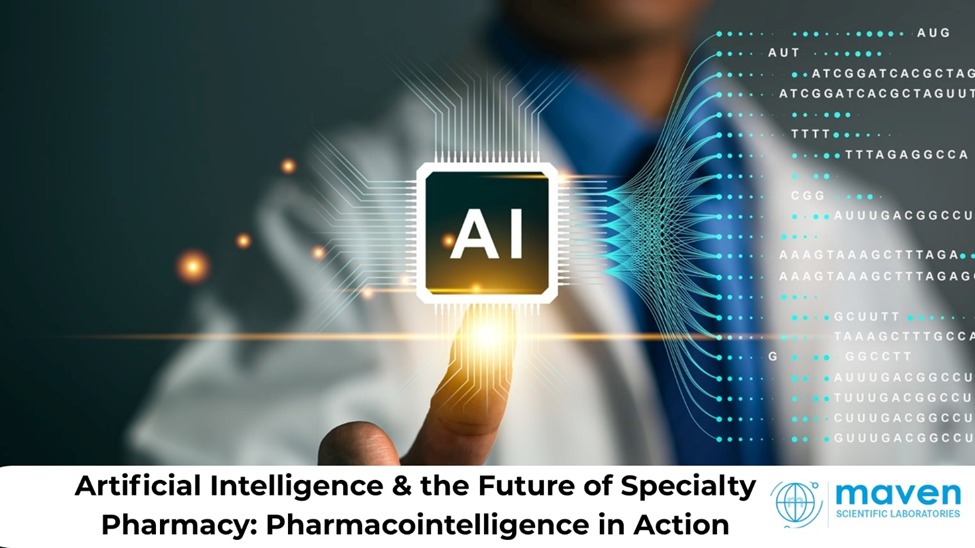
Artificial Intelligence (AI) is transforming healthcare, and within pharmacy, this technology—often called Pharmacointelligence—is reshaping how specialty pharmacy is delivered and how novel drugs are developed. AI empowers clinical pharmacists to make evidence-based decisions by processing large volumes of patient data, medication histories, lab results, and genomic information.
In specialty pharmacy, where treatments often involve rare diseases or complex biologics, AI offers notable advantages: accelerating drug discovery, optimizing dosage regimens, predicting patient response, and improving adherence strategies. But to harness AI’s full potential, questions of accuracy, data security, and regulatory compliance must be addressed head-on.
What Is Pharmacointelligence?
Pharmacointelligence refers to the intelligent application of AI and data science in the pharmaceutical domain, covering areas such as:
- Drug discovery & development
- Manufacturing process optimization
- Supply chain and distribution analytics
- Patient-level decision support and therapy management
According to Hatem (2024), Pharmacointelligence brings together algorithms, real-world evidence, and systems integration to streamline medication-related workflows.
AI Subfields in Drug Development
To understand AI’s role in specialty pharmacy, it’s helpful to distinguish among its core subfields:
|
Subfield |
Definition |
Example in Pharma / Pharmacy |
|
Machine Learning (ML) |
Algorithms that learn from labeled or unlabeled data |
Predicting drug efficacy from historical patient data (supervised ML) |
|
Unsupervised Learning |
Pattern recognition without explicit labels |
Clustering patients into new disease phenotypes |
|
Deep Learning (DL) |
Neural networks that handle unstructured data (images, signals) |
Predicting molecular binding affinity or imaging biomarkers |
DL enables AI to analyze complex data — such as molecular structures, imaging scans, or high-throughput screening output — that traditional methods cannot easily process.
AI Through the Drug Development Lifecycle
AI and Pharmacointelligence can be integrated across all phases:
1. Target Identification & Validation
AI models analyze biological, omics, and pathway data to pinpoint promising molecular targets. Algorithms like Tamura texture features may extract hidden biomarkers from imaging datasets.
2. Compound Screening & Lead Optimization
Using silico libraries, AI can rapidly screen thousands of virtual compounds for potential activity. Structure-Activity Relationship (SAR) models help refine lead compounds by predicting how structural tweaks influence potency and selectivity.
3. ADMET Prediction
ML/DL models assist in evaluating Absorption, Distribution, Metabolism, Excretion, and Toxicity (ADMET) profiles before in vitro or in vivo testing, improving safety and reducing attrition.
4. Clinical Trial Design & Recruitment
AI aids patient selection by identifying biomarkers or subpopulations likely to respond to therapy. This improves trial efficacy and reduces failed enrollments. If a trial fails, AI can help repurpose compounds to other indications faster.
5. Drug Repurposing
When drugs fail in one indication, AI can suggest alternative targets or disease states — cutting development time by skipping early phases.
Real-World Example: INS018_055 & Pharma.AI
A case in point is INS018_055, a small antifibrotic molecule developed for idiopathic pulmonary fibrosis (IPF). This compound emerged from the integration of AI platforms Panda Omics and Chemistry42:
- Panda Omics generated hypotheses and ranked gene targets associated with IPF.
- Chemistry42 proposed molecular structures and optimization strategies.
- The combined system used DL/ML to predict pathway relevance, binding affinity, and progression potential.
INS018_055 advanced to Phase I trials in under 30 months, leveraging AI’s predictive power to reduce time and cost compared to traditional development timelines.
Ethical, Data, & Regulatory Considerations
While AI offers transformative potential, it raises significant concerns:
1. Data Privacy & Security
Pharmacointelligence models require extensive patient data — lab results, genomic profiles, medical history — which must comply with HIPAA and other privacy rules. Ensuring encryption, anonymization, and secure data governance is non-negotiable.
2. Model Accuracy & Bias
AI outputs only as good as input data. If training data is skewed or incomplete, predictions may be biased, disproportionately affecting certain populations. Transparent validation and fairness audits are essential.
3. Accountability & Liability
If AI recommendations result in adverse outcomes, who is responsible — the algorithm developer, the pharmacy, or the healthcare provider? Clear regulatory guidelines and oversight frameworks are needed.
4. Oversight & Explainability
Regulators may demand that AI models provide explainable outputs (i.e. how the algorithm arrives at a decision). This is especially relevant in high-stakes specialty therapy settings.
Implications for Specialty Pharmacy Services
For specialty pharmacies and pharmaceutical providers, Pharmacointelligence translates into:
- Personalized dosing algorithms for narrow therapeutic index drugs
- Predictive adherence models to forecast noncompliance risk
- Drug utilization analytics to manage therapy portfolios
- Post-market surveillance algorithms to detect safety signals early
Such AI-enabled services enhance clinical precision, operational efficiency, and patient outcomes — while differentiating your business in a competitive market.
How Maven Regulatory Solutions Leverages AI & Analytics
At Maven Regulatory Solutions, we integrate AI insights, regulatory strategy, and analytics frameworks to support clients in specialty pharmacy and digital therapeutics spaces. Our approach includes:
- Regulatory intelligence mapping for AI-enabled drug and device submissions
- Compliance audit of AI/ML models under FDA and EMA guidance
- Labeling and claims validation for AI-assisted therapies
- Data governance and AI explainability frameworks for regulatory submission
By combining domain expertise with AI literacy, Maven helps clients accelerate innovation safely, compliantly, and strategically.
Conclusion
The convergence of AI, Pharmacointelligence, and specialty pharmacy promises a new frontier in patient care, drug discovery, and service optimization. Yet the key to success lies in balancing innovation with ethics, transparency, and regulatory compliance.
Maven Regulatory Solutions is your partner in navigating this transformation — helping you integrate AI models into specialty pharmacy services while maintaining regulatory rigor and patient trust.

Post a comment