
March 23, 2026
What is 21 CFR Part 11 compliance?
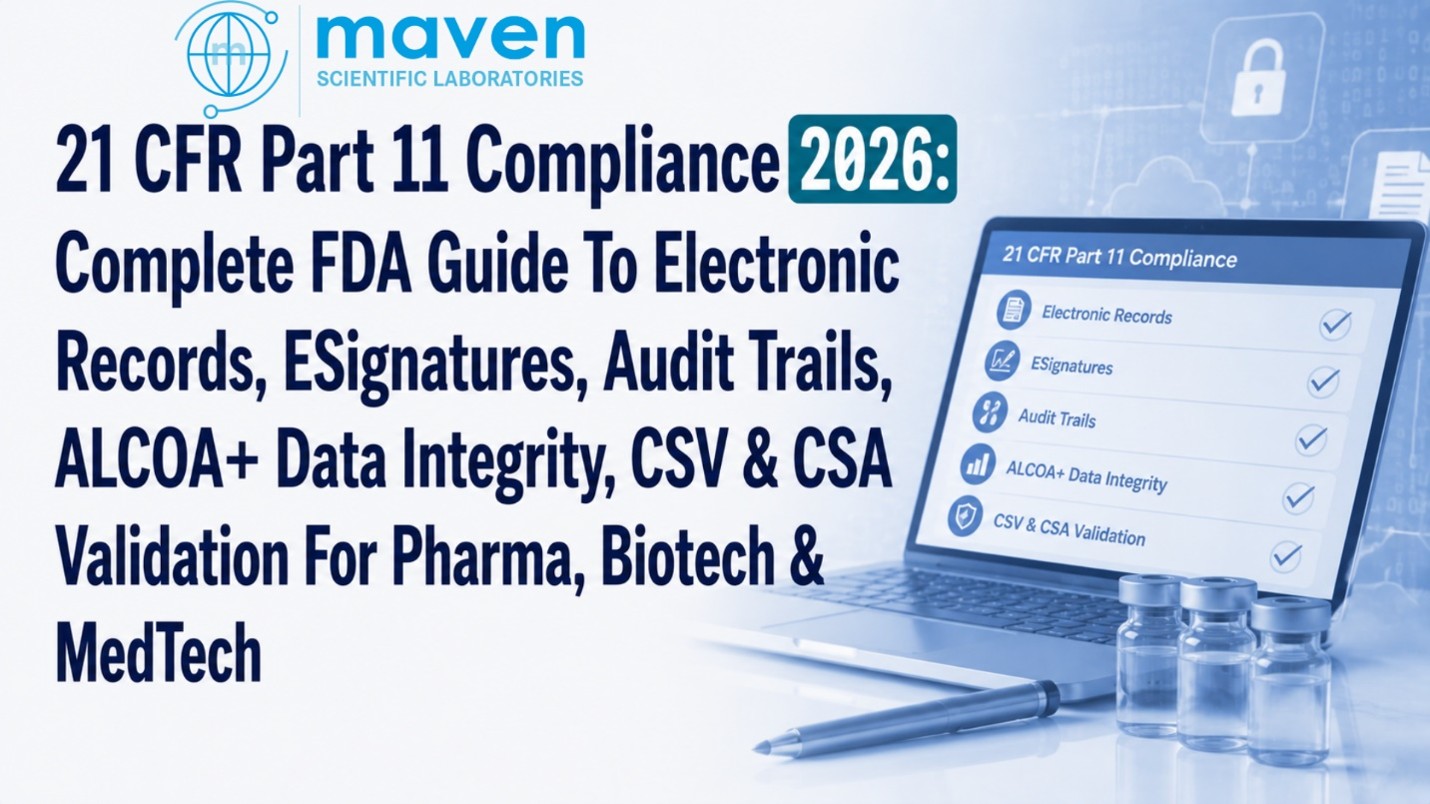
21 CFR Part 11 is an FDA regulation that establishes requirements for electronic records and electronic signatures to ensure they are secure, traceable, reliable, and legally equivalent to paper records in regulated life sciences industries.
Introduction: Enabling Digital Trust in a Regulated Ecosystem
In an era where pharmaceutical, biotechnology, and medical device organizations are rapidly transitioning toward fully digital, cloud-enabled, and AI-driven ecosystems, 21 CFR Part 11 compliance has become a foundational requirement for ensuring data reliability, regulatory acceptance, and patient safety. While often perceived as a technical regulatory framework, Part 11 is fundamentally about building trust in electronic systems, ensuring that every piece of data generated within a GxP environment is accurate, attributable, secure, and ready.
As we move into 2026, the scope of compliance has significantly expanded beyond traditional systems such as LIMS and eQMS to include SaaS platforms, AI-powered analytics tools, decentralized clinical trial systems, real-world data platforms, and integrated digital health technologies. Regulatory expectations from the FDA now emphasize continuous validation, cybersecurity resilience, data governance maturity, and lifecycle-based compliance strategies. This means organizations must shift from static validation models to dynamic, risk-based, and continuously monitored compliance frameworks.
At Maven Regulatory Solutions, we support life sciences organizations in designing and implementing scalable, audit-ready, and globally aligned Part 11 compliance strategies, enabling them to confidently adopt digital innovation while maintaining full regulatory control.
Core Pillars of 21 CFR Part 11 Compliance
1. Electronic Records: Foundation of Digital Compliance
Electronic records are at the heart of regulated operations and include a wide spectrum of data such as clinical trial datasets, manufacturing batch records, laboratory test results, deviation reports, CAPA records, and quality documentation. Ensuring the integrity and reliability of these records is critical, as they serve as primary evidence during regulatory inspections and decision-making processes.
To meet Part 11 requirements, organizations must implement robust data governance frameworks that ensure records are protected against unauthorized access, alteration, or deletion while maintaining complete traceability and version control. In 2026, regulators are placing increased emphasis on metadata management, cloud data integrity, backup validation, and long-term archival strategies, particularly for hybrid and SaaS-based systems.
Additionally, all electronic records must align with ALCOA+ principles, ensuring that data is attributable, legible, contemporaneous, original, accurate, complete, consistent, enduring, and readily available throughout its lifecycle.
2. Electronic Signatures (eSignatures): Legal Accountability in Digital Systems
Electronic signatures under Part 11 carry the same legal weight as handwritten signatures and are widely used across clinical, manufacturing, and quality processes, including batch approvals, data verification, and regulatory submissions. Ensuring their integrity is critical for maintaining accountability and compliance.
| Requirement | Description | Compliance Outcome |
| Unique User Identity | Distinct user credentials | Accountability |
| Authentication Controls | Passwords, MFA, biometrics | Security |
| Signature Manifestation | Name, date, reason | Traceability |
| Non-Repudiation | Cannot deny action | Legal enforceability |
With the rise of cyber threats and digital transformation, organizations are increasingly implementing multi-factor authentication (MFA), identity access management (IAM), and biometric verification systems to strengthen both compliance and system security.
3. Audit Trails & End-to-End Data Traceability
Audit trails are one of the most scrutinized elements during FDA inspections, as they provide a complete, time-stamped history of system activities. They serve as critical evidence for demonstrating data integrity and system control.
Modern audit trail expectations in 2026 go beyond basic logging and include automated, tamper-proof recording of all user actions, capturing who performed an action, what changes were made, when the activity occurred, and why it was executed. Additionally, organizations are expected to implement proactive audit trail review processes, supported by AI-driven anomaly detection and continuous monitoring tools.
Failure to properly configure or review audit trails remains one of the most common FDA inspection findings, making this a high-risk compliance area.
4. Security & Access Control: Integrating Cybersecurity with Compliance
| Control Mechanism | Purpose | Regulatory Benefit |
| Role-Based Access Control (RBAC) | Limits user permissions | Prevents unauthorized actions |
| Multi-Factor Authentication | Strengthens login security | Reduces breach risk |
| Encryption | Protects data | Ensures confidentiality |
| Session Timeout | Prevents misuse | Enhances compliance |
In 2026, regulatory expectations are increasingly aligned with cybersecurity frameworks, requiring organizations to adopt zero-trust architectures, endpoint protection, continuous threat monitoring, and secure cloud configurations. This convergence of cybersecurity and compliance reflects the growing importance of protecting sensitive patient and product data in digital environments.
5. Computer System Validation (CSV) & CSA Evolution
Computer System Validation (CSV) ensures that systems perform consistently according to predefined specifications, while Computer Software Assurance (CSA) introduces a more efficient, risk-based approach to validation.
| Phase | Description |
| URS | Defines user and regulatory requirements |
| FS/DS | Functional and design specifications |
| IQ | Installation verification |
| OQ | Operational testing |
| PQ | Performance validation |
In 2026, organizations are transitioning toward CSA methodologies, focusing on critical thinking, risk prioritization, and reduced documentation burden, while still maintaining compliance with FDA expectations. This shift allows companies to accelerate digital adoption without compromising regulatory standards.
End-to-End 21 CFR Part 11 Compliance Lifecycle
| Step | Activity | Outcome |
| System Inventory | Identify all GxP systems | Defined scope |
| Risk Assessment | Evaluate impact | Prioritized validation |
| Control Setup | Configure compliance features | System readiness |
| Validation | Execute IQ/OQ/PQ or CSA | Verified system |
| Documentation | Maintain records | Inspection readiness |
| Monitoring | Continuous oversight | Sustained compliance |
2026 Trends Shaping Part 11 Compliance
The regulatory and technological landscape continues to evolve rapidly, requiring organizations to stay ahead of emerging trends:
- Adoption of AI/ML validation frameworks
- Expansion of cloud-native SaaS validation models
- Evolution toward Data Integrity 2.0 (ALCOA++)
- Automation of audit trail review using AI tools
- Integration of cybersecurity with regulatory compliance
- Growth of digital quality systems (eQMS)
- Increased regulatory scrutiny on decentralized trials and digital endpoints
Common FDA Inspection Findings
- Lack of periodic audit trail review
- Incomplete or outdated validation documentation
- Shared user accounts violating compliance
- Weak data integrity governance frameworks
- Insufficient cloud and SaaS validation controls
How Maven Regulatory Solutions Supports Compliance
Maven Regulatory Solutions delivers end-of-end support, including:
- Regulatory gap assessments and remediation strategies
- CSV & CSA validation lifecycle management
- ALCOA+ data integrity audits
- Audit trail implementation and review frameworks
- SaaS and cloud validation strategies
- FDA inspection readiness and mock audits
Our approach ensures scalable compliance, operational efficiency, and audit readiness.
Best Practices for Sustainable Compliance
- Implement risk-based validation aligned with GAMP 5
- Establish strong data governance frameworks
- Conduct periodic audit trail reviews
- Maintain continuous training and awareness programs
- Leverage automation and AI tools for compliance monitoring
FAQ – 21 CFR Part 11 Compliance
1. What is 21 CFR Part 11 in simple terms?
It ensures electronic systems produce secure, reliable, and legally valid records.
2. Does it apply to SaaS platforms?
Yes, all cloud-based systems must comply fully.
3. CSV vs CSA?
CSV is documentation-heavy; CSA is risk-based and efficient.
4. What is ALCOA+?
A framework ensuring complete and reliable data integrity.
Conclusion
21 CFR Part 11 compliance in 2026 is no longer just about regulatory adherence it is a strategic enabler of digital transformation.
As life sciences organizations adopt AI, cloud computing, and advanced digital platforms, maintaining compliance requires a proactive, risk-based, and continuously evolving approach.
Companies that invest in robust compliance frameworks today will not only avoid regulatory risks but also gain a competitive advantage in innovation, efficiency, and global market access.
Maven Regulatory Solutions remains your trusted partner in building future-ready, audit-proof, and globally compliant digital ecosystems.

Post a comment